



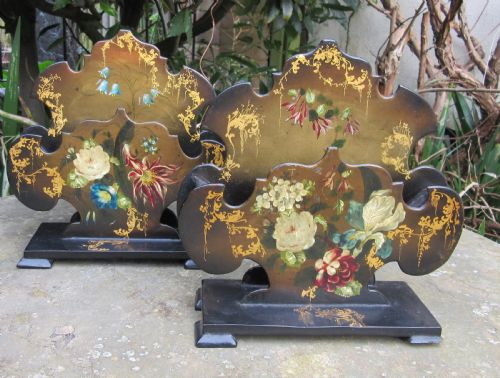
Victorian Letter Rack
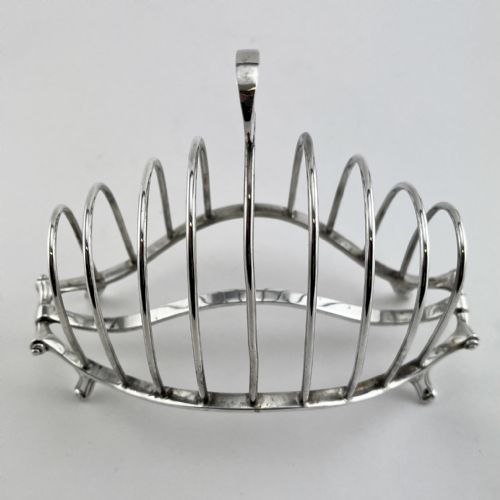
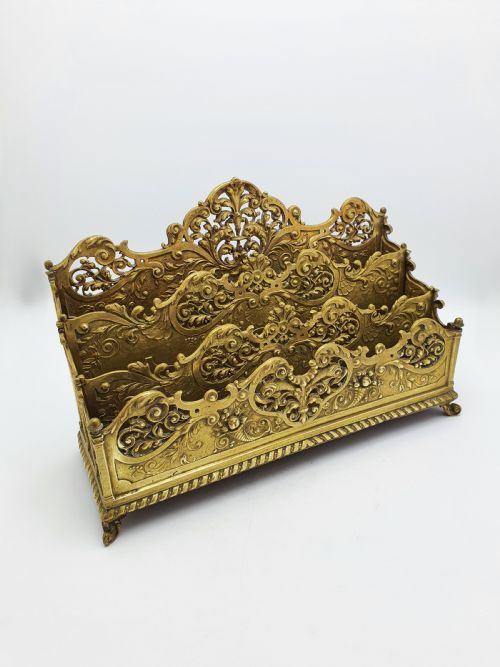
A victorian letter rack organises correspondence with the heavy brass, rich mahogany, and pierced scrollwork characteristic of nineteenth-century desk accessories.
Victorian Letter Rack
When searching for a victorian letter rack, a buyer looks at desk accessories designed to hold post, stationery, and documents in nineteenth-century studies and offices.
The most common examples on this page are freestanding brass frames, often mounted on oak bases or combined with walnut and mahogany correspondence boxes.
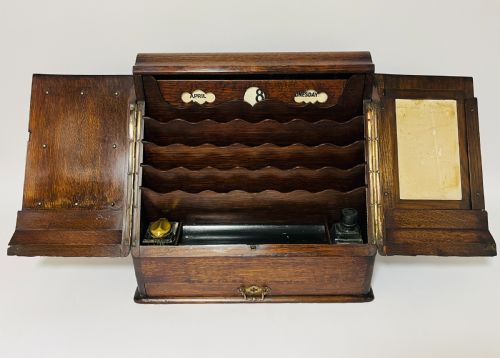
Makers produced these pieces in various forms including wall pockets, desktop cartonnieres, and slope-front stationery cabinets to suit the Victorian writing table.
How They Were Made
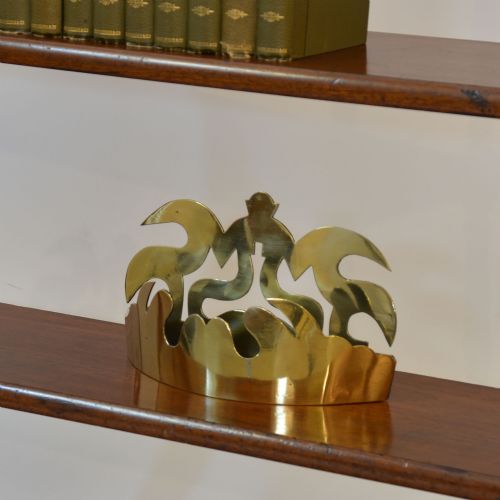
Craftsmen utilised cast and sheet brass for framework, frequently piercing the metal with scrollwork, floral motifs, or Gothic revival patterns.
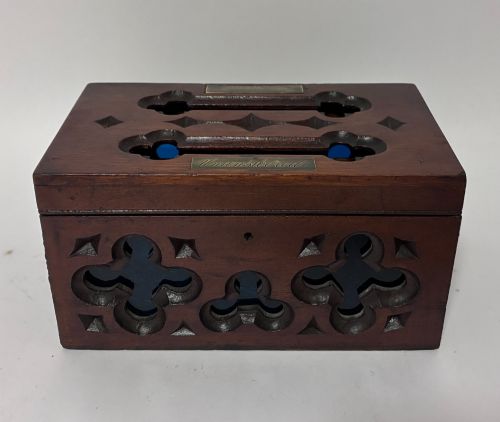
Cabinetmakers worked with dense timbers like oak, walnut, rosewood, and mahogany, sometimes adding brass bounds, inlaid veneers, or Tunbridge ware details.
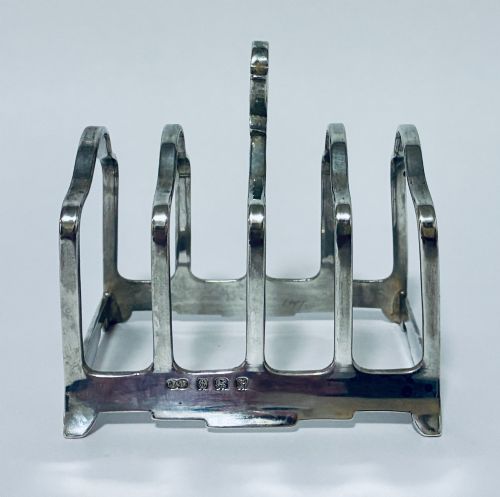
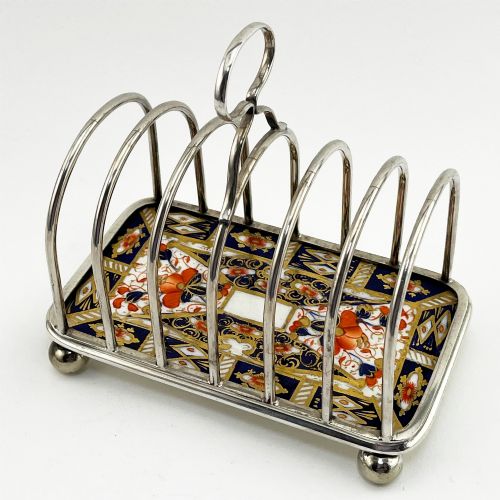
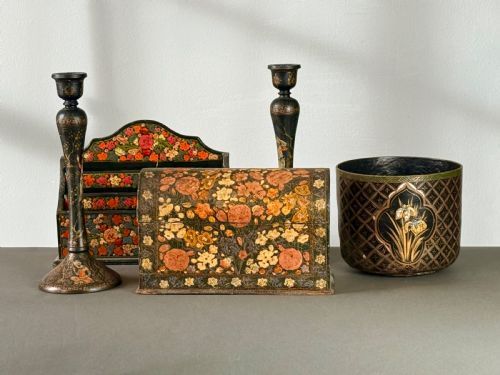
Workshops also employed silver plating, sterling silver wirework, and papier-mâché for smaller desk tidies and wall-hung pockets.
Victorian Letter Rack Retail Price Guide 2026
Typical asking prices for victorian letter rack among the pieces listed under this phrase on Sellingantiques today, from the lower quarter to the upper quarter. They describe what is for sale here now, not the wider market.
A few sporting pieces turn correspondence storage into a game, shaped like cricket bats, balls, and wickets.
What Varies in Quality
The standard of a piece depends on the weight of the cast brass and the crispness of any pierced ornamentation or classical mask motifs.
Cabinetwork distinguishes finer boxes and stationery cabinets, seen in figured timber grains, tightly fitted secret drawers, and substantial dovetailed construction.
Elkington·F Waller·Martin Hall & Co
The Victorian Letter Rack Glossary
- Cartonnier
- A desktop cabinet with multiple tiers or compartments designed for holding papers, letters, and documents. These pieces often feature ornamental mounts or leather-lined partitions.
- Correspondence box
- A desk box built specifically to store writing paper, envelopes, and incoming letters. They frequently incorporate sloping fronts or fitted interior compartments.
- Stationery cabinet
- A larger desk accessory with an enclosing door or lid that opens to reveal pigeon holes and letter slots. Finer examples utilise figured mahogany, walnut, or inlaid veneers.
- Standish
- A traditional desk tidy or inkstand that combines a letter rack with inkwells and pen trays. These items formed the centrepiece of the nineteenth-century writing table.
- Wall pocket
- A hanging letter rack designed to be fixed to a wall rather than placed on a desk. They appear in pressed brass, papier-mâché, and oak with backplates for mounting.
Victorian Letter Rack: Frequently Asked Questions
What is the difference between a letter rack and a stationery cabinet?
A letter rack generally consists of open wirework, brass divisions, or tiered partitions designed for immediate sorting of daily post. Items left in view remain accessible on the desktop.
In contrast, a stationery cabinet encloses writing materials behind doors or fitted lids. These larger pieces protect paper from dust and often include internal pigeon holes.
Were all these pieces used on desks?
Many examples sat on writing tables, slope-front desks, and pedestal tables alongside inkwells and stamp boxes. Desk tidies and standishes gathered these accessories into one footprint.
Other versions, such as wall pockets and hanging racks, were secured to study walls or hall panelling. These saved valuable surface space in busy nineteenth-century offices and homes.
How can I tell a Victorian piece from later copies?
Examine the construction methods, materials, and weight of the metalwork. Victorian pieces typically employ heavy cast brass, solid mahogany or oak, and hand-cut screws or dovetailing.
Later reproductions often feel lighter, use modern pressed sheet metals, or display machine-standard finishes that lack the depth of nineteenth-century chasing and piercing.
How do I care for brass and wood letter racks?
Dust wooden surfaces gently with a dry cloth and feed figured veneers occasionally with appropriate wax to maintain the grain. Avoid chemical polishes on timber.
For brass elements, a soft cloth removes dust without disturbing the aged patina. Aggressive cleaning agents should be avoided to preserve the historic finish.