






Victorian Desk Compendium
A victorian desk compendium is a fitted desktop repository for correspondence and writing implements designed to keep a gentleman's or lady's workspace orderly and handsome.
Victorian Desk Compendium
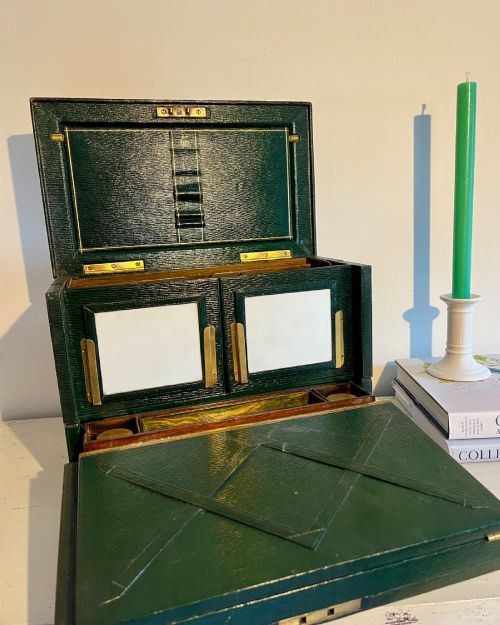
When you search for a victorian desk compendium, you encounter pieces designed to house stationery, writing boxes, and smoking accessories on a library or study table. The selection spans straightforward timber stationery boxes alongside complex novelty and industrial items created during the nineteenth century.
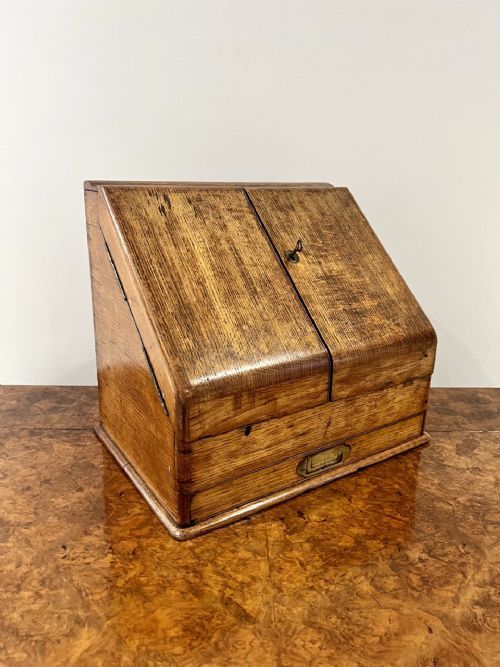
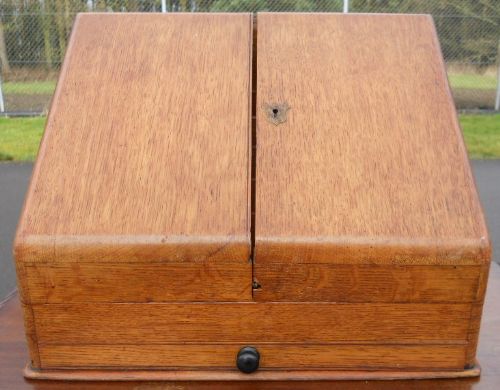
The version you are most likely to meet on this page is the oak stationery cabinet, often featuring drop fronts or sloping lids. Alongside these timbers, you find varied forms including writing boxes, architectural desk clocks, and specialised cigar and tobacco cabinets.
Origins and periods stretch from the mid-nineteenth century through the turn of the twentieth century. Makers utilised diverse stylistic influences, ranging from Arts and Crafts simplicity to Victorian Gothic Revival and Chinoiserie.
How they were made
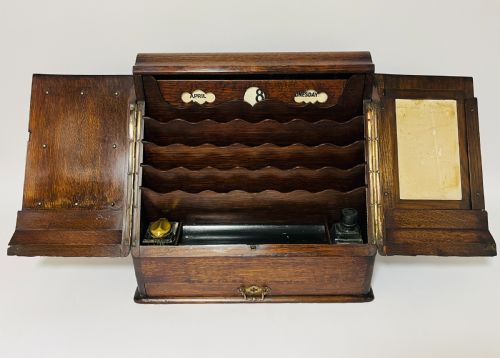
Cabinet makers constructed these pieces primarily in oak, mahogany, walnut, and coromandel, occasionally incorporating satinwood, olivewood, and rosewood veneers. They fitted interiors with compartments for paper, envelopes, and inkwells, sometimes adding adjustable dates and drop-front mechanisms.
Metalwork played a structural and decorative role, utilising brass, gilt bronze, and silvered bronze for hinges, locks, and novelty forms such as Davy lamps or fire carriages. Glass components appeared in inkwells and smoking accessories, while leather lined writing surfaces and interiors.
Victorian Desk Compendium Retail Price Guide 2026
Typical asking prices for victorian desk compendium among the pieces listed under this phrase on Sellingantiques today, from the lower quarter to the upper quarter. They describe what is for sale here now, not the wider market.
Materials recorded across current items include brass, oak, glass, leather, mahogany, satinwood, and porcelain.
What varies in quality
The distinction between standard examples and superior pieces rests on the choice of timber and the ambition of the design. Dense hardwoods like coromandel and burr walnut, combined with detailed inlay or architectural framing, elevate a piece above utilitarian oak boxes.
Mechanical complexity and novelty execution also separate basic items from masterworks. Fitted interiors with working locks by recognised makers, or intricate industrial and novelty configurations, demonstrate a higher degree of Victorian craftsmanship.
Guilmet·Houghton and Gunn·F Waller
The Victorian Desk Compendium Glossary
- Stationery box
- A tabletop cabinet designed to hold writing paper, envelopes, and correspondence neatly. These pieces often feature tiered interior compartments and sloping or drop-front lids.
- Compendium
- A comprehensive box or cabinet housing multiple related items, such as writing materials, smoking accessories, or desk clocks, in one unified desk accessory.
- Drop front
- A hinged front panel that opens forward to provide access to internal stationery slots and writing surfaces. This mechanism allows for a compact footprint when closed.
- Campaign writing compendium
- A portable box configured for travel, folding out to provide a writing surface and storage for correspondence. These were utilised by travellers during the nineteenth century.
Victorian Desk Compendium: Frequently Asked Questions
What is a victorian desk compendium used for?
These pieces served to organise correspondence, writing paper, and implements on a study or library desk. Many incorporated compartments for letters, pens, and inkwells.
Some specialised versions doubled as cigar and tobacco cabinets or housed clocks and thermometers. They kept personal papers private and desktop clutter contained.
How do I identify a nineteenth century stationery box?
Look for period timbers such as oak, mahogany, coromandel, and walnut combined with period brass hardware. Construction methods typically include dovetail joints and fitted internal dividers.
Styles often reflect Victorian Gothic Revival, Arts and Crafts, or Chinoiserie influences. Many feature drop fronts, sloping lids, or built-in calendars.
What is a novelty desk compendium?
A novelty compendium is a desktop piece shaped to resemble an everyday object or industrial item. Examples include miniature Davy lamps and fire carriages.
These pieces combine decorative amusement with practical storage for smoking accessories or writing materials. They reflect Victorian enthusiasm for clever mechanical design.
Where were these cabinets placed?
They sat upon library tables, partners desks, and writing tables in studies and drawing rooms. Their purpose was to provide immediate access to writing materials.
Larger architectural or oversized examples remained static on heavy furniture, while folding campaign versions travelled with their owners.
What materials are common in these pieces?
Makers relied heavily on solid oak, mahogany, and walnut for the primary structure. Finer examples utilised decorative veneers like coromandel, burr walnut, satinwood, and olivewood.
Brass provided hinges, locks, and handles, while glass and leather appeared in internal fittings and writing surfaces.