



Dark Wood Desk Tidy
These dark wood desk tidy pieces are functional Victorian and later desk accessories that organise correspondence and writing instruments.
What these pieces are
A dark wood desk tidy groups together writing materials, correspondence, and ink in forms ranging from stationery cabinets and letter organisers to inkstands. These items serve the practical demands of nineteenth and early twentieth-century offices and homes, keeping desks orderly.
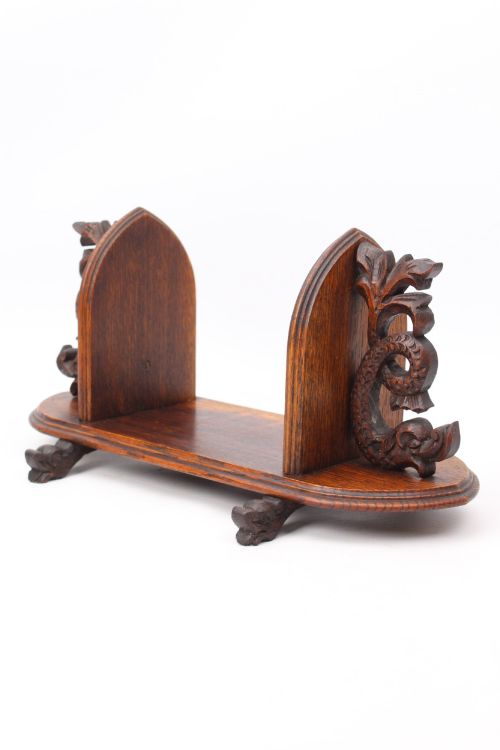
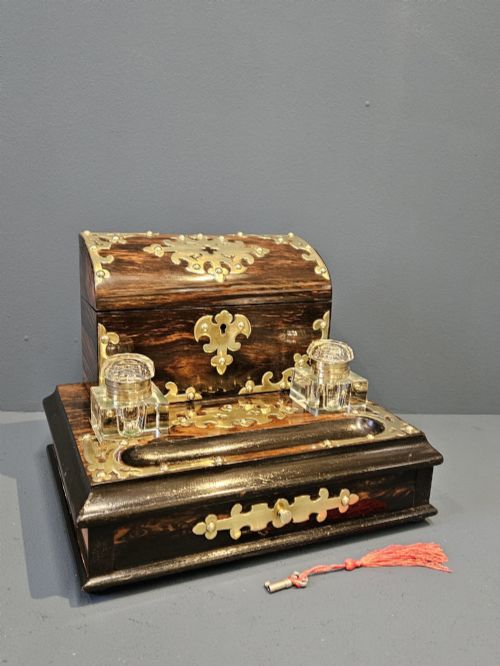
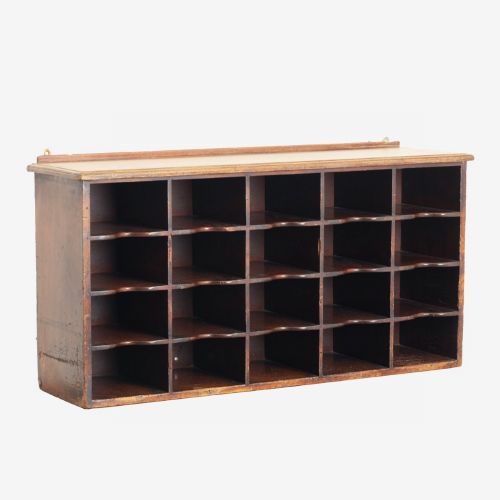
The pieces appearing on this page include Victorian coromandel stationery and ink stands, insurance agent letter organisers, and carved mahogany waterfall desk tidies. Buyers also encounter Black Forest figural inkwells depicting animals from around eighteen ninety.
Originating predominantly from the Victorian period through to nineteen twenty, these dark wood desk tidy items showcase the craftsmanship of British and European makers working in hardwood and coromandel.
How they were made
Maker's workshops built these dark wood desk tidy items using dense timbers such as mahogany and coromandel, paired with carved details and structured compartments. Woodworking techniques of the nineteenth century allowed for the construction of tiered stationery cabinets and waterfall letter racks.
Functional hardware in brass and silver plate provides hinges, mounts, and handles, while internal inkwells incorporate glass and bone fittings. Surface decoration includes detailed hand carving, particularly evident in Black Forest animal studies.
Retail Price Guide 2026
Typical UK retail prices for dark wood desk tidy, calculated from the Sellingantiques database of over a million retail prices indexed since 2003. This retail price guide relies exclusively on Sellingantiques data; no external sources or auction records are used, so the figures do not describe the wider market.
Listings feature Victorian, eighteen seventy, eighteen ninety, and nineteen twenty periods.
What varies in quality
The distinction between standard office utility items and superior examples lies in the selection of exotic timbers like coromandel and the complexity of the fitted interiors. Elaborate stationery cabinets by documented retailers demonstrate finer cabinet-making standards than basic agent organisers.
Artistic execution in carved woodwork separates mass-produced items from sculptural Black Forest pieces, where realistic animal forms require advanced hand-carving skill. The integration of original glass, bone, and metal hardware further distinguishes superior survivals.
Houghton and Gunn
The Dark Wood Desk Tidy Glossary
- Coromandel
- A dense, heavily figured exotic hardwood with dark brown and black grain patterns. It was frequently used for luxury Victorian boxes and writing cabinets.
- Stationery Cabinet
- A desk furniture form featuring fitted shelves or partitions designed to hold writing paper and envelopes upright. These cabinets often incorporate locking doors and internal drawers.
- Waterfall Desk Tidy
- A tiered letter organiser where successive compartments step down like water over ledges. This design keeps different categories of correspondence visible and accessible.
- Inkstand
- A tray or stand holding one or more inkwells, often with channels for pens and compartments for sealing wax. Materials include hardwood bases fitted with glass and metal components.
Frequently Asked Questions
What is a dark wood desk tidy used for?
These accessories hold letters, stationery, and writing implements on nineteenth and early twentieth-century desks. They provide dedicated spaces for paper and ink, keeping workspaces orderly.
Different formats serve specific tasks, from holding incoming correspondence in upright racks to storing ink vessels securely.
How do I date a desk tidy?
Dating relies on stylistic clues, construction methods, and materials such as coromandel or mahogany. Victorian Gothic Revival and Black Forest carvings point to specific nineteenth-century design movements.
Inscribed dates or maker plaques on fitted cabinets occasionally provide precise years of manufacture.
What materials are common in these pieces?
Makers utilised dense hardwoods including mahogany and coromandel for the main bodies. Brass, silver plate, glass, and bone appear in the hardware, inkwells, and internal fittings.
Carved wooden animal figures also feature in specific regional styles like Black Forest work.
Where were these items placed?
They sat upon office desks, library tables, and writing bureaus in homes and business premises. Insurance offices and domestic studies both utilised these organisers for daily correspondence.
Their compact footprints allowed them to hold multiple desk accessories without occupying excessive workspace.