




Wooden Stationery Rack
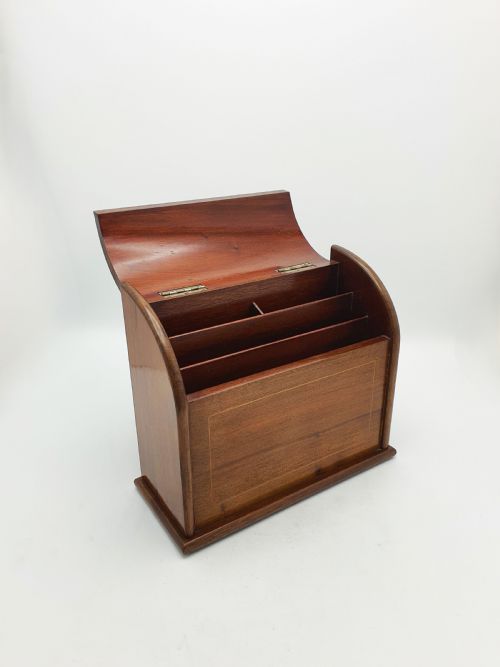
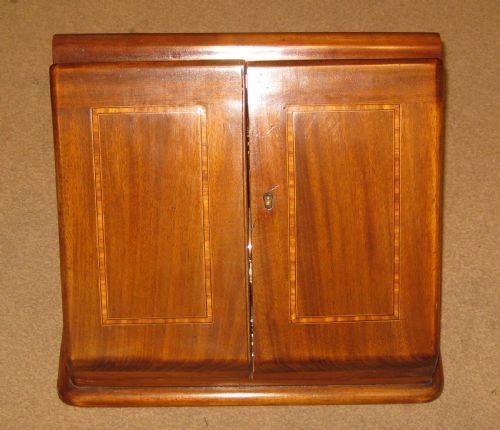
A wooden stationery rack keeps your desk in order with traditional craftsmanship, offering fitted compartments and drop-front cabinets to house correspondence.
Wooden Stationery Rack
When you search for a wooden stationery rack, you encounter practical desk accessories designed to hold letters, envelopes, and writing equipment. The selections span the Victorian, Edwardian, and George V periods, featuring pieces produced across the nineteenth and early twentieth centuries.
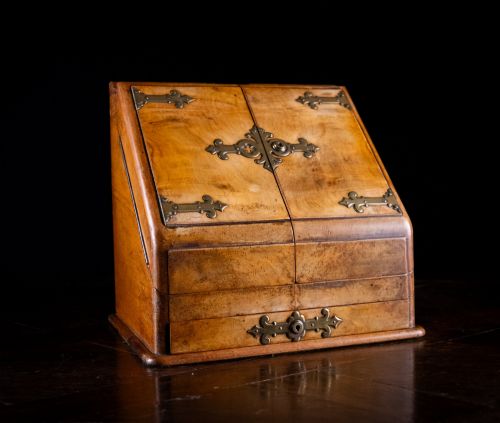
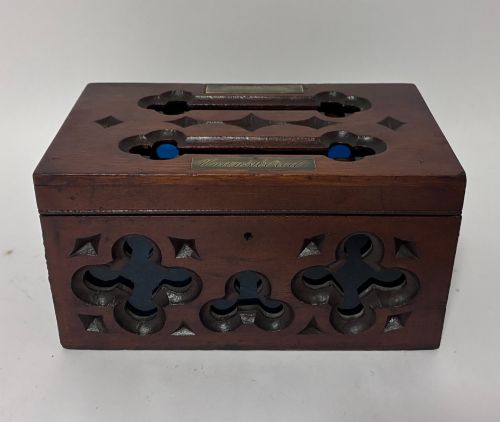
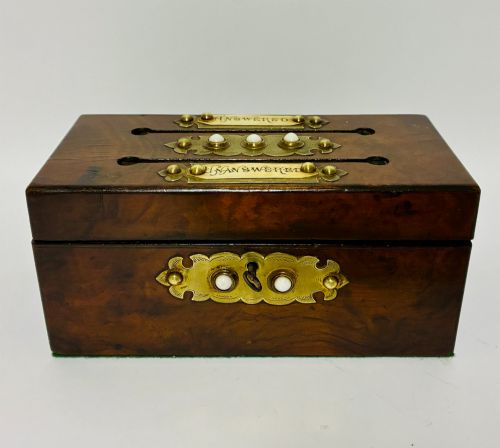
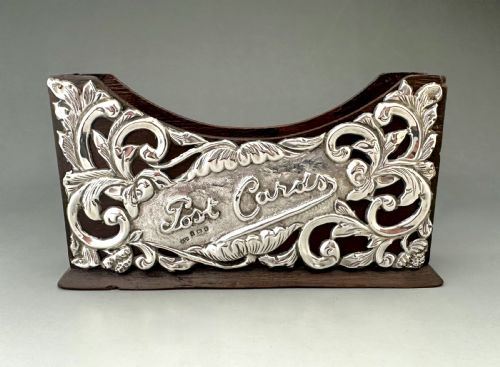
The assortment on this page ranges from simple open letter racks and desk tidies to elaborate correspondence boxes and double-opening writing slopes. You will also find drop-front cabinets, two-tier organizers raised on bun feet, and wall-mounted requisitions boxes originating from country houses and offices.
Most examples date from the Victorian era up to the nineteen-twenties, showcasing styles such as Arts and Crafts, Gothic Revival, and Georgian influences. Oak, mahogany, and walnut dominate the offerings, frequently enhanced by brass mounts, glass bottles, and inlaid details.
Materials and Construction
Cabinet makers constructed these desk accessories using dense hardwoods like oak, mahogany, walnut, and rosewood, ensuring durability for daily desk use. Surfaces often display decorative elements such as inlaid wood details, carved motifs, and silver mounts.
Functional fittings such as brass hinges, handles, and lock escutcheons are integrated into correspondence boxes and drop-front cabinets. Interior arrangements frequently incorporate glass ink bottles, fabric linings, and hidden drawers alongside partitioned letter slots.
Judging Quality in Desk Storage
Superior pieces distinguish themselves through the selection of timber grain, the precision of inlaid details, and the robustness of brass hardware. Maker's labels and specialised functions, such as secret drawers or fitted inkwells, elevate an item above standard utility pieces.
Construction methods determine longevity, seen in the tight joinery of compartment dividers and the smooth operation of hinged lids and drop fronts. Finer examples retain original glass bottles, intact fabric interiors, and working locks with matching keys.
The Wooden Stationery Rack Glossary
- Correspondence box
- A covered box designed to hold writing paper and incoming letters securely on a desktop. These often feature hinged lids or sloping fronts.
- Desk tidy
- An open or partitioned accessory meant for sorting daily paperwork, pens, and small office supplies within arm's reach.
- Standish
- A traditional inkstand or tray incorporating ink bottles, pen holders, and sanders for blotting wet ink. They sit centrally on a writing surface.
- Writing slope
- A portable desk with an angled writing surface that opens to reveal storage space for stationery, nibs, and documents.
- Requisitions box
- A specialised storage container used in institutions or large households to manage official requests and correspondence.
Wooden Stationery Rack: Frequently Asked Questions
How were stationery cabinets used?
Victorian and Edwardian households and offices used these cabinets to keep incoming mail, blank paper, and stamps tidy and private. Drop-front models and locking boxes protected sensitive letters from view.
Many designs included built-in ink bottles and pen trays, serving as comprehensive writing stations before the advent of modern office furniture.
How do I style a desk tidy at home?
You can place a wooden desk tidy on a study table, sideboard, or console to hold modern mail, notebooks, and pens. Their warm woods complement traditional and contemporary interiors alike.
Items featuring brass mounts and glass inkwells double as decorative display pieces that add historical character to a workspace.
How can I tell Victorian pieces apart?
Victorian stationery boxes often display heavier ornamentation, such as Gothic Revival architectural motifs, elaborate brass hinges, and rich walnut or mahogany grains. Edwardian pieces tend to show lighter Arts and Crafts influences.
Looking at the construction of the interior dividers, the type of joinery, and any maker's labels helps distinguish between mid-nineteenth-century items and later twentieth-century productions.