


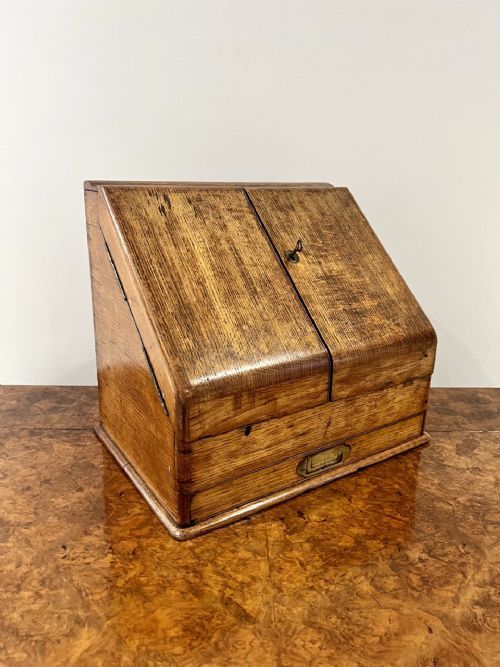


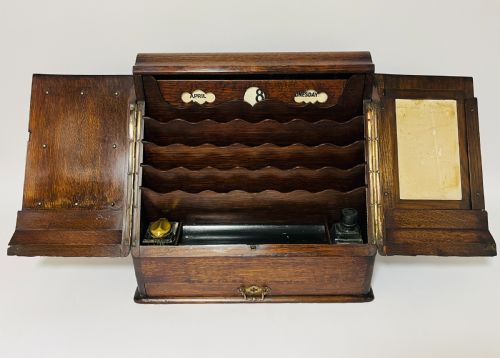


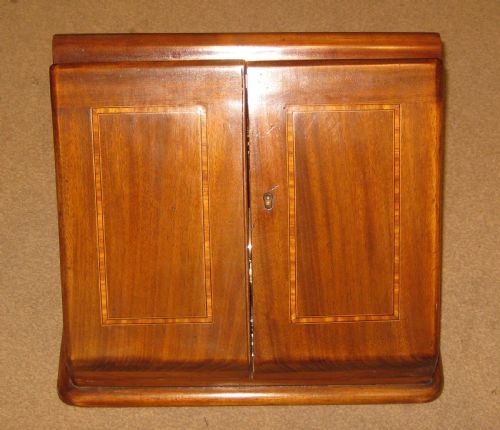


Antique Letter Compendium
An antique letter compendium organises correspondence with fitted compartments and drop fronts, offering a handsome desk tidy for any study.
Antique Letter Compendium
An antique letter compendium serves as a desk accessory designed to hold stationery, envelopes, and writing materials in an orderly fashion. These pieces range from compact stationary boxes to larger desktop cabinets featuring fall fronts or sloping lids.
The selections here are predominantly Victorian and Edwardian examples, spanning the mid-nineteenth century through to the early twentieth century. Oak and mahogany appear most frequently, alongside more decorative woods such as coromandel, walnut, and olivewood.
Makers integrated various practical elements into these designs, including adjustable dates, inkwells, and internal pigeonholes for categorising post. Buyers encounter traditional English cabinetwork alongside occasional export pieces like Japanese lacquer writing boxes.
Materials and construction
Cabinetmakers constructed these compendiums using solid timbers and select veneers over sturdy carcases, employing durable joints to withstand daily desktop use. Oak and mahogany form the structural backbone of English examples, while exotic woods like coromandel and rosewood provide rich exterior grain patterns.
Surface ornamentation relies on brass hardware, inlaid banding, and leather accents rather than heavy carving, aligning with Victorian and Edwardian tastes for neat utility. Fall fronts and sloping lids require precise hinges and internal stops to support the weight of folding writing surfaces and fitted compartments.
Antique Letter Compendium Retail Price Guide 2026
Typical asking prices for letter compendium among the pieces listed under this phrase on Sellingantiques today, from the lower quarter to the upper quarter. They describe what is for sale here now, not the wider market.
Compositions span the mid-Victorian period through the Edwardian era, incorporating Arts and Crafts sensibilities alongside traditional revival styles.
Quality variations in compendiums
The distinction between standard desktop boxes and superior compendiums lies in the choice of timber and the complexity of the interior arrangement. Higher quality pieces utilise figured veneers, intricate brass mounts, and signed maker's labels from established retailers.
Engineering touches such as smooth drop-front mechanisms, integrated perpetual calendars, and fitted glass inkwells elevate a simple stationery box into a refined desk cabinet. The crispness of the interior joinery and the preservation of the original finish determine the overall desirability of each piece.
Houghton and Gunn·F Waller
The Antique Letter Compendium Glossary
- Fall front
- A hinged panel that lowers to provide access to internal compartments or a writing surface. This mechanism is common in upright stationery cabinets.
- Stationery box
- A desktop container designed specifically to hold paper, cards, and envelopes upright. These often feature divided interiors for organisation.
- Coromandel
- A dense, heavily figured tropical Asian hardwood prized for its dark brown colour and contrasting light stripes. It was frequently used for luxury Victorian desk accessories.
- Pigeonhole
- A small, open compartment within a desk or cabinet used for sorting letters and documents. They form the core of internal stationery fittings.
Antique Letter Compendium: Frequently Asked Questions
What is an antique letter compendium used for?
An antique letter compendium provides a dedicated desktop storage solution for writing paper, envelopes, and correspondence. The fitted compartments keep postage essentials neat and accessible.
In a modern home, these pieces function well on a study desk or mantelpiece to hold mail, small notebooks, and everyday stationery supplies.
What woods were used for letter compendiums?
English cabinetmakers most commonly worked with oak, mahogany, and walnut for everyday desktop compendiums. These domestic hardwoods offered stability and durability.
More luxurious pieces featured exotic decorative veneers including coromandel, rosewood, olivewood, and satinwood, often accented with boxwood stringing or brass mounts.
How do I care for a wood writing box?
Keep wooden compendiums out of direct sunlight and away from rapid temperature changes to prevent the timber and veneers from drying out or splitting. Gentle dusting with a dry cloth is usually sufficient for daily maintenance.
An occasional application of a suitable wax polish helps nourish the wood surface and preserve the historic finish without causing buildup.