
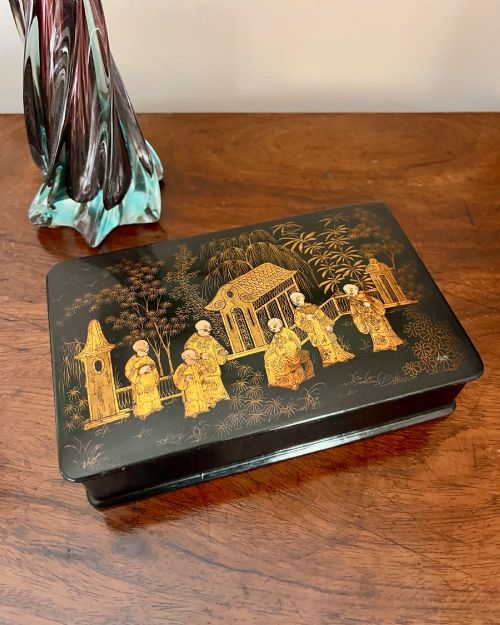
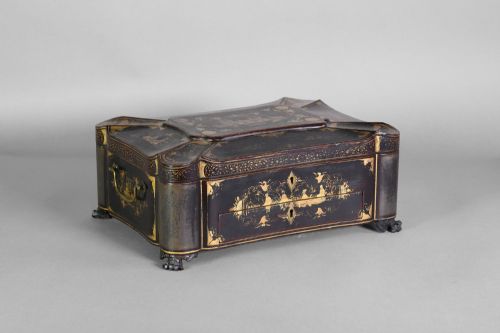
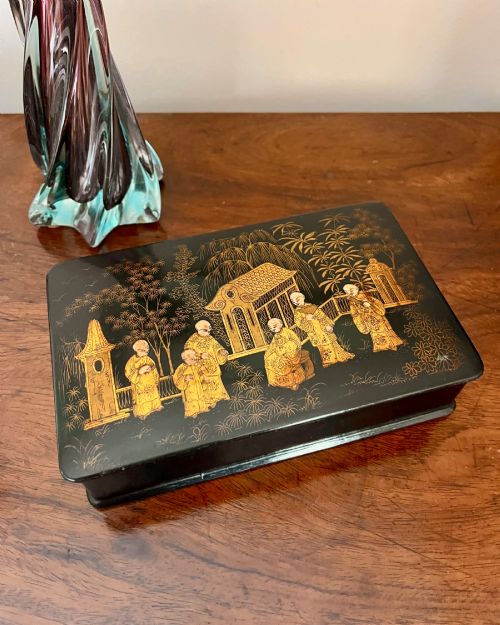
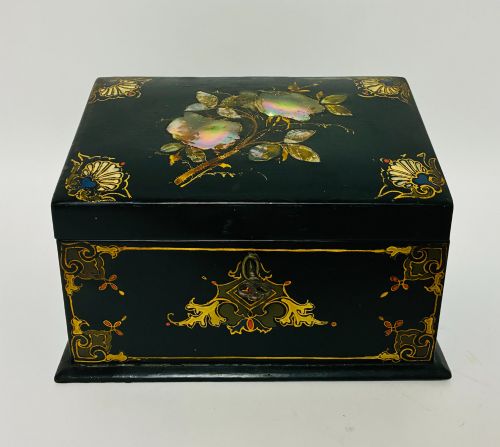
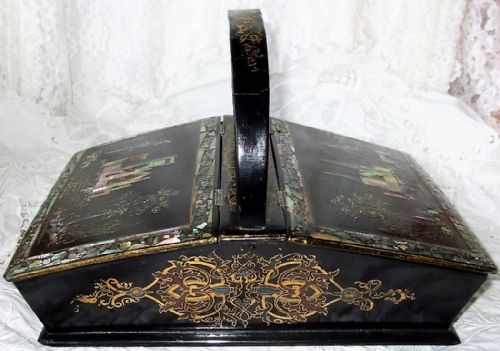


Black Lacquer Casket
A black lacquer casket is a decorated storage piece built to hold valuables or sewing tools, offering both utility and ornamental character.
Black Lacquer Casket
When you search for a black lacquer casket, you are looking at small storage containers fashioned primarily during the Georgian, Regency, and Victorian periods. These pieces serve multiple domestic functions, functioning as jewellery boxes, needlework caskets, stationery boxes, and small trinket containers.
The versions you are most likely to meet on this page include Victorian papier-mâché caskets and Regency penwork or chinoiserie boxes. They span forms from simple desk boxes to fitted sewing baskets and elaborate jewellery cabinets.
How they were made
The construction of these items relies heavily on wood, lacquered wood, and papier-mâché as foundational materials. Artisans applied black lacquer finishes to these surfaces, creating a dark, reflective base for further decoration.
Surface ornamentation involved hand-painted details, gold leaf application, and inlaid mother-of-pearl. Some examples incorporate delicate penwork or intricate Russian folk art motifs executed with ink and paint.
What varies in quality
Quality in these caskets is defined by the fineness of the surface decoration and the complexity of the internal fittings. Hand-painted chinoiserie scenes and detailed penwork demonstrate greater artisan skill than simpler, plain black surfaces.
The choice of secondary materials such as brass hardware, gold leaf accents, and mother-of-pearl inlays elevates the piece. The preservation of the original lacquer and the integrity of internal trays and compartments also distinguish finer examples.
The Black Lacquer Casket Glossary
- Lacquer
- A durable finish applied to wood or papier-mâché, yielding a smooth, hard surface that takes polish well. It forms the primary protective and aesthetic coat on these caskets.
- Papier-mâché
- A composite material made of paper pulp or reinforced paper sheets mixed with adhesive, pressed and dried into sturdy shapes. It provides a lightweight yet strong core for Victorian boxes.
- Chinoiserie
- A European artistic style reflecting Chinese motifs and decorative techniques. It frequently appears on Regency and 19th-century boxes in gold and colour.
- Penwork
- A decorative technique utilising fine ink drawings on a prepared surface, often enhanced with tinted washes. It creates intricate linear patterns on Regency boxes.
- Bijouterie
- A term used to describe small decorative items or jewellery boxes designed for display. These pieces often feature fitted compartments for precious trinkets.
Black Lacquer Casket: Frequently Asked Questions
What is a black lacquer casket used for?
These boxes were traditionally employed to store precious personal possessions, including jewellery, letters, and sewing implements. Their decorative nature meant they sat openly on dressing tables and writing desks.
Today, they serve the same practical function for small accessories while acting as striking decorative accents in a room.
How do I care for papier-mache?
Papier-mâché requires protection from excessive moisture and direct sunlight, both of which can damage the lacquer and paint layers. Dusting gently with a dry, soft cloth is sufficient for routine maintenance.
Avoid using liquid cleaners or chemical polishes, as these substances can soften or strip the historical finish.
How do I date a black lacquer box?
Dating relies on observing the core material, the style of decoration, and construction methods. Regency pieces often feature delicate penwork or classical motifs, whereas Victorian examples frequently utilise papier-mâché with mother-of-pearl inlay.
Examining the internal paper linings, hinges, and locks also provides reliable clues to the period of manufacture.
What is Regency chinoiserie?
Regency chinoiserie combines the classical architectural influences of the Regency era with whimsical interpretations of East Asian art. This style manifests as raised gold figures, pagodas, and landscapes set against a deep black lacquer background.
Such decoration reflects the period's fascination with exotic trade goods from Asia.