




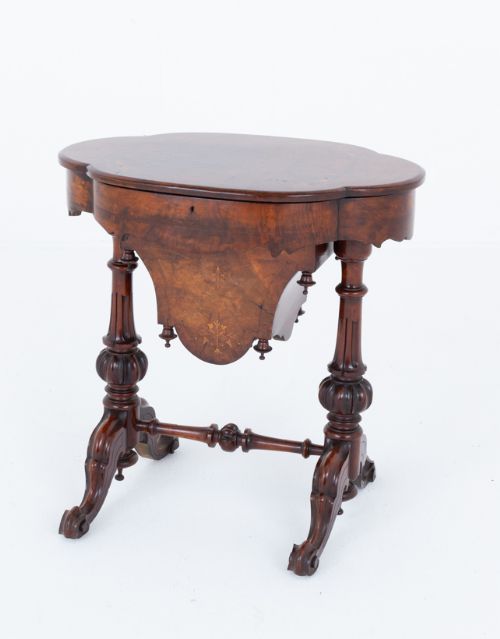

Wooden Sewing Basket
These wooden sewing basket pieces are compact household containers and work tables designed for needlework, offering collectors practical historical utility.
Wooden Sewing Basket
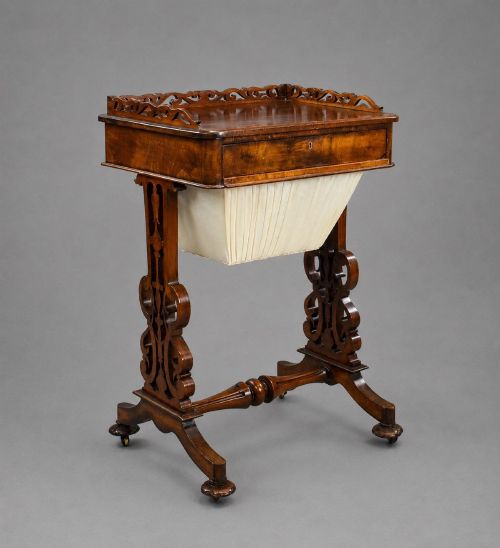
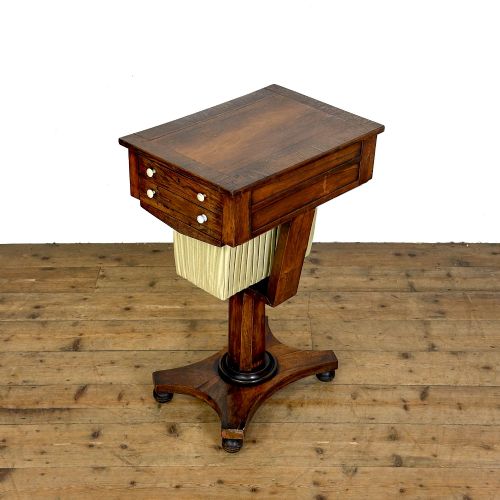
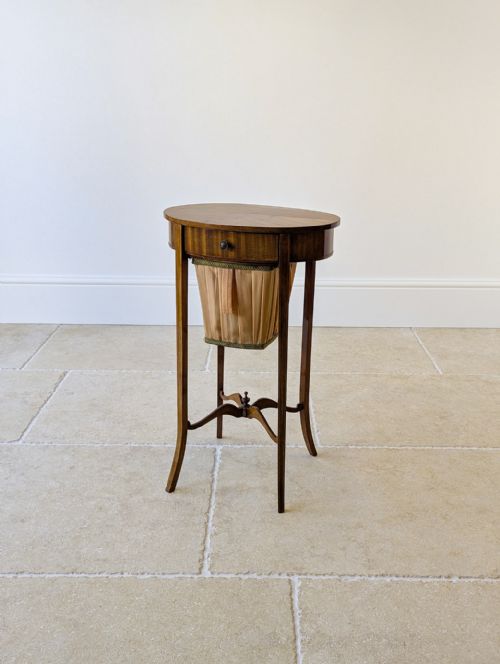
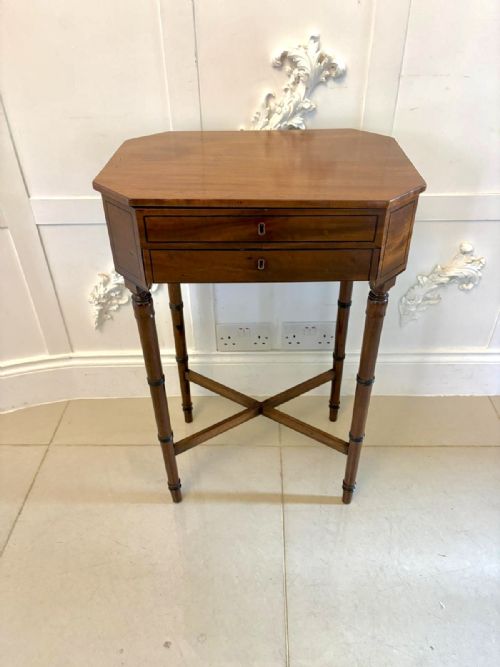
A wooden sewing basket encompasses functional work tables, boxes, caskets, and occasional side tables designed to store needlework tools and materials. These pieces range across the Regency, Victorian, and Edwardian periods, reflecting changing domestic habits of the nineteenth and early twentieth centuries.
The most common formats on this page are mahogany and rosewood work tables alongside Tunbridge Ware baskets. Buyers encounter items from the eighteen hundreds through to nineteen ten, incorporating various woods and fitted interior compartments.
Examples vary from simpler occasional side tables with sewing attachments to elaborate inlaid caskets and octagonal baskets. Each piece serves as a tactile record of period craftsmanship dedicated to domestic needlecraft.
How they were made
Construction relies heavily on dense timbers such as mahogany, rosewood, walnut, and boxwood, shaped into tables, boxes, and baskets. Cabinetmakers utilised these sturdy woods to ensure durability during daily domestic use.
Surface decoration frequently involves fine inlay work, penwork, and Tunbridge Ware mosaic techniques. Silk and fabric linings often complement the wooden structures to protect delicate sewing implements.
Wooden Sewing Basket Retail Price Guide 2026
Typical asking prices for wooden sewing basket among the pieces listed under this phrase on Sellingantiques today, from the lower quarter to the upper quarter. They describe what is for sale here now, not the wider market.
Intricate Tunbridge Ware baskets hide tiny mosaic landscapes made from thousands of individual wood strips inside their lids.
What varies in quality
Quality differentiates through the precision of timber selection, such as burr walnut or figured mahogany, and the intricacy of decorative surface work like Tunbridge Ware mosaics. Finer items demonstrate superior joinery and more complex internal compartmentalisation.
The sophistication of penwork and inlay design separates standard utility items from higher-status examples. Condition of original fabric linings and fitted interiors also influences the overall desirability of each piece.
The Wooden Sewing Basket Glossary
- Tunbridge Ware
- A form of British woodworking originating from Tunbridge Wells, characterised by mosaic designs created from thousands of tiny tinted wood blocks. This decorative technique appears on boxes and baskets from the nineteenth century.
- Work Table
- A specialised piece of occasional furniture fitted with drawers, compartments, or hanging bags for holding sewing equipment. These tables combine the function of a side table with domestic storage.
- Penwork
- A decorative method using ink applied to wood surfaces to create detailed pictorial or geometric designs. This technique is often found on early nineteenth-century boxes and caskets.
- Burr Walnut
- Timber taken from the wart or burl of a walnut tree, exhibiting swirling and highly figured grain patterns. Cabinetmakers used this prized wood for decorative veneers on Victorian furniture.
Wooden Sewing Basket: Frequently Asked Questions
What is a wooden sewing basket?
A wooden sewing basket is a container or fitted table designed to organise threads, needles, and fabric scraps. These pieces functioned as portable or dedicated stations for domestic needlecraft.
They reflect the prominence of needlework in historical households, combining practical storage with decorative cabinetmaking.
How were these items used?
Owners utilised them to keep sewing implements neat and accessible during leisure hours in the parlour or drawing room. Fitted trays and compartments kept delicate tools separated.
Over time, they evolved from utilitarian storage into decorative objects displayed on side tables.
How do I date a piece?
Dating relies on identifying timber choices, stylistic markers, and construction methods associated with periods like Regency or Victorian. Mahogany and rosewood point towards the nineteenth century.
Specific decorative traits, such as Tunbridge Ware mosaics or penwork, help narrow the timeframe further.
How do I care for wooden sewing items?
Keep them away from direct sunlight and sudden temperature changes to protect the timber and delicate veneers. Dust gently with a dry cloth.
Preserve original fabric linings by avoiding moisture and handling interior compartments with care.