




Wooden Needlework Basket
A wooden needlework basket organises the tools of sewing while bringing fine timber and period detail to a room.
Wooden Needlework Basket
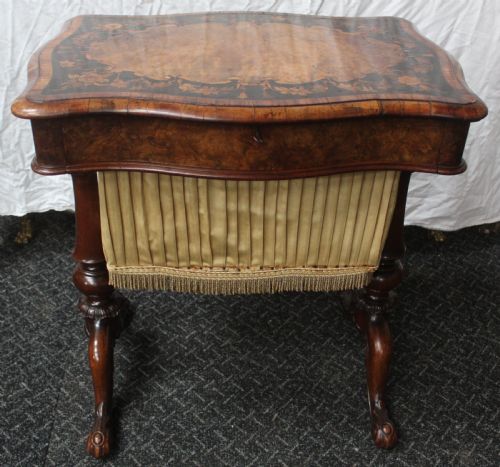
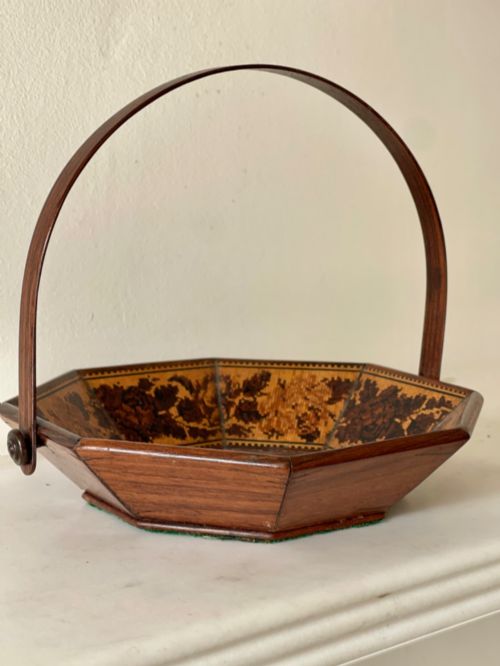
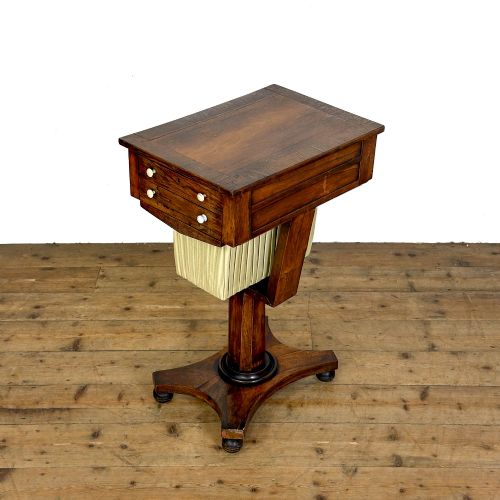
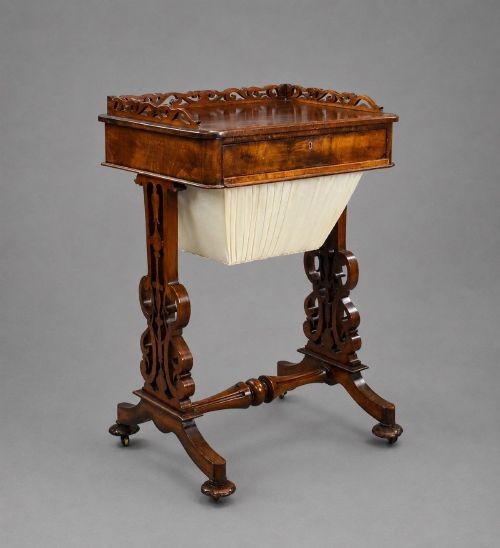
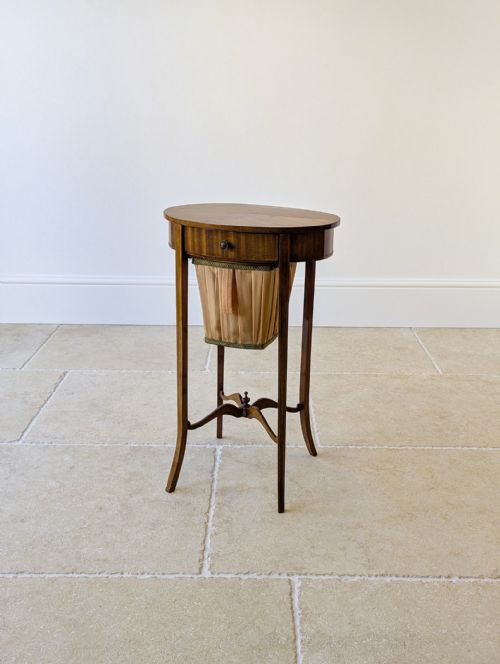
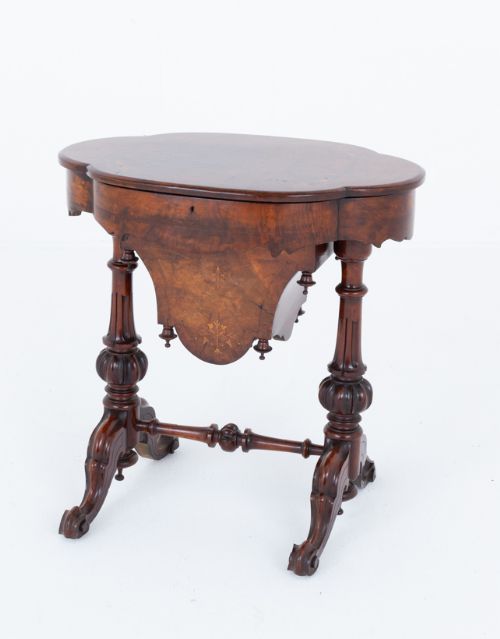
A wooden needlework basket takes several forms across the periods represented here, appearing as small table-top boxes, lidded caskets, and larger work or occasional tables fitted for sewing. These pieces served domestic interiors from the Regency era through to the Edwardian period, functioning both as useful containers and as decorative items for the home.
The versions most commonly met on this page are mahogany and rosewood work tables alongside Victorian Tunbridge Ware and inlaid specimens. Makers utilised diverse woods to build functional compartments, folding lids, and fabric drop bags designed to hold threads, needles, and cloth during hours of handwork.
How they were made
Craftsmen built these items from hardwoods such as mahogany, rosewood, and mixed hardwoods, frequently applying boxwood stringing, bone details, and intricate mosaic Tunbridge Ware decoration. Interiors often incorporated fitted trays, compartments, and suspended fabric bags to contain sewing materials.
Surfaces received fine French polishing or intricate penwork designs, while structural elements included brass hardware and drop handles. The construction balances sturdy cabinetry with delicate surface ornament suited to a parlour or withdrawing room.
Wooden Needlework Basket Retail Price Guide 2026
Typical asking prices for wooden needlework basket among the pieces listed under this phrase on Sellingantiques today, from the lower quarter to the upper quarter. They describe what is for sale here now, not the wider market.
The listings span the 1800s, Regency, Victorian, and Edwardian periods, utilising mahogany, rosewood, boxwood, and brass.
What varies in quality
Quality rests upon the selection of timber veneers and the precision of decorative techniques like Tunbridge Ware mosaic work and penwork. Pieces featuring complex internal tray fittings, original fabric components, and balanced proportions stand apart from simpler utility boxes.
The integrity of the timber joints and the crispness of inlaid boxwood lines distinguish superior examples. Age-related patination on rosewood and mahogany surfaces also contributes to the visual distinction of a piece.
The Wooden Needlework Basket Glossary
- Tunbridge Ware
- A form of British woodworking from Kent featuring microscopic tesserae of naturally coloured woods assembled to form pictorial or geometric mosaics. This technique adorned the lids of boxes and caskets.
- Work Table
- A freestanding piece of furniture incorporating drawers, compartments, or a fabric bag beneath the top designed specifically for sewing and needlework. These tables combined utility with parlour elegance.
- Penwork
- A decorative surface treatment involving inked lines and motifs drawn directly onto a prepared wooden ground. It created detailed pictorial scenes without the use of coloured veneers.
- Boxwood
- A dense, pale hardwood frequently utilised for contrasting stringing and inlay lines on darker woods like mahogany and rosewood. Its fine grain permitted precise cutting for geometric patterns.
Wooden Needlework Basket: Frequently Asked Questions
What is a wooden needlework basket?
A wooden needlework basket is a period container or fitted table designed to hold sewing tools, threads, and fabrics. These items range from tabletop caskets to freestanding work tables.
They combine practical storage compartments with decorative woodwork such as mahogany veneers, Tunbridge Ware mosaics, and inlay.
How were these pieces used?
These pieces served nineteenth-century households as functional containers for needlecraft, embroidery, and mending. The fitted interiors kept small tools organised while the surfaces sat in parlours or bedrooms.
Larger work tables also doubled as occasional tables for lamps or side placement when sewing was finished.
How do I date a piece?
Dating relies on stylistic markers, timber choices, and construction methods associated with periods like the Regency, Victorian, and Edwardian eras. Rosewood and penwork often point towards the early nineteenth century.
Later Edwardian items display lighter mahogany frames and simplified interior layouts compared to earlier ornate caskets.
How do I care for antique wood?
Care involves keeping wooden pieces away from direct sunlight and sudden changes in humidity to protect the veneers and joins. Occasional dusting with a dry cloth maintains the surface.
Harsh chemical polishes should be avoided to preserve the original polish and patination of the timber.