



19th Century Sevres Ceramic
19th century sevres ceramic pieces bring ornate French Rococo Revival elegance to interiors through hand-painted porcelain and gilt bronze mounts.
19th Century Sevres Ceramic
Buyers seeking 19th century sevres ceramic items encounter a diverse selection of vases, decorative urns, comports, and cabinet plates originating primarily from France. Many pieces on this page reflect the French Sevres style or French Chateau aesthetics, spanning the Victorian era from the 1830s through to 1900.
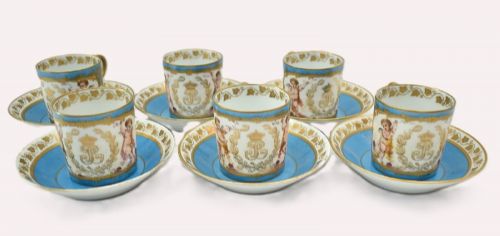
The inventory includes specialised forms such as lidded vases, table lamps, centrepieces, inkstands, and decorative trays. Works associated with makers such as Samson, Paris, alongside factory-marked or castle-marked items like Chateau des Tuileries, represent the core of these offerings.
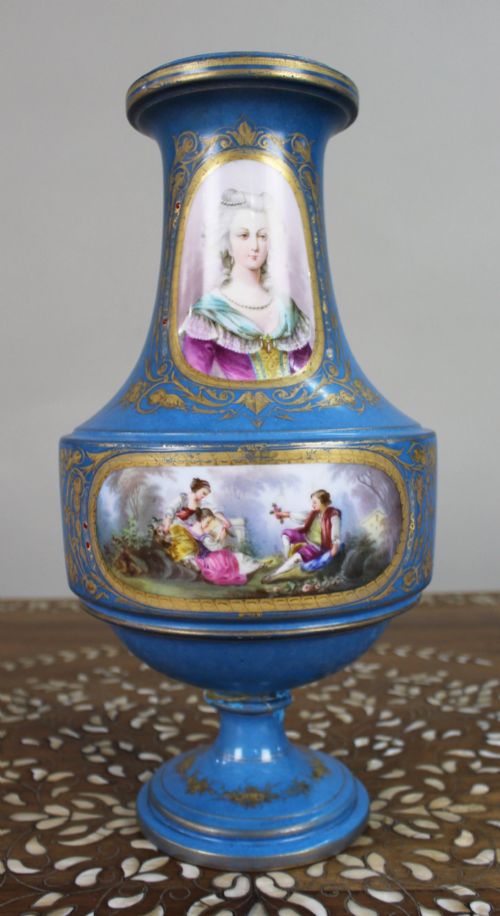
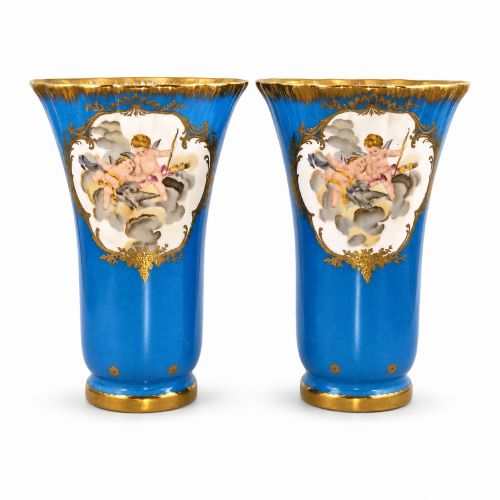
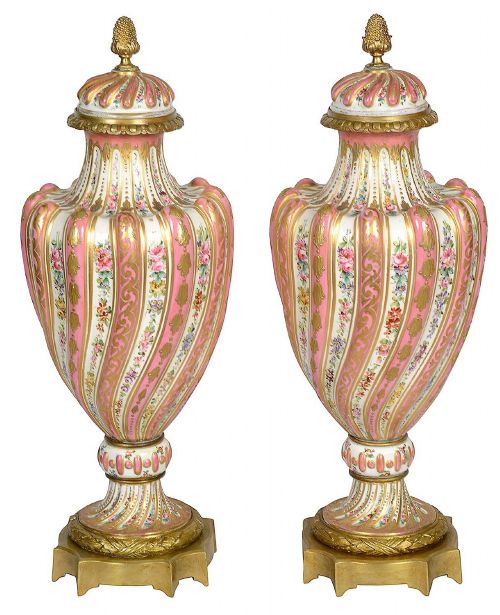
Vessels frequently display characteristic ground colours such as Bleu Céleste or pink, often decorated with hand-painted scenes, gilt detailing, and classical figures. Bisque porcelain busts and majolica urns also appear within the broader scope of these nineteenth-century ceramics.
How They Were Made
Potters shaped these objects from porcelain, occasionally utilising bisque porcelain for sculptural works like busts, while makers applied enamel and champlevé techniques for surface enrichment. Hand-painting formed the foundation for pictorial scenes and floral motifs across plates, vases, and trays.
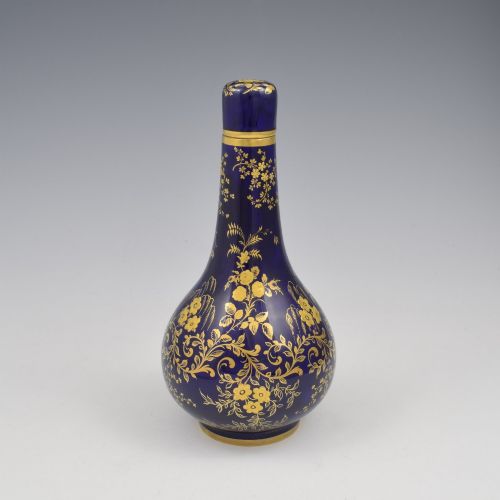
Craftsmen integrated metalwork by mounting porcelain bodies in gilt bronze, ormolu, and gilt metal, securing mounts with precision. Artisans finished the ceramic surfaces using gold leaf, gilding, and gold paint to accentuate handles, rims, and moulded panels.
Listings feature items from the 1830s through to 1900, incorporating porcelain, ormolu, and champlevé enamel in forms ranging from cabinet plates to monumental lidded vases.
What Varies in Quality
The refinement of the hand-painted artistry separates standard decorative wares from exceptional examples, particularly in the detail applied to figurative scenes and landscape panels. Finely executed pieces exhibit meticulous brushwork and subtle tonal gradation within the blue or pink ground colours.
The execution and weight of the metal mounts dictate overall quality, with heavy ormolu and champlevé enamel mountings indicating superior craftsmanship compared to simpler gilt metal alternatives. The crispness of the porcelain moulding and the richness of the gilding further distinguish the upper tier of these works.
Samson Paris
The 19th Century Sevres Ceramic Glossary
- Bleu Céleste
- A bright sky-blue porcelain ground colour popularised by French factories. It often serves as the backdrop for gilt detailing and painted reserves.
- Ormolu
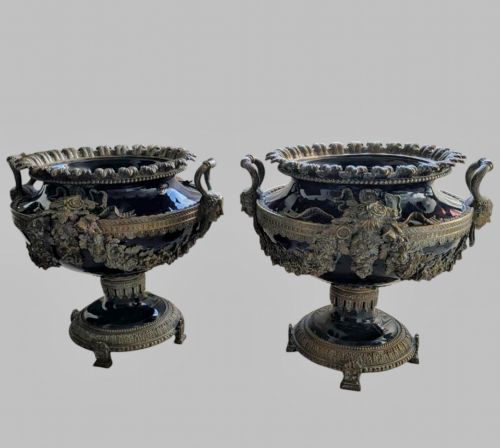
- Gilded bronze used extensively for decorative mounts, handles, and bases on nineteenth-century French porcelain vessels. It provides a bright golden contrast to the ceramic body.
- Comport
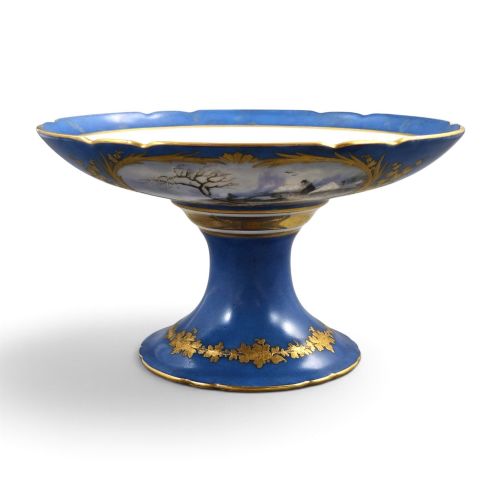
- A decorative pedestal dish or bowl raised on a foot, utilised for serving fruit or displaying confectionary on formal dining tables. In nineteenth-century interiors, they frequently functioned as decorative centrepieces.
- Tazza
- A shallow saucer-like dish mounted on a stem and foot. These ornamental vessels highlight painted scenes and gilt borders.
- Champlevé
- An enamelling technique where troughs or cells are carved into a metal surface and filled with vitreous enamel paste before firing. It frequently appears on the bronze mounts of grand nineteenth-century centrepieces.
19th Century Sevres Ceramic: Frequently Asked Questions
What is Sevres style porcelain?
Sevres style porcelain refers to decorative ceramic items produced in the manner of the famous French state manufactory, featuring rich ground colours and hand-painted details. These pieces capture the aesthetic of royal French furnishings from earlier periods.
Such items were widely produced across Europe during the nineteenth century to satisfy high demand for ornate French decorative arts.
How were nineteenth century porcelain urns used?
Nineteenth century porcelain urns and lidded vases served primarily as decorative focal points on mantelpieces, pedestals, and side tables. They demonstrated the owner's taste for classical ornamentation and fine craftsmanship.
Larger paired urns balanced formal room layouts in Victorian and Edwardian drawing rooms.
How do I care for gilt bronze mounted ceramics?
Gilt bronze mounted ceramics require gentle dusting with a soft, dry cloth to protect both the porcelain glaze and the delicate gilding. Avoid using liquid cleaners or chemical polishes which can damage the metal mounts and painted surfaces.
Keep pieces away from direct sunlight to preserve the vibrancy of hand-painted enamel colours and ground tints.
What distinguishes Victorian pieces from earlier nineteenth century items?
Earlier nineteenth century pieces often align with the French Restauration or early Victorian aesthetic, showcasing precise neoclassical or early revival motifs. Dated pieces from the 1830s and 1840s frequently display specific factory or castle marks.
Later Victorian and 1890s examples tend toward heavier ormolu mounts and more exuberant Rococo Revival interpretations.