


Hand Painted Portrait Vase
A hand painted portrait vase brings quiet character into a room, capturing human likeness across porcelain, glass, and earthenware.
Hand Painted Portrait Vase
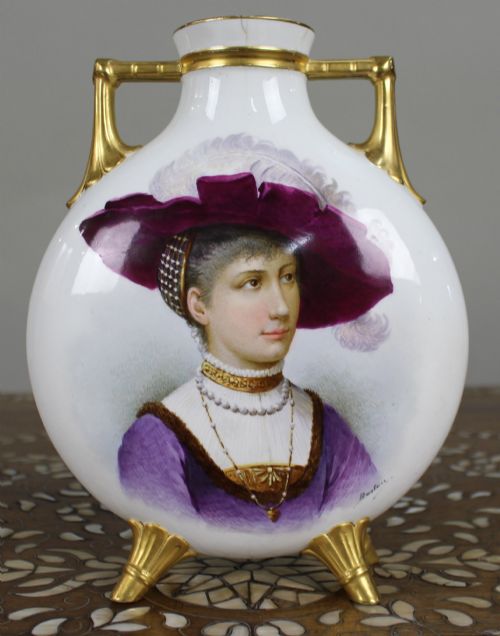
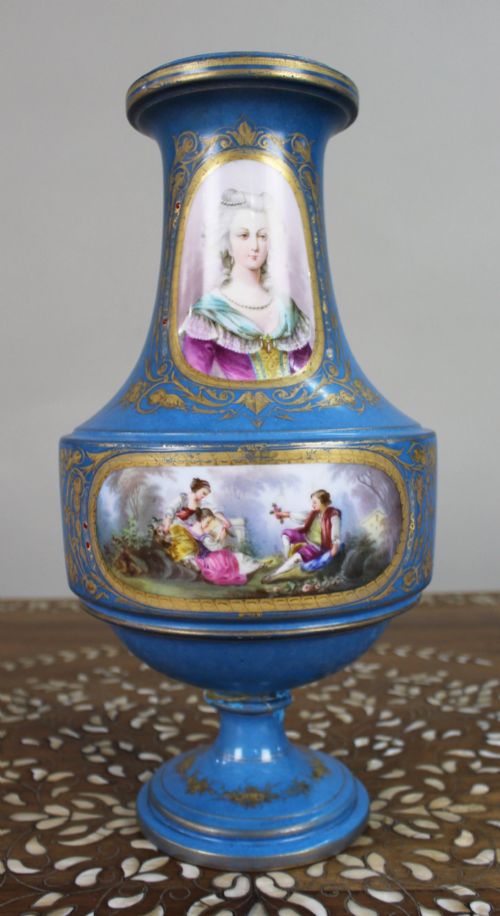
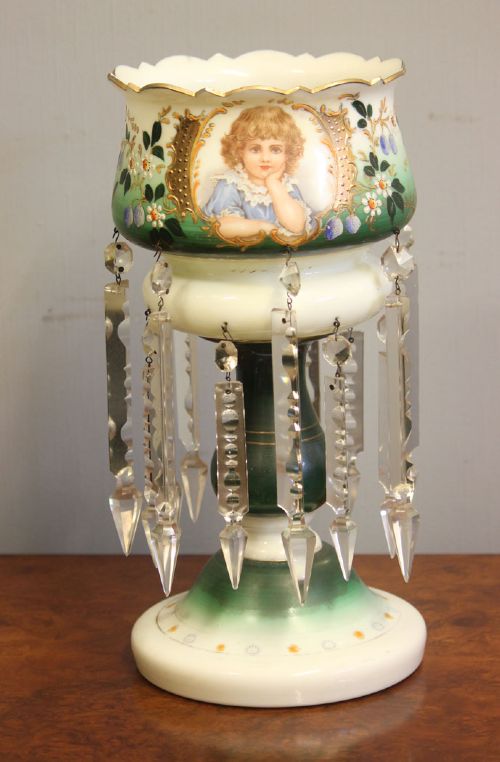
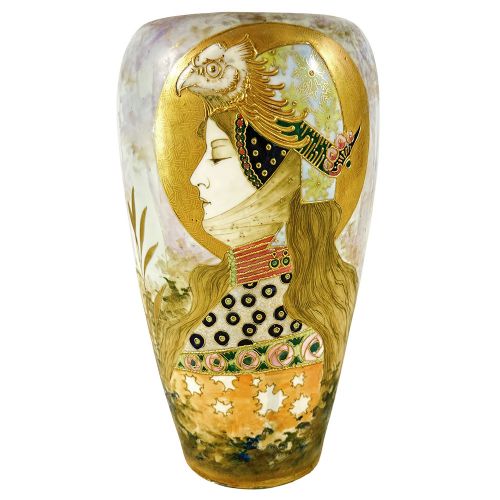
When you search for a hand painted portrait vase, you encounter decorative vessels shaped by 18th century, 19th century, and 1900 periods. The examples on this page span diverse forms including moon flasks, lidded vases, mantle lustres, and garniture sets.
The aesthetic vocabulary draws upon Victorian, Late Victorian, Rococo Revival, Neoclassical, Italian Baroque, and Art Nouveau styles. Most pieces you meet here originate from continental European factories or British workshops, combining utilitarian vessel forms with figurative miniature painting.
How they were made
Makers shaped these objects primarily from porcelain, earthenware, tin-glazed earthenware, and glass or crystal. Artisans then applied enamel paints by hand to render detailed human portraits directly onto the fired body.
Many items incorporate gold leaf and gilt highlights framing the central image, enhancing the decorative impact through meticulous metal leaf application. Bohemian glass pieces achieve depth through overlaid coloured glass layers cut away to reveal the portrait beneath.
Nineteenth-century production dominates the selection, alongside eighteenth-century Italian maiolica pieces.
What varies in quality
The ambition of the vessel form plays a role, with matched pairs, lidded urns, and complex shapes like moon flasks demanding greater skill from both potter and painter. Signed artist pieces or recognised factory attributions elevate the standing of a vessel within its period.
Baston·Nicholas Kannhauser·Reissner, Stellmacher and Kessel·Royal Vienna·Sèvres
The Hand Painted Portrait Vase Glossary
- Moon flask
- A flattened circular flask with a short neck and two small handles, often supported on a narrow foot. This shape provides a broad, flat panel ideally suited for figurative painting.
- Mantle lustre
- A decorative vase hung with cut glass prisms designed to catch the candlelight. They frequently appear in pairs or sets intended for placement on a fireplace mantelpiece.
- Garniture set
- A matched group of three or more vases or urns designed to be displayed together on a sideboard or mantel. The central piece is typically taller than the flanking companions.
- Bleu céleste
- A bright sky blue ground colour popularised by French porcelain factories during the eighteenth and nineteenth centuries. It provides a striking contrast for gilt borders and painted reserves.
- Enamel
- Opaque vitreous compositions fired onto metal, glass, or ceramic surfaces to create permanent coloured decoration. Miniature portrait painters used finely ground enamel pigments for facial details.
Hand Painted Portrait Vase: Frequently Asked Questions
Where were these pieces made?
European workshops and factories produced the majority of these vessels, with significant output from Austrian, German, French, Bohemian, and Italian centres. Each region brought distinct ceramic bodies and painting traditions to the craft.
Bohemia excelled in coloured and overlaid glass, while Vienna and Sèvres focused on fine porcelain bodies.
How do I style a portrait vase?
Position these vessels on stable surfaces where natural light can illuminate the painted details and any gilt highlights. Mantelpieces, sideboards, and glass-fronted cabinets offer secure display locations.
Keep surrounding decor understated to allow the intricate portrait work and coloured glazes to remain the visual focus of the space.
How do I identify the period?
Examine the style of the painted portrait, the shape of the vessel, and the characteristics of the ceramic or glass body. Victorian and Art Nouveau pieces display distinct decorative motifs and colour palettes that separate them from earlier eighteenth century examples.
Maker marks, signatures, and factory stamps on the base often provide definitive chronological markers.