




Bleu Celeste Urn
A bleu celeste urn brings a distinctive pale turquoise ground and rich gilt mounts into a room, capturing nineteenth-century French luxury.
Bleu Celeste Urn
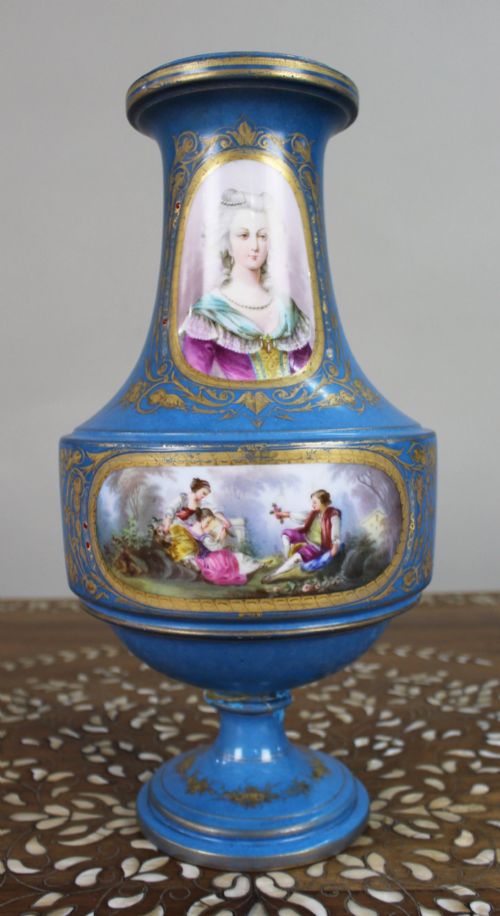
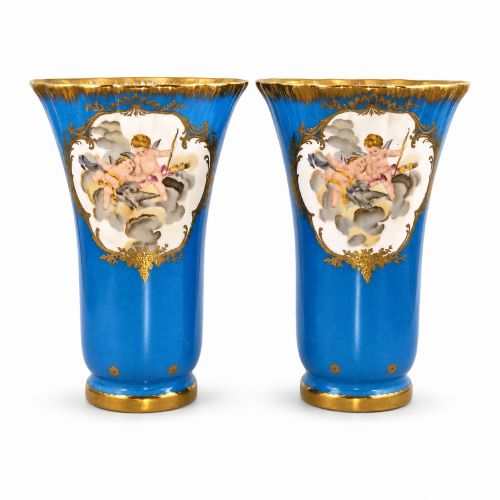
A bleu celeste urn is a decorative porcelain vessel defined by its striking sky-blue ground colour, closely associated with the French Sevres style. These pieces span the nineteenth century, including specific dates such as 1880, and emerge from French traditions and makers like Samson Paris.
Many of these objects incorporate matched pairs alongside single large centrepieces. They function primarily as decorative focal points for a mantelpiece, table, or sideboard.
How they were made
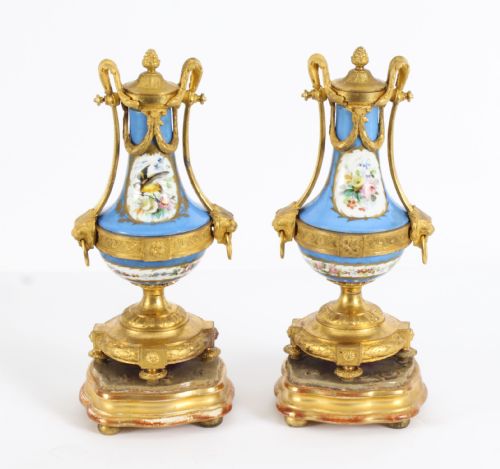
These pieces combine high-fired porcelain with cast metal mounts, predominantly utilising ormolu, gilt bronze, and gilt metal. Artisans applied gold leaf and gilt highlights to accentuate the moulded details of the porcelain bodies.
Enamel work and onyx elements frequently appear alongside the porcelain and metal components. The construction relies on traditional nineteenth-century techniques to join the ceramic bodies securely with decorative metal bases, handles, and lids.
Object forms on this page include decorative urns, comports, and table lamps styled in the French Rococo Revival taste.
What varies in quality
Quality in these pieces depends on the precision of the porcelain painting and the depth of the blue glaze. Finer examples display meticulous hand-painted details set against a smooth, even bleu celeste ground.
The standard of the metalwork also dictates the overall grade, with heavier, more sharply chased ormolu and gilt bronze mounts separating superior items from simpler productions. The integration between the ceramic body and the metal fittings shows the maker's level of skill.
Samson Paris
The Bleu Celeste Urn Glossary
- Bleu celeste
- A bright sky-blue ceramic ground colour famously utilised by the Sevres factory. It provides a vivid backdrop for gilt decoration and painted panels.
- Ormolu
- Finely ground high-carat gold applied to bronze through a mercury amalgamation process, or later via electroplating. This technique gives the metal mounts a rich, durable golden finish.
- Rococo Revival
- A nineteenth-century design style drawing on eighteenth-century French motifs such as C-scrolls, asymmetrical cartouches, and naturalistic floral elements. It heavily influences the shape and mounts of these pieces.
- Sevres style
- A decorative manner imitating the aesthetic of the royal French porcelain manufactory. It is characterised by rich ground colours, heavy gilding, and classical or pastoral painted scenes.
Bleu Celeste Urn: Frequently Asked Questions
What is a bleu celeste urn?
A bleu celeste urn is a nineteenth-century decorative ceramic vessel featuring a characteristic bright sky-blue glaze.
These pieces typically incorporate French styling and gilt metal mounts for ornamental display.
How were these urns used?
They served as decorative items for grand interiors, often displayed on mantelpieces, tables, or as centrepieces.
Some nineteenth-century examples were later converted into table lamps while retaining their original porcelain and ormolu bodies.
How do I date a nineteenth-century urn?
Dating relies on the style of the porcelain body, the manufacturing techniques of the metal mounts, and specific period markers such as 1880.
Evidence from nineteenth-century records and maker attributions like Samson Paris also help establish the chronology.