

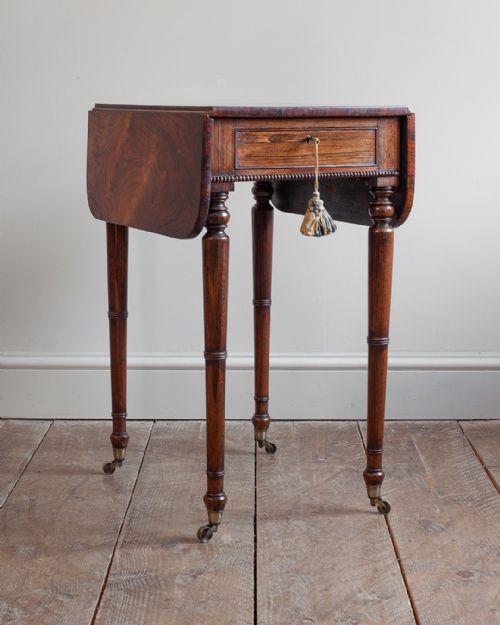
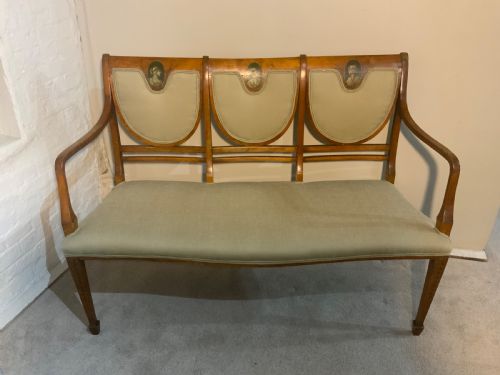
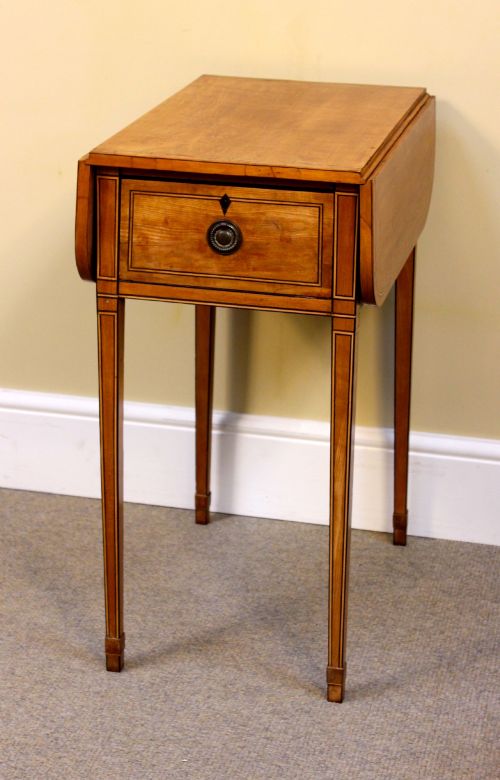
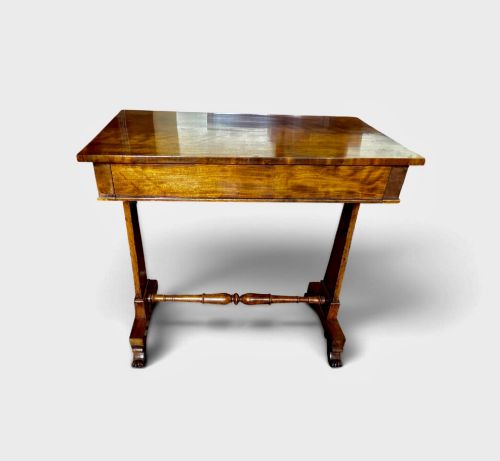
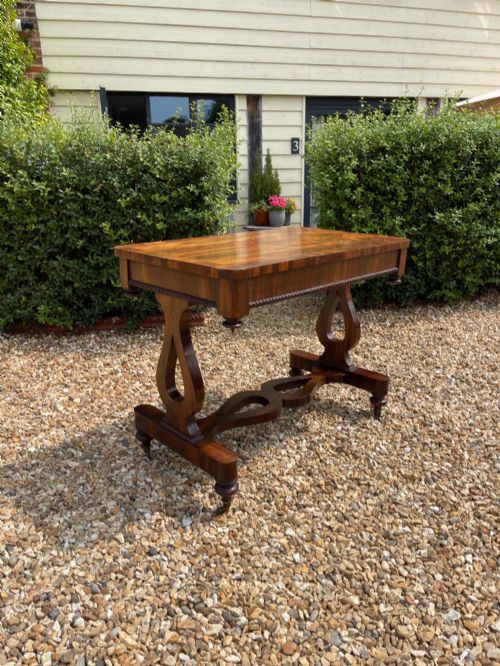
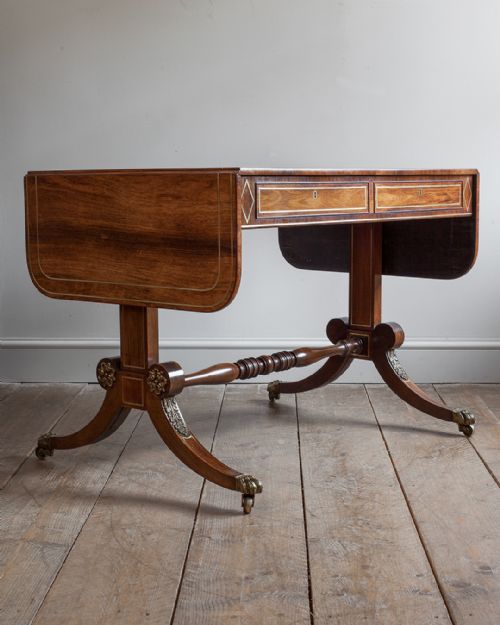

19th Century Regency Sofa
These pieces unite the clean classical lines and rich timber grains that define a 19th century regency sofa.
19th Century Regency Sofa
A 19th century regency sofa search gathers formal seating, scroll-end couches, and low settees alongside related library and sofa tables from the Georgian through Victorian periods. The selection focuses heavily on architectural timber frames, drop-leaf library pieces, and upholstered chaises longues designed for morning rooms and formal reception spaces.
Most examples originate from the early 19th century, carrying the stylistic hallmarks of the Regency, George IV, and William IV eras. Buyers encounter everything from rosewood freestanding tables to mahogany benches and country house sofas upholstered in silk or leather.
Materials and construction
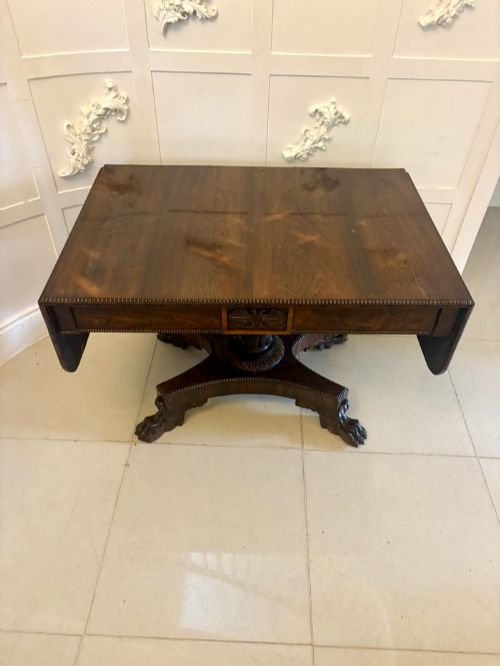
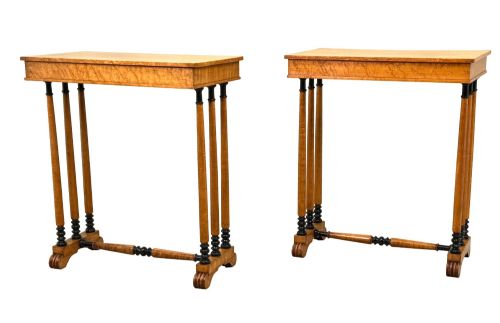
Cabinet makers relied primarily on dense, figured hardwoods like mahogany and rosewood, often enhanced with satinwood, burr oak, maple, and ebony veneers. Structural elements frequently incorporated brass inlay, giltwood highlights, and carved lion paw feet to accentuate the classical forms.
Joinery methods balanced sturdy framing with decorative finesse, utilising drop flaps, turnable tops, and elaborate scroll ends. Surfaces were finished to highlight natural grain patterns, sometimes paired with applied brass mounts, cane seating, or traditional fabric upholstery.
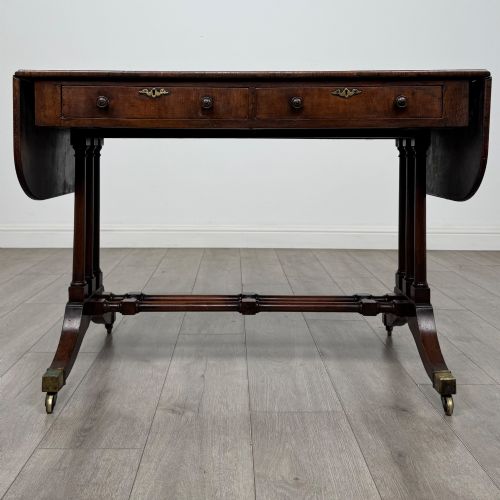
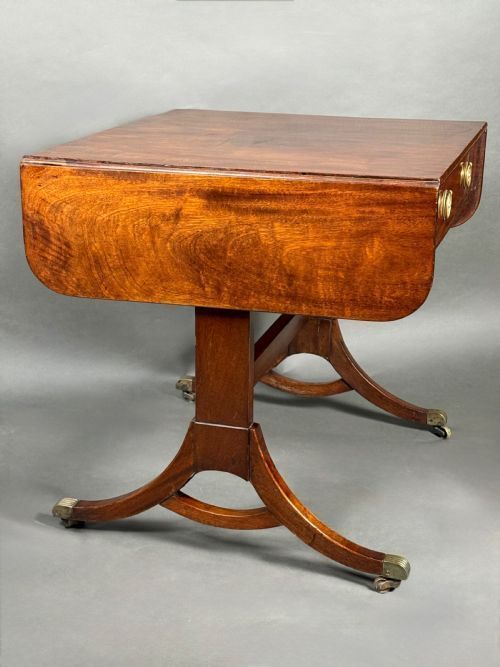
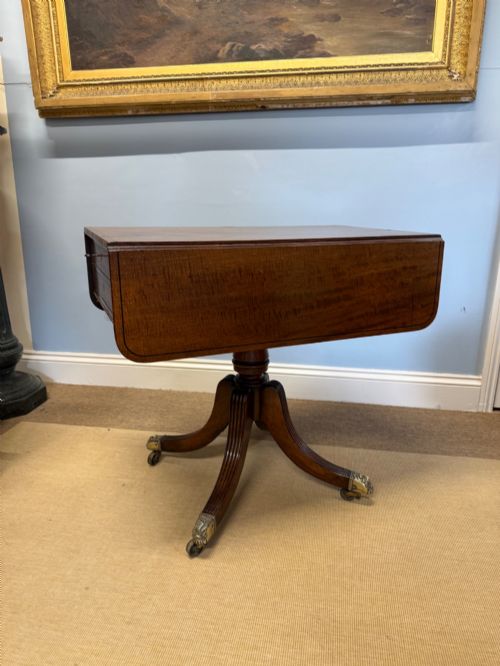
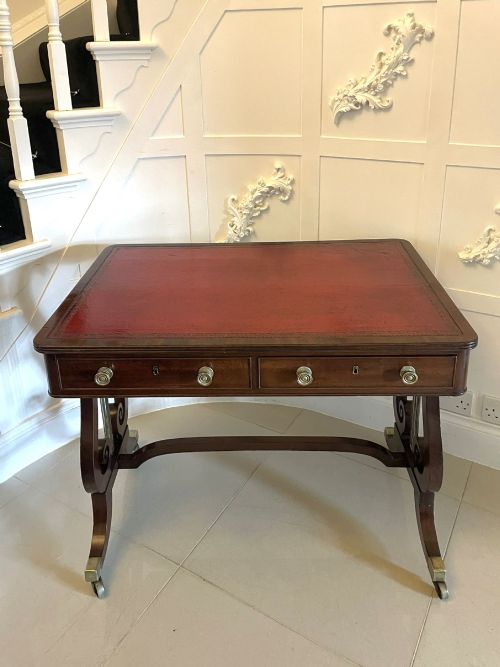
Several tables include drop flaps and clever one-drawer setups designed for morning letter-writing.
Distinctions in quality
The degree of refinement in timber selection and secondary wood usage sets finer examples apart from standard workshop output. Superior pieces display carefully matched flame veneers, intricate brass inlay, and crisply carved structural details rather than plain secondary timber.
Proportion and structural integrity define the upper tier of these items, where balanced lines and substantial weights indicate careful workshop production. The integration of specialised details, such as solid brass mounts and well-executed scroll ends, elevates a piece beyond utilitarian manufacture.
Williams and Gibton·Gillows·Jean-Joseph Chapuis
The 19th Century Regency Sofa Glossary
- Sofa table
- A rectangular freestanding table traditionally placed in front of a sofa, equipped with drop leaves on either side and usually two small drawers.
- Chaise longue
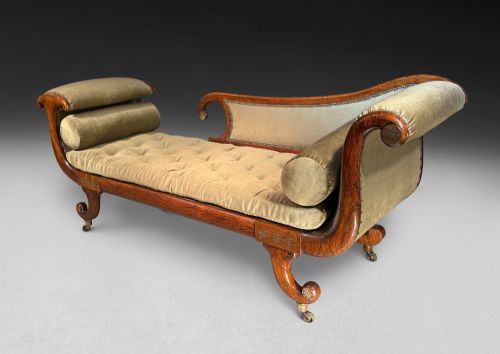
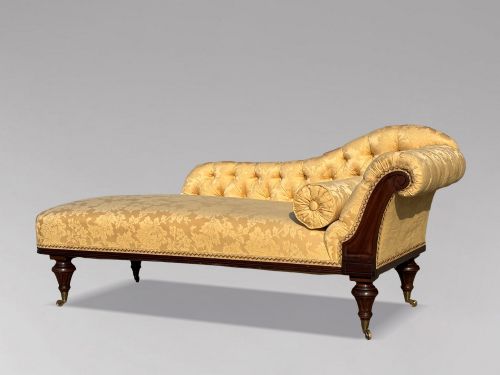
- An upholstered long chair or day bed designed for reclining, featuring a raised headrest and sometimes a single scroll end.
- Library table
- A large freestanding writing or reading table designed to be viewed from all sides, commonly finished in mahogany or rosewood with a leather insert.
- Scroll end
- A decorative furniture termination curving outward and over in a continuous scroll shape, frequently seen on arms and frame ends.
- Satinwood
- A hard, yellowish timber prized for its lustrous grain, utilised extensively for veneers and stringing on high-status tables and seating.
19th Century Regency Sofa: Frequently Asked Questions
What defines a 19th century regency sofa?
These pieces are characterised by classical proportions, scroll-end frames, and rich timber surfaces such as mahogany or rosewood. They often feature upholstered seats and subtle decorative details influenced by classical antiquity.
They serve as both practical seating and focal points in period interiors, reflecting the refined design priorities of the early 19th century.
How were these tables and sofas used originally?
Library and sofa tables were positioned flexibly within formal rooms to hold books, writing materials, or decorative objects. Sofas and chaises longues provided comfortable lounging options for reading or resting in reception spaces.
Their freestanding nature allowed them to occupy central positions in a room rather than remaining pushed against walls.
How do I care for rosewood and mahogany surfaces?
Maintain timber surfaces by keeping them away from direct sunlight and sudden temperature changes that can dry out the wood. Regular dusting with a soft, dry cloth preserves the natural sheen without damaging the historic finish.
Avoid chemical polishes and excess moisture, which can degrade antique veneers and delicate brass or leather components over time.
How do I distinguish Regency styles from later Victorian pieces?
Regency and early 19th-century pieces generally exhibit restrained classical lines, precise brass work, and lighter, elegant proportions. Later Victorian interpretations often introduce heavier carving, denser frames, and more exuberant ornamentation.
Examining the secondary timbers, construction methods, and hardware helps confirm the specific period of manufacture.