




Regency Upholstered Sofa
A regency upholstered sofa brings classical elegance and enduring comfort to a room.
Regency Upholstered Sofa
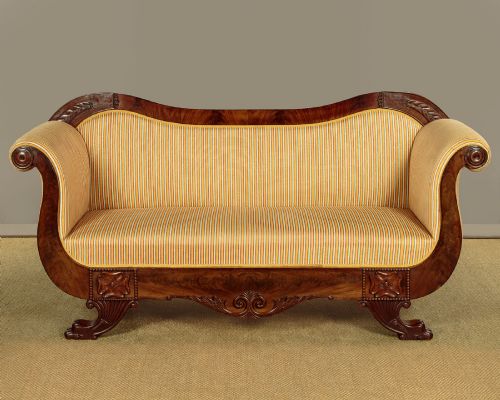
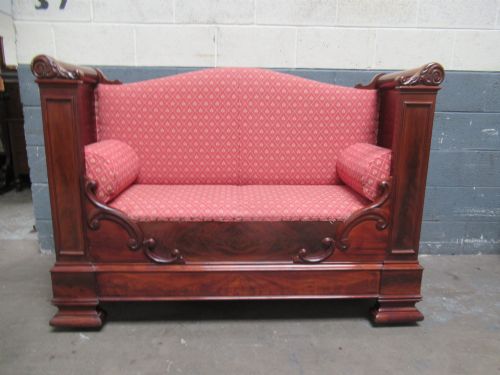
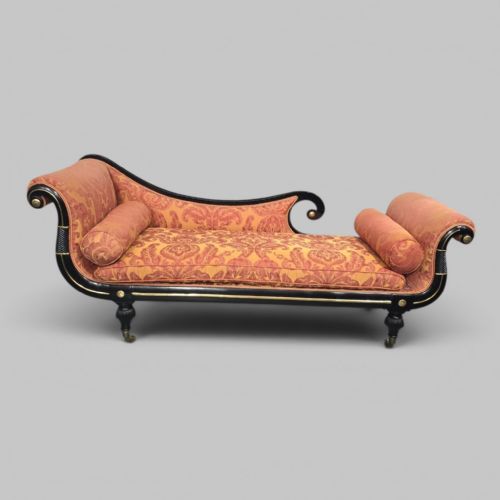
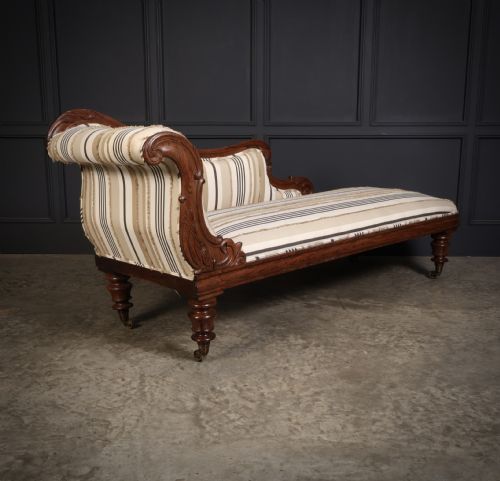
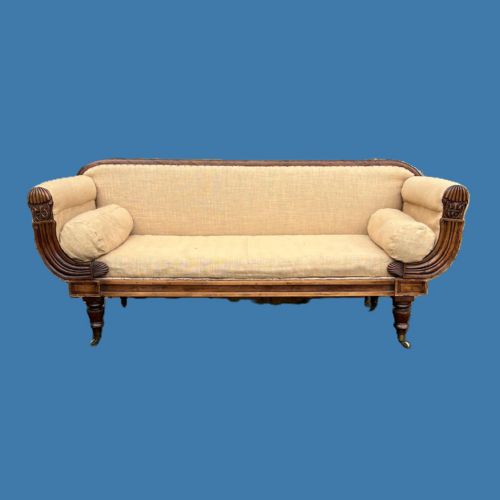
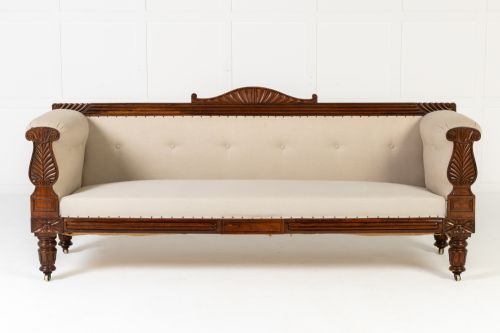
A regency upholstered sofa is a seating piece defined by classical lines, scroll ends, and substantial timber frames. Buyers seeking this phrase encounter pieces ranging from formal giltwood drawing room settees to country house mahogany couches and rosewood chaise longues. The form draws heavily on early nineteenth-century design, spanning the Regency, George IV, and William IV periods.
How they were made
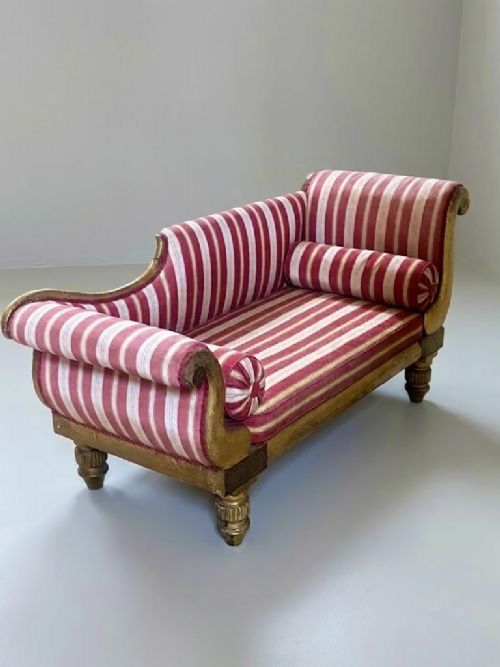
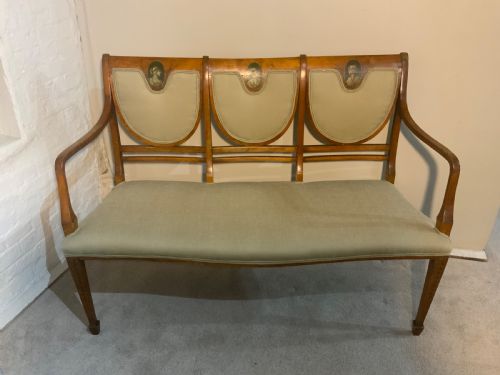
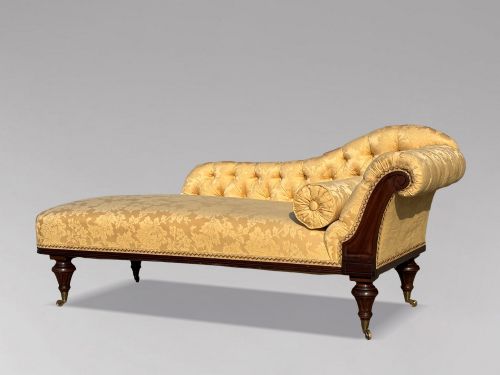
Cabinet makers built the structural frames using dense timbers like mahogany and rosewood, frequently incorporating turned wooden legs, brass castors, or carved scroll arms. Some finer examples utilise giltwood or ebonised finishes to achieve a striking visual contrast. Joinery was robust, designed to support heavy upholstery and daily use.
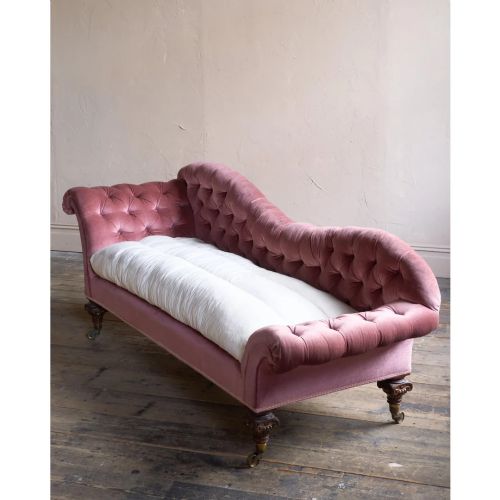
Upholstery techniques involved traditional stuffing secured over webbing and springs, finished with fabrics such as silk, velvet, linen, or hessian. Show frames allowed portions of the polished wood to remain visible around the upholstered sections, highlighting the grain and craftsmanship of the timber.
Child-sized regency upholstered sofas occasionally surface, proving that miniature lounging was serious business two centuries ago.
What varies in quality
Quality rests upon the crispness of the timber carving, the choice of primary wood, and the overall architectural proportion of the frame. Higher-tier pieces display finely figured mahogany or rosewood veneers, balanced scroll arms, and integrated decorative elements like ionic column legs or giltwood detailing. Lesser examples feature simpler turned supports and plain, unadorned frames.
The sophistication of the upholstery detailing also marks the distinction between standard and exceptional pieces. Sofas retaining thoughtful fabric choices or sophisticated show-frame construction demonstrate the elevated standards of master workshops from the period.
Thomas Hope·Gillows
The Regency Upholstered Sofa Glossary
- Scroll end
- A sofa arm or terminal that curves outward in a tight scroll. This feature defines the profile of many early nineteenth-century couches.
- Chaise longue
- An upholstered long chair designed for reclining. It combines the functions of a chair and a day bed.
- Double-ended sofa
- A sofa with identical raised scroll ends at both extremities. This balanced layout allows a person to recline comfortably facing either direction.
- Giltwood
- Timber treated with gold leaf or gold paint to give a metallic, decorative surface. It appears frequently on grander neoclassical seating.
- Show frame
- A wooden structural framework left exposed around the upholstered areas of a seat. It displays the polished grain and carving of the timber.
Regency Upholstered Sofa: Frequently Asked Questions
What distinguishes a regency sofa?
A regency sofa is characterised by classical architectural influences, scroll-end arms, and rich timber frames such as mahogany or rosewood. These pieces often feature bold curves, classical mounts, and exposed show frames.
They reflect the design trends of the early nineteenth century, drawing inspiration from ancient Greek, Roman, and French Empire styles.
Where were these sofas used?
These seating pieces were placed in principal reception rooms, drawing rooms, and libraries of large country houses and town residences. They served as formal seating for guests as well as comfortable day beds for reading and resting.
Larger double-ended examples often occupied central positions within spacious rooms rather than sitting flush against walls.
How do I care for the wood?
Maintain the timber frame by dusting gently with a dry, soft cloth and keeping the piece away from direct sunlight and heat sources. This prevents the polish and veneer from drying out or cracking over time.
Abrasive cleaners and excess moisture should be strictly avoided to preserve the original finish.
How do I distinguish periods?
Distinguishing between Regency, George IV, and William IV pieces involves looking at the scale, weight, and decorative motifs of the timber frame. Earlier Regency pieces often display lighter, refined classical lines, while subsequent William IV and early Victorian examples tend to be heavier and more robustly carved.
Changes in leg style, from slender tapered legs to heavier scroll or melon-turned supports, help indicate the chronological shift.