




Antique Regency Couch
An antique regency couch brings classical proportion and generous scroll ends to a room, offering both daybed comfort and formal presence.
Antique Regency Couch
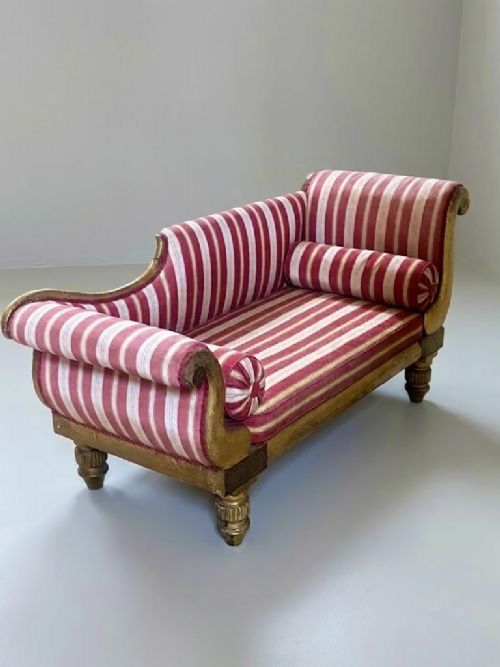
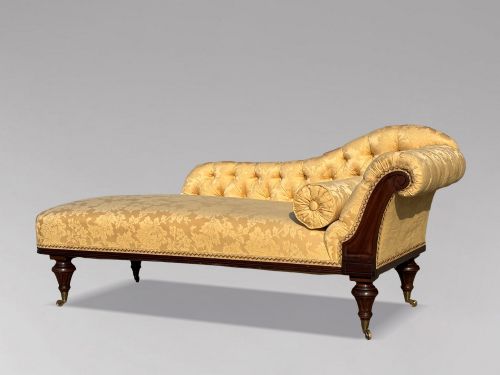
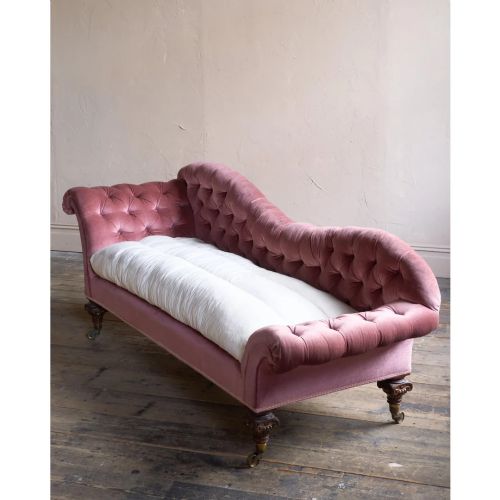
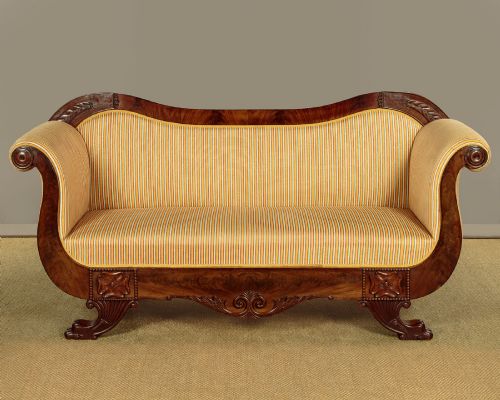
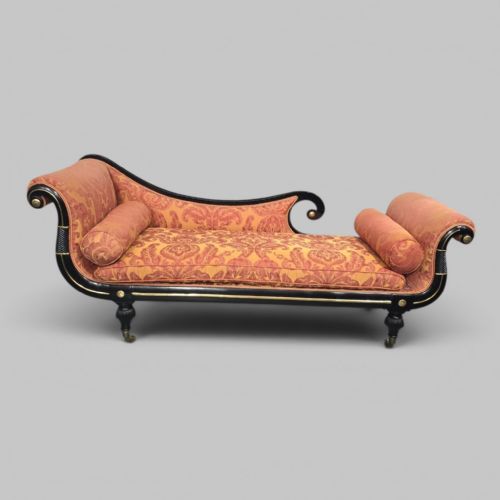
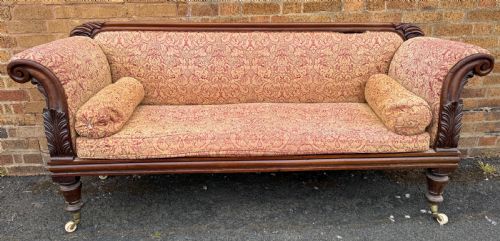
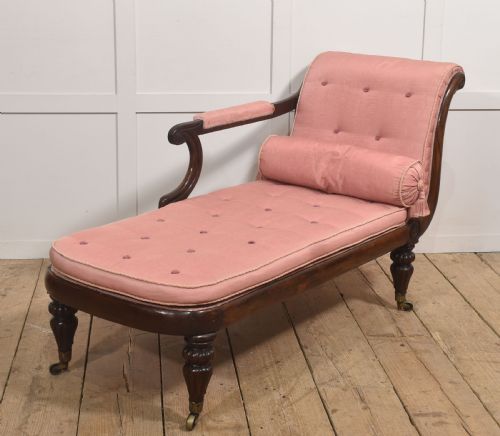
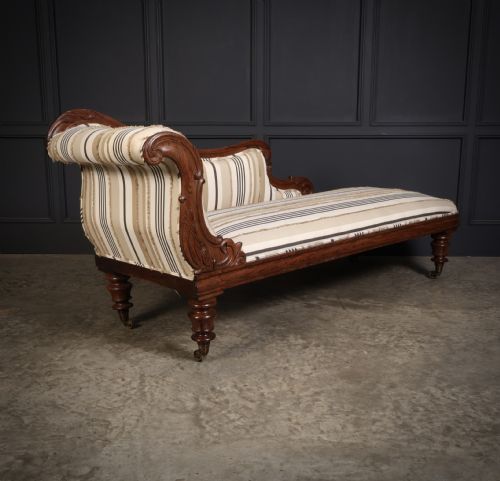
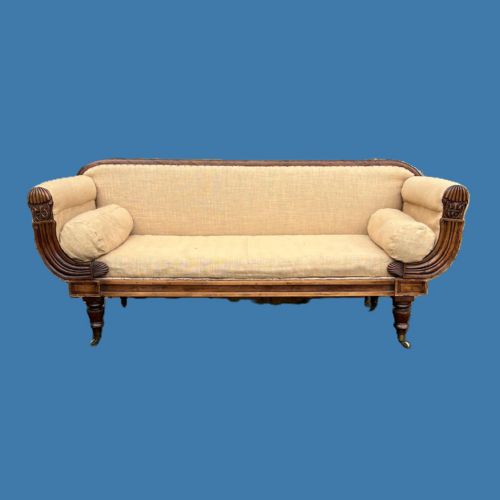
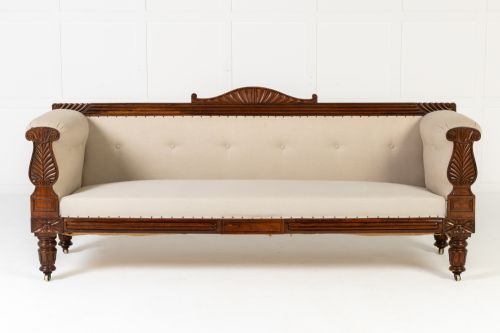
When you search for an antique regency couch, you encounter a selection of formal seating spanning the nineteenth century, including daybeds, settees, and chaise longues. These pieces embody the classical revivals of the period, often taking the form of double-ended sofas or single-ended scroll couches designed for reclining.
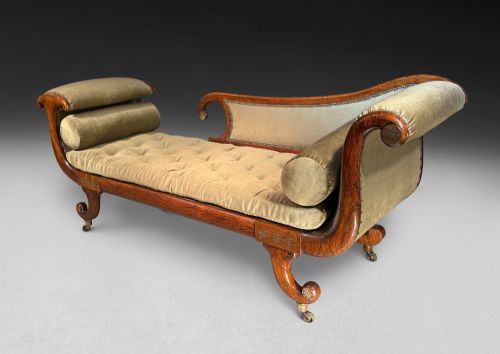
The versions most frequently met on this page date from around eighteen hundred to eighteen fifty, aligning with the Regency, George the Fourth, and William the Fourth periods. Mahogany, rosewood, and simulated rosewood dominate the structural forms, frequently paired with scroll arms, lyre shapes, or ionic column legs.
How they were made
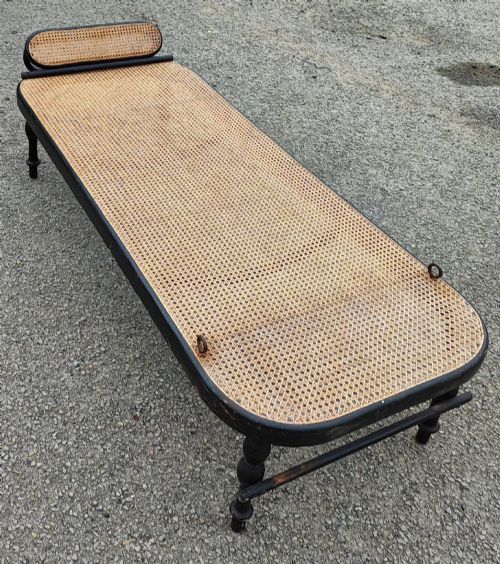
Cabinet makers constructed the frames of these couches predominantly from dense timbers like mahogany and rosewood, alongside ebonised wood and giltwood. Solid construction methods supported elaborate scroll ends and carved mahogany framing, occasionally incorporating cane seating or brass inlay.
Upholstery techniques relied on traditional stuffing finished in various fabrics, from silk and velvet to hessian and leather. Detail work often included carved wooden motifs, turned column supports, and brass detailing integrated directly into the simulated rosewood surfaces.
Periods represented span from the early nineteenth century through to the William the Fourth era.
What varies in quality
The distinction between standard examples and superior pieces rests largely on the crispness of the timber carving and the sophistication of the timber grain. Finer couches utilise solid rio rosewood or finely figured mahogany, displaying deeply articulated scroll arms and balanced proportions rather than plain secondary woods.
Design complexity also separates the tiers, with sculptural elements like lyre shapes, ionic column legs, or giltwood enrichments lifting a piece above utilitarian furniture. Original construction integrity, including retained cane work or structural joinery, marks the higher end of the surviving range.
Gillows·Thomas Hope
The Antique Regency Couch Glossary
- Chaise longue
- A long seat for reclining, combining a chair and a couch into a single piece with one raised end. These appear frequently in mahogany and rosewood.
- Scroll end
- A sweeping, upward-curving wooden arm or back termination characteristic of nineteenth-century seating design. This profile defines the classic silhouette of the period.
- Simulated rosewood
- Painted or stained timber mimicking the dark grain and rich colour of genuine rosewood. Cabinet makers utilised this finish on alternative woods during the Regency era.
- Double-ended sofa
- A couch featuring symmetrically raised scroll ends at both extremities, allowing a person to recline facing either direction. Examples often emerge in Irish and English country house collections.
- Daybed
- An elongated seating form intended for resting during daylight hours, sometimes incorporating cane panels or an open wooden frame. These pieces bridge the function of a bed and a settee.
Antique Regency Couch: Frequently Asked Questions
How do I identify a true Regency couch?
Look for specific classical design markers such as scroll ends, lyre shapes, and robust mahogany or rosewood framing. Proportions tend to reflect ancient Greek or Roman architectural influences.
Dates generally cluster around the early nineteenth century, aligning with the Regency and George the Fourth periods. Finer details often include brass inlay or simulated rosewood finishes.
Where should I place a chaise longue?
These pieces suit drawing rooms, studies, or large bedrooms where their extended length can sit parallel to a wall. Their asymmetrical profile makes them effective as standalone statement furniture.
Ensure adequate floor space around the scroll ends to let the silhouette remain visible. Pairing them with a low table creates a practical reading corner.
Are these couches comfortable for daily use?
Many historical frames offer surprising support, though comfort largely depends on the current state of the interior upholstery and springing. Traditional stuffing methods create a firm sit compared to modern deep-cushioned sofas.
Reclining against the scroll end works well for reading or resting. Buyers planning heavy daily use often assess whether the internal webbing requires renewal.