


Mahogany Scroll End Sofa
A mahogany scroll end sofa brings classic nineteenth century proportions and rich timber grain to a drawing room or library.
Mahogany Scroll End Sofa
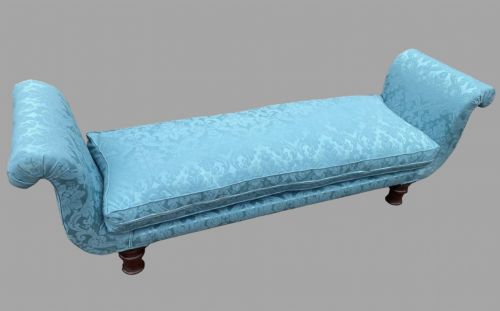
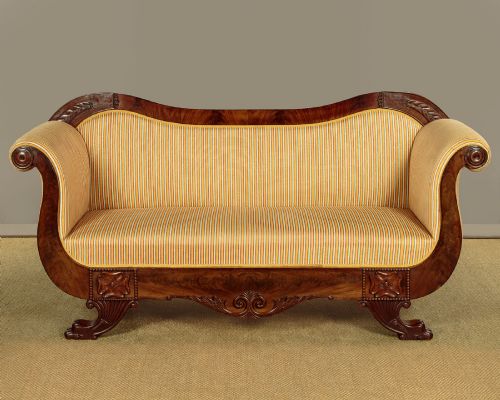
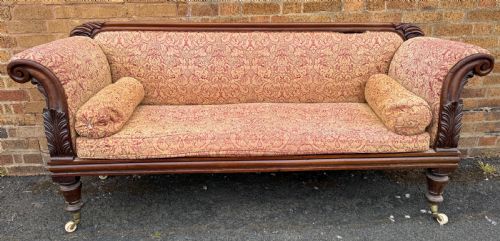
A mahogany scroll end sofa stands as a principal seating form from the nineteenth century, uniting architectural timber frames with sweeping, scroll-carved terminals. When searching for a mahogany scroll end sofa, buyers encounter pieces spanning the Regency, William IV, and Victorian periods, often displaying classical lines influenced by French Empire and English design. These items appear in various formats including double-ended settees, daybeds, and show wood frames suited for formal or domestic interiors.
The most common examples on this page date from the early to mid-nineteenth century, built with deep mahogany frames and prominent scrolled ends. Many survive with traditional upholstery, damask, or fabric coverings, while others present bare timber frames awaiting renewed textile work. The selection reflects diverse regional cabinet-making traditions, including notable Irish interpretations alongside standard English workshop output.
Materials and construction methods
Cabinet-makers relied heavily upon dense, figured mahogany timber for the structural framework, utilising its strength to support expansive scroll ends and show wood borders. Brass details and subtle inlay occasionally accent the primary wood structure, adding contrast to the dark polished surfaces.
Upholstered sections incorporated traditional stuffing and springs secured beneath fabric, silk, or damask upholstery. Carved wooden elements, such as lyre shapes or scroll motifs, required skilled hand-chiselling directly into the solid mahogany framing.
Early nineteenth-century makers designed scroll ends large enough to accommodate elaborate silk cushions and voluminous morning coats.
Distinctions in craftsmanship
The degree of hand-carved detail upon the show wood frame and scroll terminals distinguishes standard production from superior pieces. Crisp execution of classical motifs, such as acanthus leaves or moulded scrolls, indicates skilled workshop origin.
Timber selection governs the visual depth of the sofa, with highly figured, rich mahogany grain elevating the overall presence. Solid structural integrity of the main frame and well-proportioned double-scroll symmetry mark the upper tiers of nineteenth-century manufacture.
The Mahogany Scroll End Sofa Glossary
- Scroll end
- A sweeping, curved wooden terminal at one or both ends of a sofa. This characteristic nineteenth-century feature mimics classical scrollwork found in ancient Grecian and Roman furniture.
- Show wood
- Exposed polished timber framing that remains visible around the upholstered portions of a settee. It displays the grain and carved details of the mahogany structure.
- Double ended
- A sofa configuration featuring scroll terminals of equal height at both ends, allowing a user to recline comfortably against either side. This symmetrical layout gained immense popularity during the Regency and William IV periods.
- Lyre shaped
- A specific backrest or arm configuration resembling the ancient musical instrument. The curved wooden frame creates open-work symmetrical loops reminiscent of string attachment points.
- Damask
- A reversible figured fabric traditionally woven with intricate patterns, frequently utilised for historical upholstery. It provides a subtle sheen that complements polished nineteenth-century mahogany timber.
Mahogany Scroll End Sofa: Frequently Asked Questions
How do I date a mahogany scroll end sofa?
Dating relies primarily on the structural characteristics, carved motifs, and framing proportions visible across different nineteenth-century eras. Regency examples tend to exhibit lighter, classically inspired frames, whereas William IV and Victorian versions often present heavier timbers and bolder scrollwork.
Examining the underlying construction methods and upholstery foundation also helps place the piece within a specific decade. Comparing the piece against documented examples from the archive aids in narrowing down the manufacturing period.
Were these sofas used for sleeping?
These seating forms served primarily for daytime resting, reading, and formal lounging in grand drawing rooms. Their generous lengths and supportive scroll ends allowed occupants to recline comfortably without retiring to a bed.
Some variants, such as daybeds and chaise longues, were specifically engineered for recumbent posture. They bridged the gap between formal seating and functional day furniture in nineteenth-century homes.
How should I care for the mahogany frame?
Preserving the timber involves maintaining consistent indoor humidity and protecting the polished surface from direct sunlight. Occasional dusting with a soft, dry cloth prevents particulate accumulation without harming the antique finish.
Harsh chemical polishes should be avoided in favour of traditional beeswax applied sparingly. This maintains the natural lustre of the mahogany grain over decades of daily use.
What does a frame for upholstery mean?
A listing noting a sofa is intended for upholstery indicates that the internal stuffing and exterior fabric require complete replacement. This provides an opportunity to select bespoke textiles that match modern interior colour schemes.
Buyers receive the foundational timber structure and springs, leaving the decorative textile finish entirely customisable. This approach is common for nineteenth-century seating requiring restoration.