


Regency Style Daybed
A regency style daybed offers a graceful spot for daytime rest, bringing classic nineteenth-century elegance and architectural forms into a modern room.
Regency Style Daybed
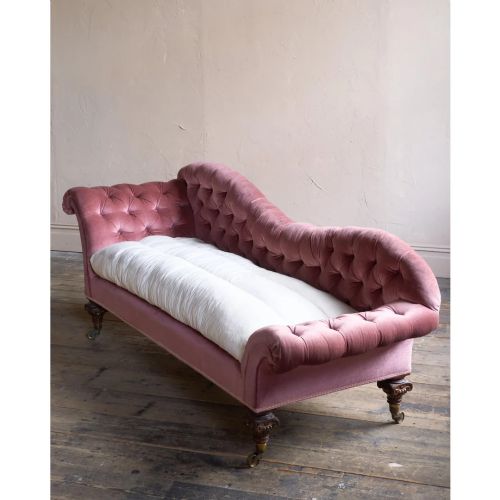
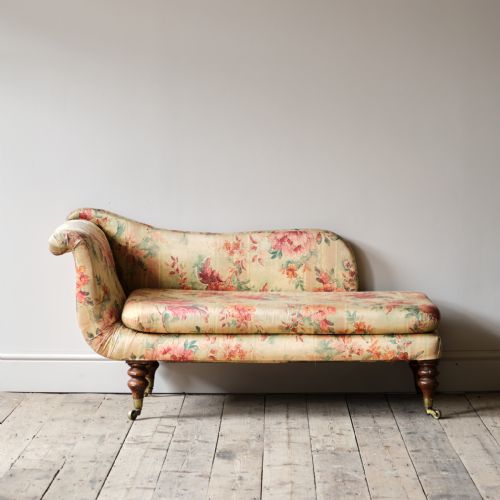
When you search for regency style daybed, you encounter nineteenth-century chaise longues, scroll end sofas, settees and window seats designed for reclining and formal seating.
The versions you are most likely to meet on this page span the Regency period and the wider nineteenth century, alongside later revivals from nineteen hundred.
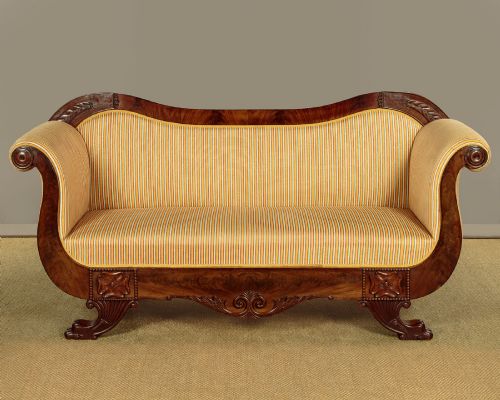
These forms range from solid mahogany scroll end couches and cane seated settees to Anglo-Indian designs and walnut framed window seats.
How they were made
Cabinetmakers utilised dense timbers such as mahogany, ebony, rosewood and walnut, often pairing carved wooden frames with woven cane seating.
Upholstery fabric and velvet provided soft padding for scroll end couches, while brass details accented column legs and structural joints.
Listings feature nineteenth century materials including mahogany, ebony, rosewood, walnut, brass, cane and velvet across various chaise longue and settee forms.
What varies in quality
Quality rests on the crispness of the carving, the selection of figured timbers like rio rosewood and ebony, and the integrity of the structural joinery.
Pieces that display refined proportions, such as balanced scroll ends and well-executed Ionic column legs, stand apart from simpler variations.
Gillows
The Regency Style Daybed Glossary
- Chaise Longue
- An upholstered long chair designed for reclining, combining a chair seat with an extended footrest. It serves as a principal seating and resting form in nineteenth-century interiors.
- Scroll End
- A sweeping, curved wooden terminal on the arm or back of a sofa or daybed. This characteristic shape defines much of the Regency aesthetic.
- Cane
- Woven peeled rattan or similar material forming a light, resilient seat or back panel. It appears on lighter seating forms and Anglo-Indian pieces.
- Bergere
- An enclosed upholstered armchair or seat with wooden framing. Examples often feature cane panels on the sides or back.
Regency Style Daybed: Frequently Asked Questions
What is a regency style daybed used for?
These pieces serve as daytime lounging furniture, combining the upright support of a settee with the reclined length of a chaise longue.
They function well in living rooms, studies and large bedrooms as both decorative focal points and practical resting spots.
How do I identify a Regency scroll end sofa?
Look for sweeping wooden arms that curve outward like scrolls, often paired with low backs and turned or classical column legs.
Timbers like mahogany and rosewood predominate, frequently dating from the early nineteenth century around eighteen twenty.
Are caned daybeds authentic to the period?
Caned seating appears frequently on nineteenth-century pieces, including Anglo-Indian imports and lighter settees.
The woven panels provide breathability and visual lightness in contrast to heavy upholstered frames.
How do I live with a nineteenth-century daybed?
Position the piece where its profile can be appreciated from multiple angles, such as floating in a room or against a long wall.
Protect delicate fabrics and cane panels from direct sunlight and excessive dryness to preserve the timber and textiles.