
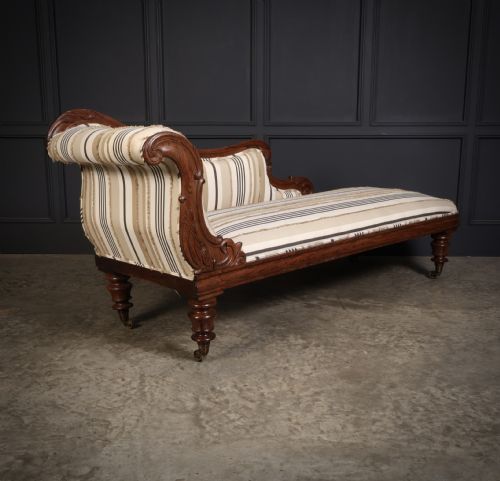

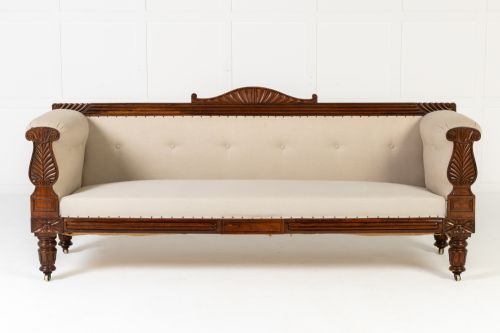


Dark Wood Regency Couch
A dark wood regency couch brings architectural line and figured grain into a room, offering the long, single-ended form that defined formal seating of the period.
Dark Wood Regency Couch
When you search for a dark wood regency couch, you encounter nineteenth-century forms designed for reclining, typically categorised as chaise longues, country house sofas, or upholstered settees. These seating pieces emerge from the Regency and William IV eras, capturing the monumental yet classical aesthetic of the period through distinct wooden frames.
The versions you are most likely to meet on this page are rosewood or mahogany chaise longues and large sofas, often featuring exposed timber frames alongside fabric, hessian, or cane seating. Many examples span the nineteenth century, including grand country house items and simpler simulated rosewood variations.
Makers of the era utilised rich dark timbers to anchor grand interiors, shaping the wood into scrolling ends and carved supports that remain the hallmark of these designs. Whether configured as a chaise lounge or a larger sofa intended for fresh upholstery, each piece reflects the classical revival tastes of early nineteenth-century cabinet makers.
How they were made
Cabinet makers built these frames using solid rosewood, Rio rosewood, or mahogany, often selecting timber for its deep colour and striking natural grain. Where solid exotic hardwoods were not deployed, workshops applied simulated rosewood finishes over alternative woods to achieve the fashionable dark aesthetic.
Construction methods combined robust joinery with decorative carving, shaping the wood into scrolled arms and sweeping headrests that supported the characteristic asymmetric form of the chaise longue. Seating foundations relied on sturdy wooden frames integrated with cane work, hessian, or traditional upholstery webbing to hold the padding.
The listings here feature nineteenth-century furniture built from rosewood, mahogany, and simulated rosewood, spanning both the Regency and William IV periods.
What varies in quality
Quality in these pieces rests upon the selection and handling of the timber, distinguishing deeply figured solid rosewood or carved mahogany from simpler or simulated surfaces. The depth of the carving and the architectural proportion of the frame dictate whether a piece holds a commanding presence in a room.
The integrity of the original wooden structure and the sophistication of its joinery separate standard production from exceptional country house examples. Finer pieces demonstrate careful attention to the grain alignment across prominent curves and scrollwork, ensuring the timber remains the primary visual asset.
The Dark Wood Regency Couch Glossary
- Chaise longue
- An upholstered seating unit with a backrest at one end and a single raised arm, designed for reclining in nineteenth-century drawing rooms. This form provides an elongated seat intended for daytime rest.
- Simulated rosewood
- A painted or stained surface treatment applied to common woods to mimic the rich, dark grain patterns of genuine rosewood. This technique allowed cabinet makers to achieve an expensive look at a lower material cost.
- Rio rosewood
- A dense, highly figured tropical hardwood harvested in Brazil and prized for dark, contrasting grain lines during the nineteenth century. Furniture constructed from this material possesses exceptional weight and depth of colour.
- William IV
- A transitional design period spanning the 1830s, characterised by heavier proportions and bolder carving than earlier Regency work. Pieces from this era often feature robust mahogany or rosewood frames.
- Cane seating
- A woven grid of split rattan used to form a resilient and breathable seat panel within a wooden frame. This method lightens the visual weight of heavy nineteenth-century wooden furniture.
Dark Wood Regency Couch: Frequently Asked Questions
What is a regency couch?
A regency couch is a nineteenth-century seating form, usually encountered as a chaise longue or a country house sofa made from dark woods like rosewood or mahogany. These pieces feature classical lines and asymmetric scrolled ends designed for formal reception rooms.
They reflect the aesthetic tastes of the Regency and William IV periods, prioritising bold wooden frames and luxurious upholstery or cane panels.
How were these sofas used?
These pieces served as daytime lounging furniture in grand drawing rooms and libraries, allowing occupants to recline without retiring to a bedroom. Their sculptural forms meant they were often placed away from walls to be viewed in the round.
They combined decorative impact with functional seating, acting as focal points in nineteenth-century domestic interiors.
Are these pieces made of solid wood?
Many examples utilise solid rosewood, Rio rosewood, or carved mahogany for their primary structural and visible framing components. The weight and grain depth of these hardwoods define the upper tier of nineteenth-century seating.
Alternative pieces employ simulated rosewood finishes over secondary timbers, providing the dark aesthetic through painted or stained surface techniques.
How do I identify a William IV piece?
William IV furniture displays heavier proportions and bolder, more robust carving compared to the lighter, classical restraint of earlier Regency design. You will typically notice substantial mahogany or rosewood frames with prominent scrollwork.
This transitional style spans the period immediately following the Regency, bringing a heavier architectural presence to nineteenth-century seating.
Can I use modern fabric for upholstery?
These frames readily accept contemporary fabrics, allowing you to tailor the upholstery to modern interior schemes while preserving the historic timber structure. Many pieces are acquired specifically for re-covering to match existing decor.
Choosing appropriate textiles ensures the finished seating respects the monumental scale of the nineteenth-century frame.