





19th Century Reading Table
These pieces are a 19th century reading table, built for domestic study and leisure, and a buyer wants one for its adjustable timber design and practical surface.
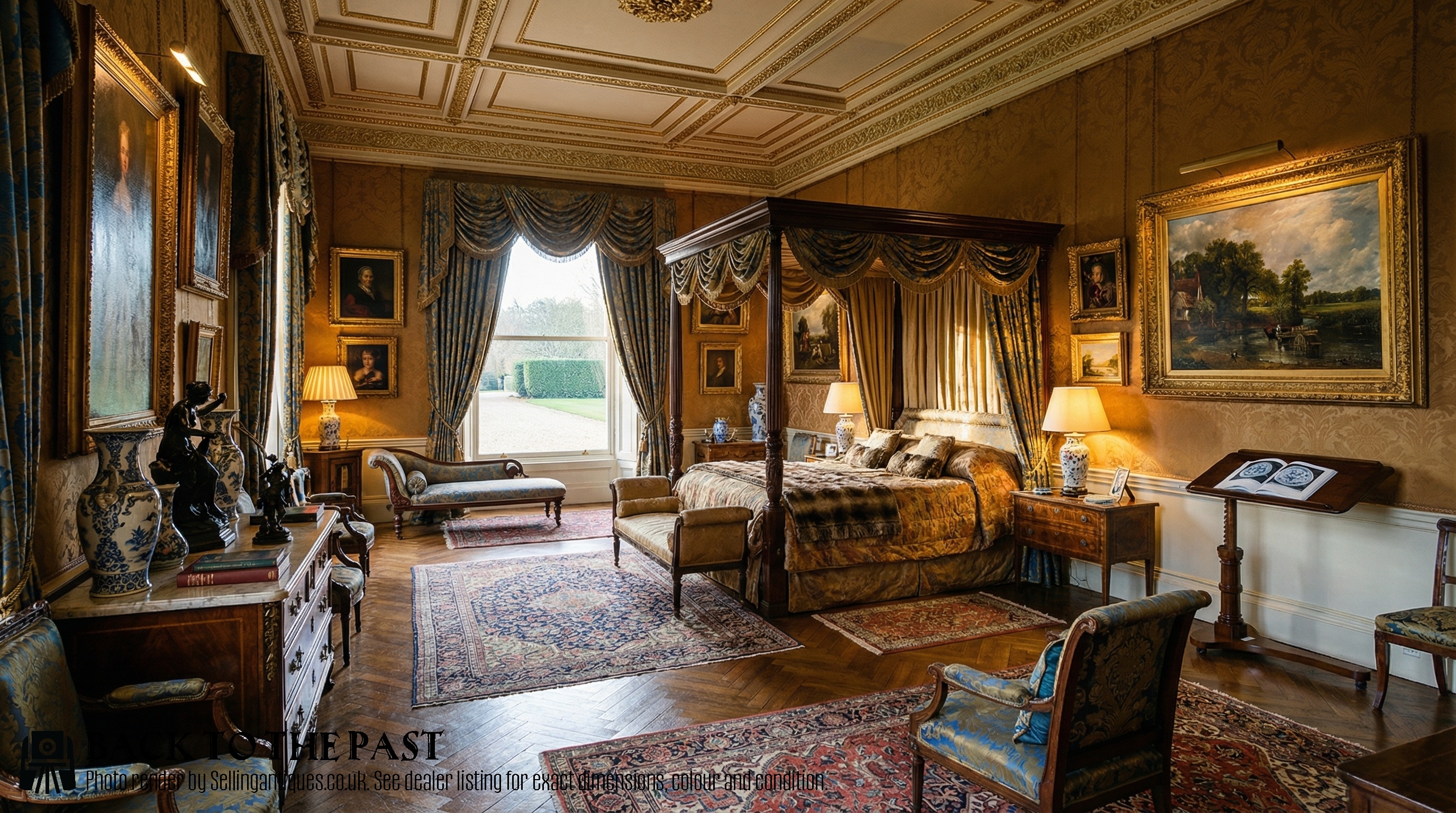
19th Century Reading Table
A 19th century reading table serves as a dedicated support for books, writing materials, and newspapers in the home. The most frequent versions on this page are constructed from mahogany and rosewood, often featuring adjustable stands or rising surfaces dating from the Regency and Victorian periods.
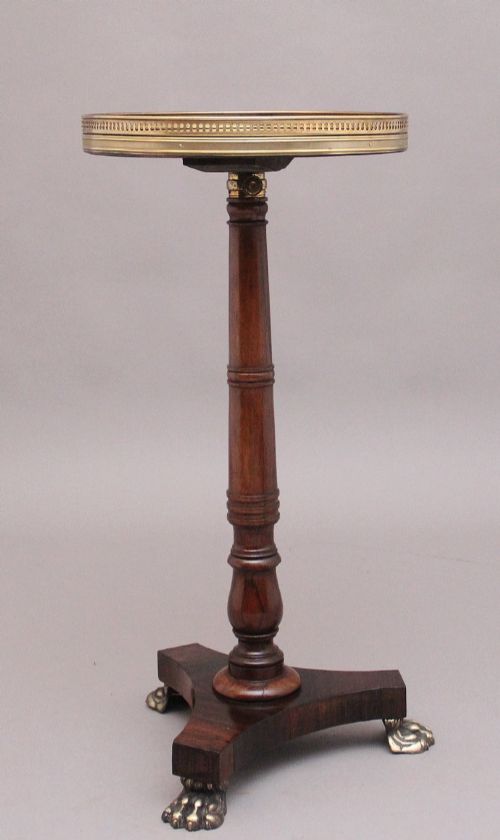
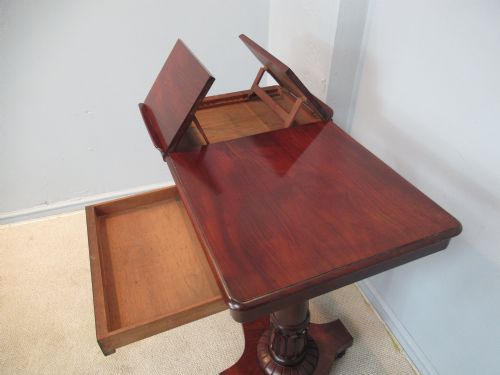
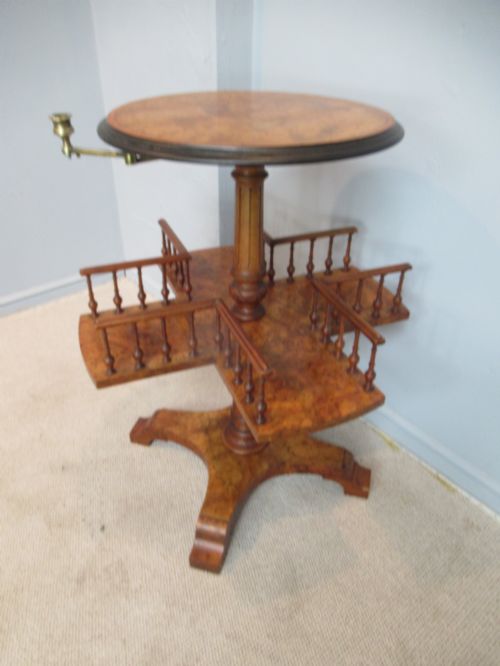
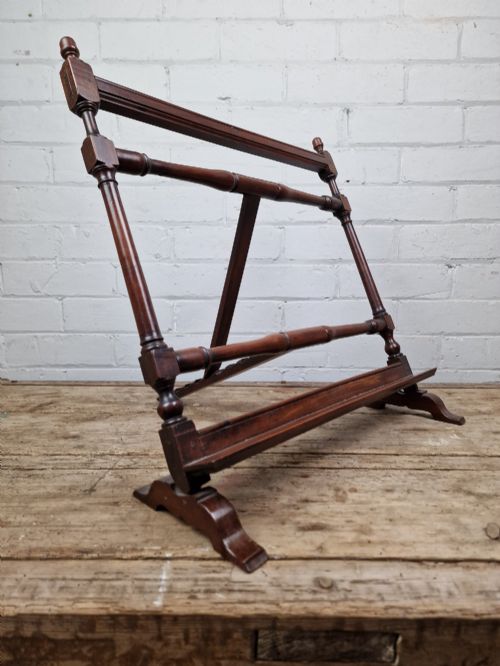
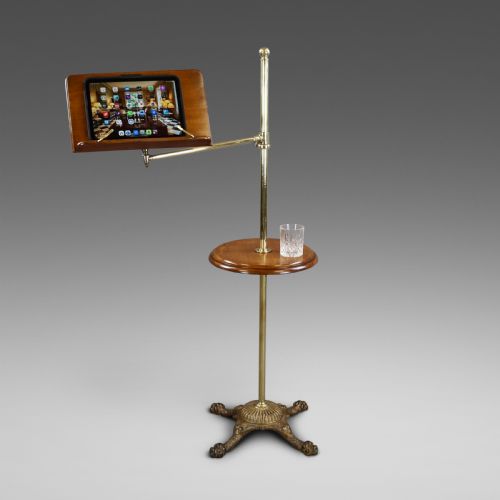
Forms range from compact table-top stands and music tables to larger two-tier reading tables, occasional tables, and rise-and-fall over-chair desks. Many incorporate leather writing surfaces or specialised book-rests designed to tilt at various angles.
Origins span English cabinet-making traditions alongside French designs, with specific mechanical examples attributed to makers like Carter's Patent. These pieces reflect the nineteenth-century domestic focus on personal study, correspondence, and comfort.
How they were made
Construction relies heavily on dense timbers such as mahogany, rosewood, and oak, chosen for structural stability and finished with polished surfaces. Brass and ormolu mechanisms, ratchets, and telescopic stems provide the adjustable functions essential for reading stands and rise-and-fall tables.
Secondary materials include inset leather writing panels and occasional fabric or brass inlay details. Joinery techniques combine traditional cabinet-making frames with functional iron and brass hardware to support pivoting book-rests and folding leaves.
19th Century Reading Table Retail Price Guide 2026
Typical asking prices for 19th century reading table among the pieces listed under this phrase on Sellingantiques today, from the lower quarter to the upper quarter. They describe what is for sale here now, not the wider market.
Some Victorian readers clearly enjoyed working across multiple disciplines, given the survival of tables equipped for reading, sewing, and writing all at once.
What varies in quality
Quality separates through the sophistication of the adjustable mechanism and the integrity of the timber framing. Superior examples feature smooth, patent rise-and-fall actions and well-figured mahogany or rosewood grains that retain their original depth of finish.
The refinement of brass mounts, the precision of the ratchets, and the presence of original leather inserts distinguish standard workshop production from high-grade or patent-protected designs.
Wild and Wessel·Messenger·Joseph Hinks
The 19th Century Reading Table Glossary
- Rise and fall
- A mechanical mechanism allowing the table top or reading slope to be adjusted in height. This enables the user to adapt the furniture for seated or over-chair use.
- Telescopic
- A concentric pillar design that extends upwards to alter the height of a stand or table. It is frequently operated via a thumbscrew or key.
- Architect's desk
- A specialised form featuring a slanted, adjustable writing surface designed for drawing and drafting. These often incorporate ledges to keep papers from sliding.
- Ormolu
- Gilt bronze mounted as decorative hardware or fittings on furniture and lamps. The technique involves applying finely ground gold-mercury amalgam to bronze.
- Regency
- A British design period spanning the early part of the nineteenth century, known for classical restraint and influenced by Greek and Roman forms.
19th Century Reading Table: Frequently Asked Questions
How do adjustable reading tables work?
These tables utilise internal ratchets, wooden struts, or brass telescopic stems to alter the height and angle of the top surface. Users can adjust the reading slope to suit different books or seating positions.
Many examples include folding ledges or ratcheted supports hidden beneath the main board to hold volumes securely at various reading angles.
What is the difference between a writing table and a reading table?
A writing table generally prioritises a flat or inset leather surface for correspondence, occasionally including drawers for stationery. A reading table specifically incorporates adjustable book-rests, folding slopes, or folio stands.
Some hybrid pieces combine both functions with multi-tier surfaces and pull-out components designed for simultaneous reading and writing.
How can I date a nineteenth-century reading table?
Dating relies on stylistic shifts in timber choice, hardware, and mechanical complexity. Regency pieces often display classical proportions and simpler brass fittings, while Victorian examples frequently introduce patent mechanisms and rosewood or walnut veneers.
Maker's marks, patent stamps, and structural joinery styles also help narrow the decade of manufacture within the broader nineteenth-century timeline.
Where were these tables used in the home?
They were positioned in libraries, morning rooms, and drawing rooms for private study, reading newspapers, or holding music scores. Over-chair models were also brought directly to the seated user for convenience during extended periods of reading.
Smaller table-top stands were placed upon existing desks or side tables to elevate books and documents to a comfortable eye level.