


19th Century Pottery Pitcher
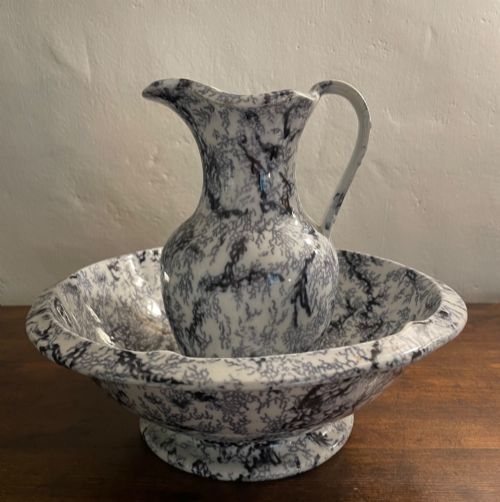
When you search for a 19th century pottery pitcher, you are looking for practical serving vessels and commemorative jugs shaped by Georgian and Victorian potters.
19th Century Pottery Pitcher
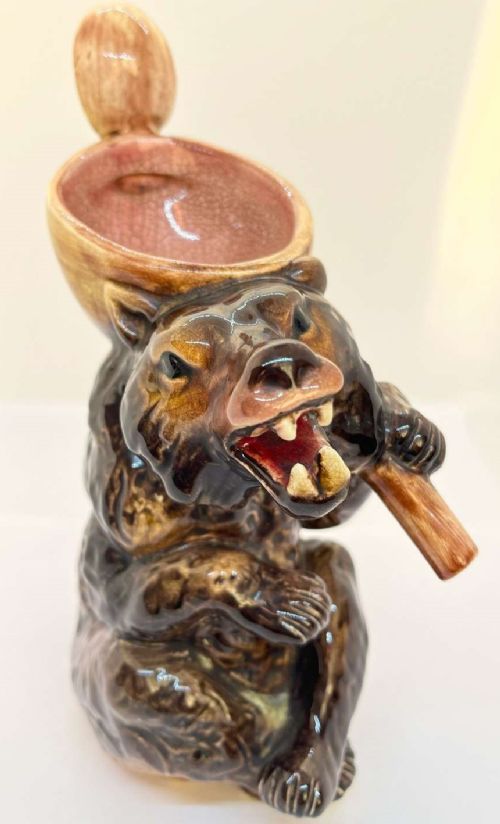
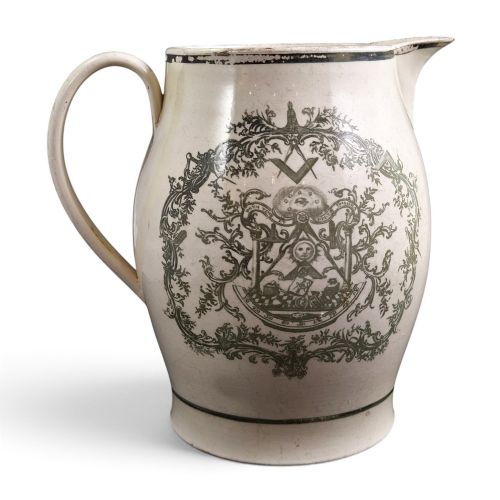
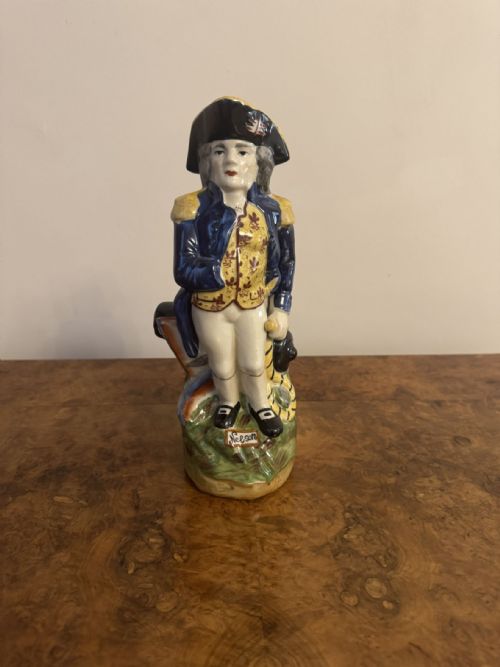
A 19th century pottery pitcher encompasses a wide variety of utilitarian and commemorative jugs, ranging from everyday milk and water vessels to elaborate tavern jugs and Masonic pieces. The selections here span the Georgian and Victorian eras, taking forms such as the traditional toby jug, the cow creamer, and the multi-handled tyg.
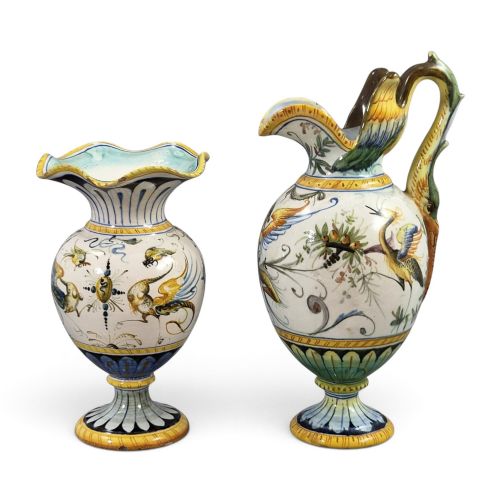
Most pieces you will encounter originate from Staffordshire potteries and northern English maritime centres like Sunderland. Alongside these robust earthenware and creamware items, you find imported continental styles including Italian majolica and French faience water pitchers.
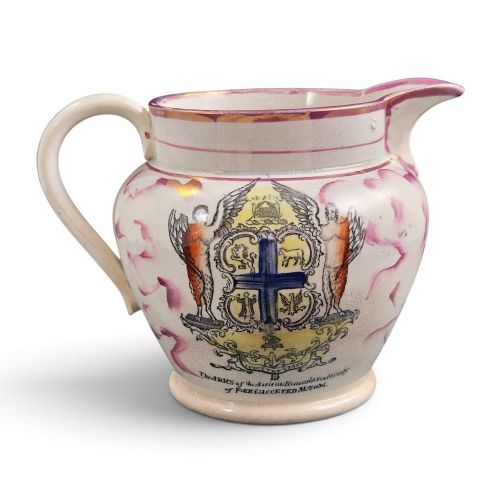
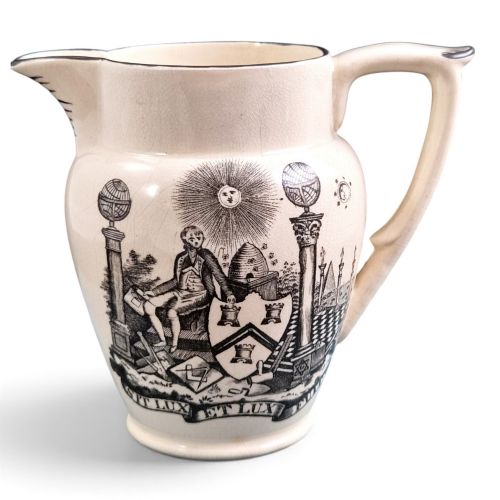
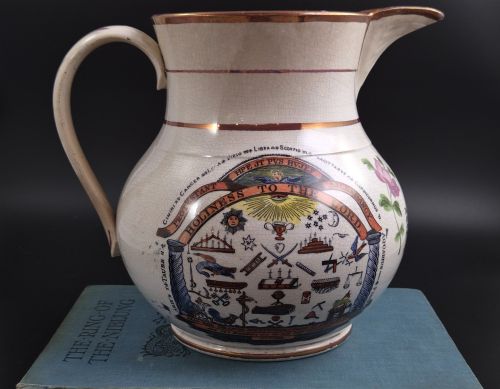
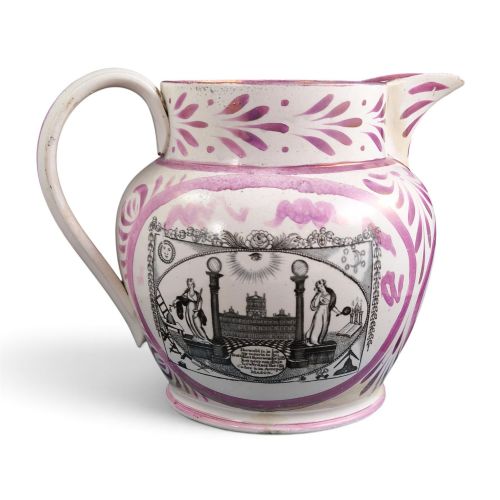
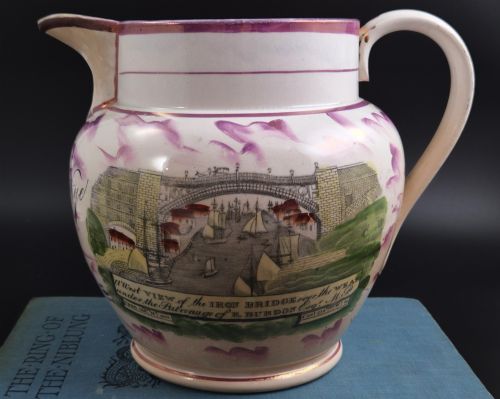
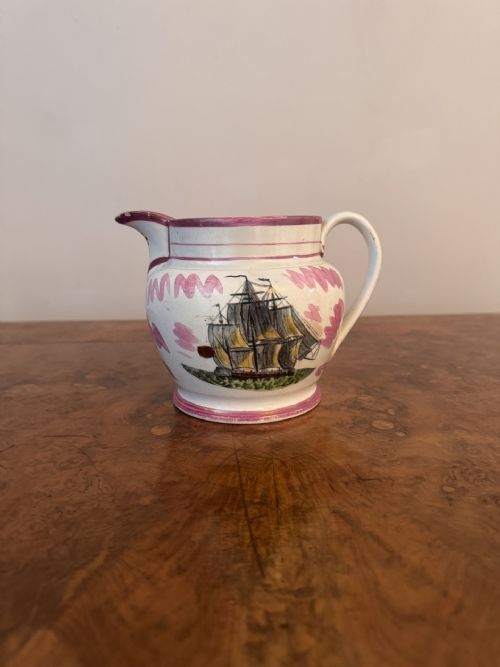
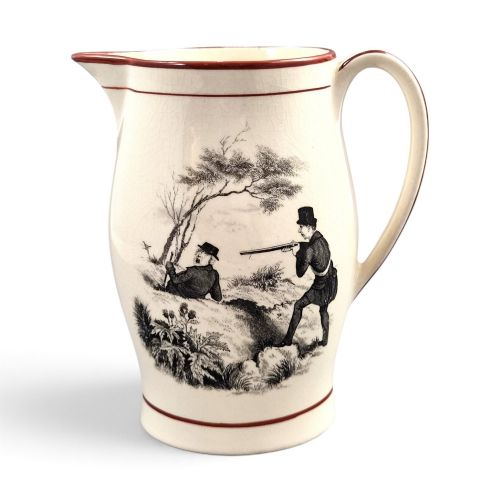
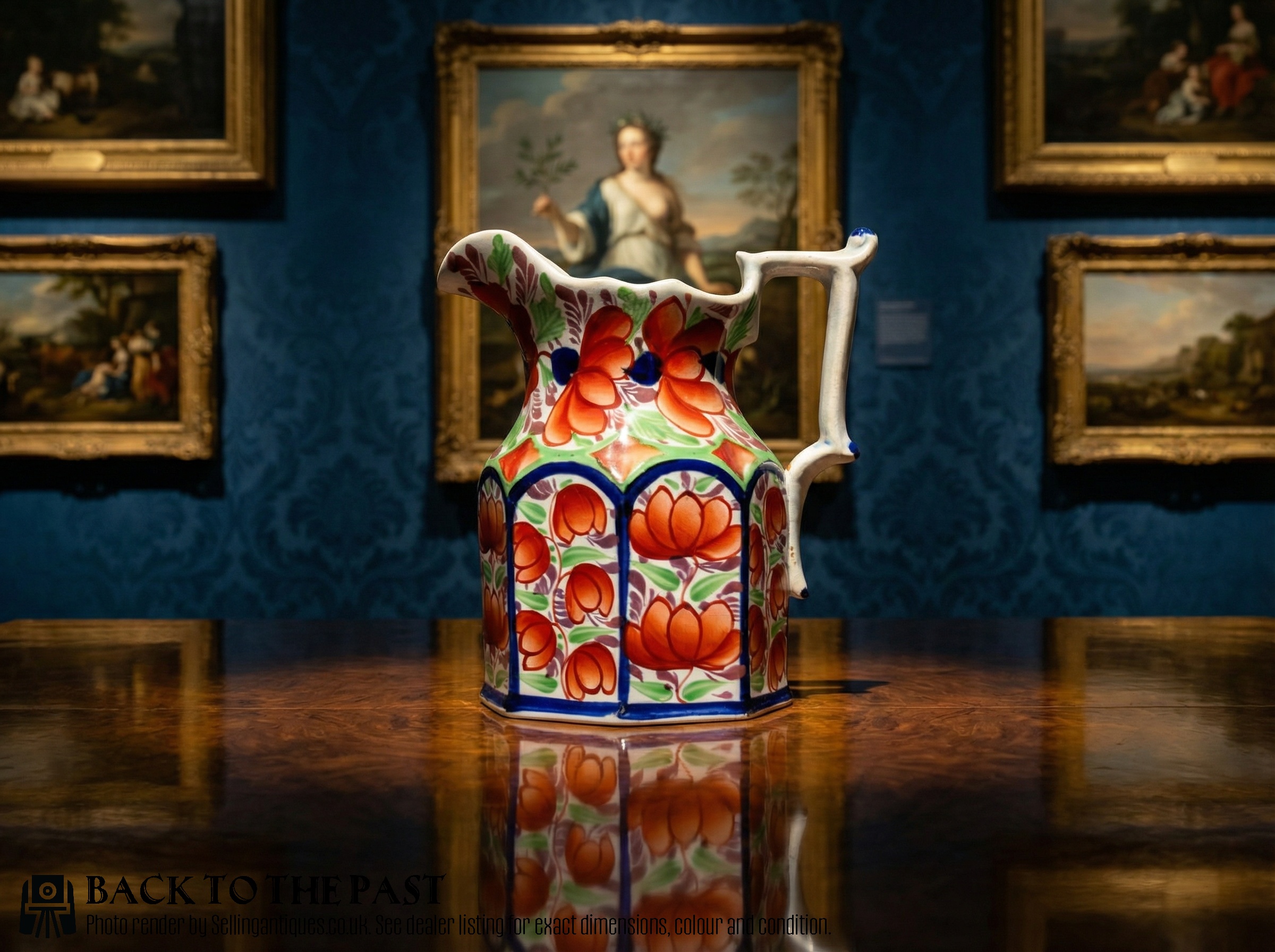
Makers frequently decorated these vessels with transfer printing, metallic lustres, and hand-painted polychrome enamels to celebrate fraternal orders, historical figures, or local landmarks like the Iron Bridge over the Wear. Each form reflects the specific domestic or commemorative purpose for which the potters originally threw or moulded it.
Materials and Construction
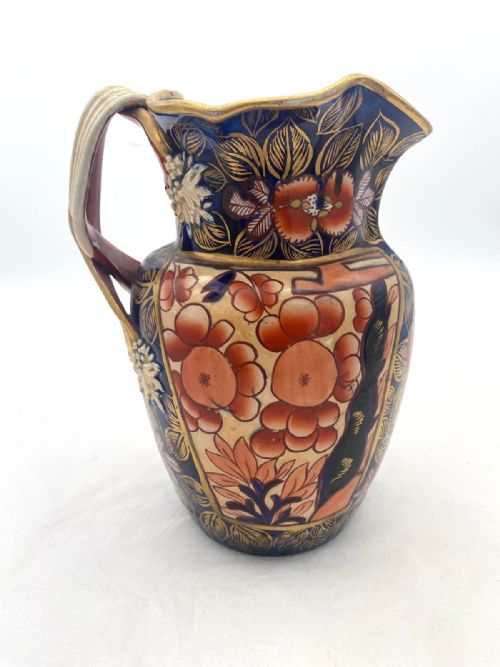
Potters utilised earthenware, creamware, pearlware, and ironstone as the primary clay bodies for these vessels, often shaping them through slip casting or relief moulding. Stoneware appeared frequently for heavier drinking vessels, while specialised bodies like Parian ware delivered smooth, unglazed surfaces resembling marble.
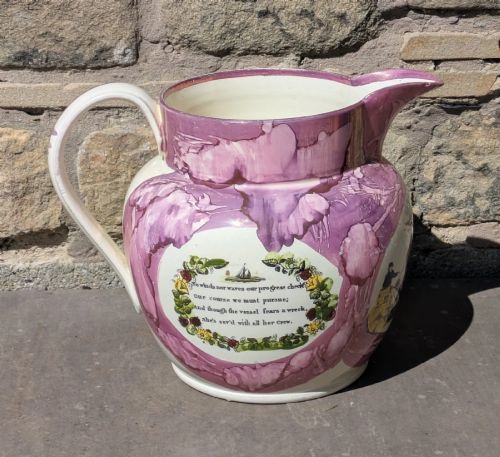
Glazing defined the final finish, utilising tin glazes, rich copper and pink splash lustres, and colourful majolica enamels to seal the porous clay. Black and polychrome transfer printing added intricate pictorial scenes and poetic panels before the final kiln firing.
The selection includes earthenware, creamware, ironstone, and stoneware forms, spanning the Georgian and Victorian eras.
Evaluating the Craft
Quality rests in the crispness of the relief moulding and the deliberate alignment of transfer-printed panels. Superior jugs show careful hand-painting over the glaze and vibrant, stable metallic lustres without dull patches.
The sophistication of the ceramic body also dictates standard, moving from thicker, heavier earthenware utilities to refined ironstone, creamware, and translucent Parian porcelain.
Holdcroft Majolica·Sunderland Garrison Pottery·Cantagalli Florence·Mason's Ironstone·Gien Faience
The 19th Century Pottery Pitcher Glossary
- Creamware
- A fine earthenware body with a pale yellowish-cream glaze, developed in Staffordshire during the eighteenth century and widely produced into the nineteenth.
- Lustreware
- Pottery decorated with a metallic glaze that produces an iridescent, reflective sheen, commonly seen in copper and pink splash finishes on northern English jugs.
- Transfer printing
- A method of applying complex decorative patterns to ceramic pieces by engraving the design on a copper plate, printing it on tissue paper, and transferring it to the bisque or glazed surface.
- Toby jug
- A pottery jug modelled in the shape of a seated, stout eighteenth-century person, usually holding a mug of beer and a pipe.
- Tyg
- A drinking vessel featuring three or more handles, designed so that several people could share it around a table.
19th Century Pottery Pitcher: Frequently Asked Questions
How were nineteenth-century jugs used daily?
These vessels served primarily as functional containers for water, milk, and ale in domestic kitchens and public taverns. Larger pieces often functioned on the table for communal serving.
Many examples also served commemorative or fraternal purposes, displayed on mantelpieces to mark memberships in organisations like the Freemasons or Oddfellows.
What is the difference between creamware and ironstone?
Creamware is a lighter earthenware body featuring a warm, pale yellow tone from its lead glaze, common in the earlier decades of the century. It offers a refined yet porous domestic surface.
Ironstone, patented later in the period, is a dense, highly durable vitrified ceramic designed to resist chipping and heavy everyday use.
How do you identify a Sunderland lustre jug?
Sunderland jugs typically display a distinctive pink splash or marbled lustre effect across a white earthenware or pearlware body. They frequently incorporate transfer-printed maritime themes, local landmarks, or moral verses.
Potters in the Sunderland region produced these extensively for sailors and coastal communities during the Victorian era.
Were toby jugs used for drinking?
While modelled in the form of a drinking vessel, many toby jugs served primarily as decorative table ornaments or tavern display pieces. Their sculptural nature made them popular conversation items in homes and inns.
Some smaller versions functioned practically for pouring liquids, but the larger character models were chiefly ornamental.