


19th Century Porcelain Box
These 19th century porcelain box pieces are decorative containers valued for their hand-painted detail and metal mounts.
19th Century Porcelain Box
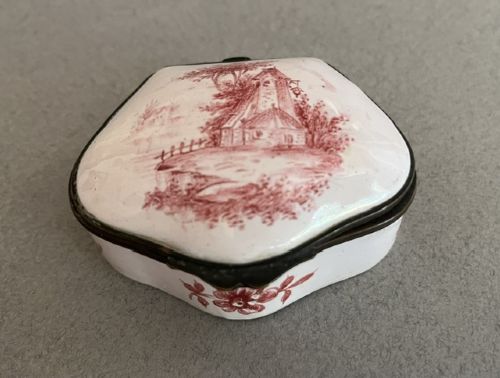
A 19th century porcelain box typically takes the form of a small trinket box, jewellery casket, or lidded dish designed for domestic display and storage. The examples found here span the Victorian era, the 1860s, 1870s, 1880s, 1900, and general 19th century production.
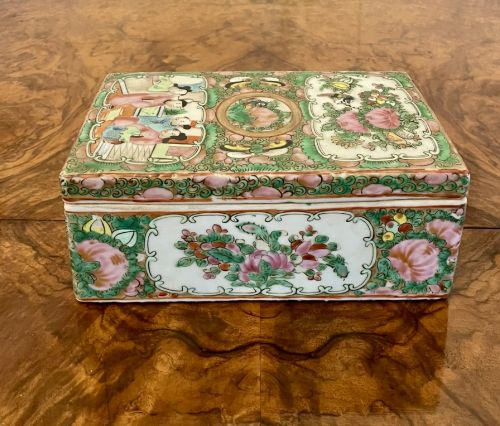
French workshops dominate the selection, particularly through Sevres-style pieces and items associated with Edme Samson of Paris. Italian Capodimonte and Chinese Famille Rose Canton pieces also appear among the offerings.
The forms extend beyond standard rectangular and round boxes to include harp-shaped snuff boxes, pill boxes, lidded pen boxes, and small table caskets. Many incorporate stands or mounts which elevate their presence on a surface.
Materials and construction
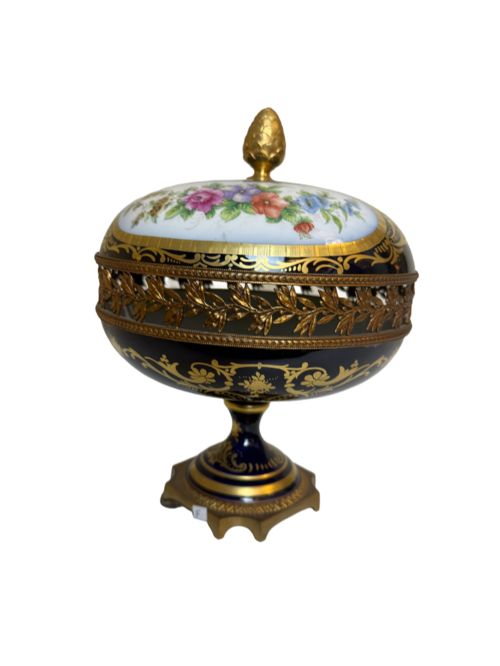
Porcelain serves as the primary body, frequently decorated with hand-painted scenes, cobalt blue glazes, or inset plaques. Enamel, glass, and gold leaf often supplement the ceramic surface to add colour and texture.
Metal mounts in ormolu, gilt bronze, brass, and gilt metal frame the porcelain panels and provide structural hinges and clasps. Wood such as kingwood appears in larger display pieces and associated storage boxes.
One exceptional box takes the delightful form of a musical instrument, appearing as a hand-painted porcelain harp.
Judging quality in these boxes
Quality rests heavily on the crispness of the hand-painting and the weight of the metal mounts. Finer pieces display detailed brushwork in figural or floral motifs rather than transfer-printed decoration.
The integration between the porcelain body and the metal ormolu or gilt-bronze mounts indicates the level of craftsmanship. Secure mountings and substantial metalwork distinguish the more accomplished pieces from simpler productions.
Edme Samson Of Paris·Sevres
The 19th Century Porcelain Box Glossary
- Ormolu
- Gilded bronze used widely for mounts and decorative frames on French furniture and caskets. This technique gives the metal a rich, golden appearance.
- Casket
- A decorative box intended for holding jewellery or valuables, often featuring hinged lids and lined interiors. They frequently incorporate metal feet or stands.
- Famille Rose
- A palette of Chinese porcelain enamels dominated by opaque pink. This style appears on export pieces from the 19th century.
- Bonbonniere
- A small decorative container made for holding sweets or confectionary. These pieces often take whimsical or figurative shapes.
- Sevなres
- A style associated with the French porcelain factory, known for rich blue grounds and hand-painted panels. Genuine pieces and inspired works both populate the market.
19th Century Porcelain Box: Frequently Asked Questions
What were these porcelain boxes used for?
These boxes served multiple domestic purposes, primarily holding small valuables such as jewellery, rings, pins, and snuff. Wealthy households used them on dressing tables, desks, and surface displays.
Some specialist variants functioned as pill boxes, lidded pen boxes, or gaming accessories like whist counters. Their decorative nature meant they were as much ornaments for a room as they were practical storage.
How do I identify French pieces?
French 19th century pieces often display specific decorative vocabularies such as French Rococo Revival styles, Second Empire details, or Louis XV Revival motifs. The use of ormolu mounts and hand-painted panels in the manner of Sevres strongly points to French origin.
Signatures or marks on the underside of the porcelain can confirm the workshop, though many unmarked items rely on stylistic attribution to French makers like Samson.
Are these boxes fragile?
Ceramic and glass elements require careful handling to prevent chipping or cracking. The metal mounts and hinges also benefit from gentle treatment when opening and closing the lids.
Placement away from high-traffic edges prevents accidental drops, ensuring the painted surfaces and gilt details remain intact over time.
What styles are common?
French Rococo Revival and Neoclassical styles dominate the aesthetic of these nineteenth-century boxes. Makers drew heavily on earlier historical periods to create ornate, curvaceous forms with rich surface decoration.
Victorian and Second Empire influences also appear, incorporating bold colours like cobalt blue alongside extensive gilt metalwork and hand-painted floral or figural scenes.