


Antique Cobalt Blue Box
An antique cobalt blue box brings rich vitreous colour to a dressing table, taking forms from Bilston enamel patches to French glass jewellery caskets.
Antique Cobalt Blue Box
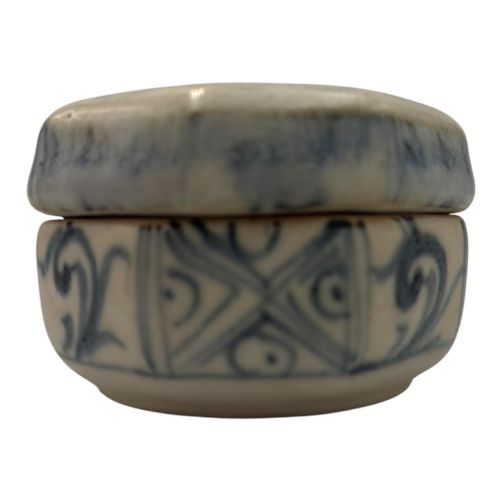
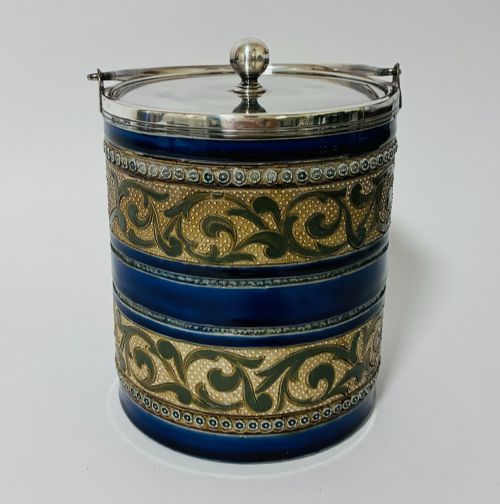
An antique cobalt blue box encompasses a range of small lidded receptacles designed for dressing tables, desks, and display cabinets, appearing in porcelain, glass, and enamel. When searching for an antique cobalt blue box, buyers encounter pieces spanning the eighteenth, nineteenth, and early twentieth centuries, with French and English examples forming the core of the selection.
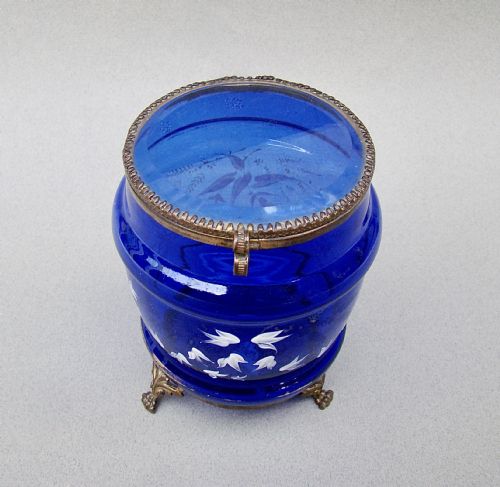
The objects themselves serve various historic functions, including patch boxes, trinket caskets, sugar boxes, and dressing table jars. Blue and white porcelain pieces from earlier periods sit alongside nineteenth-century Bristol blue glass mounted in ormolu and brightly enamelled copper boxes from Staffordshire workshops.
Materials and Construction
The creation of these pieces relies on deep metallic oxides to achieve the characteristic rich blue hue in glass, glaze, or enamel. Cobalt oxide introduced to molten glass creates the translucent Bristol blue bodies often found fitted with gilt metal mounts and hinged lids.
Ceramic examples utilise porcelain, ironstone, or stoneware bodies painted with cobalt pigments under or over the glaze, frequently enhanced with hand-applied gilding. Enamel boxes employ copper bases coated in vitreous white and blue pastes, fired repeatedly in kilns before receiving delicate polychrome painted details.
Some singing bird boxes contain hidden clockwork mechanisms that make mechanical feathered figures chirp from beneath lidded compartments.
Qualities of Manufacture and Handiwork
Differentiation across the range rests upon the crispness of the hand-painted detailing and the precision of the metal mounts. Finer porcelain and enamel work exhibits controlled brushwork and securely pinned hinges that align precisely when closed, whereas simpler commercial wares show less refined finishing.
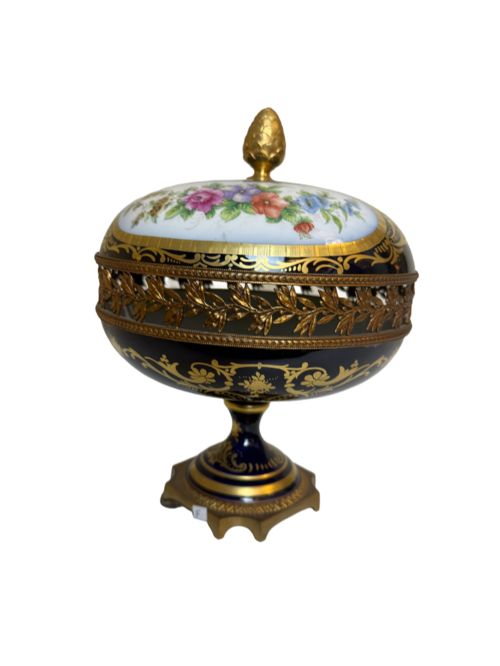
The weight and quality of the bronze, ormolu, or silver metalwork also dictate the stature of a piece, with cast and chased mounts elevating standard glass jars into luxury desk accessories.
Doulton Lambeth·Limoges·Worcester Porcelain·Ridgway Porcelain·Bilston Enamel·Thomas Forester & Sons·South Staffordshire Enamel·Wedgwood
The Antique Cobalt Blue Box Glossary
- Ormolu
- Gilded bronze mounts used extensively in nineteenth-century French furniture and decorative objects. It provides a bright metallic contrast to deep blue glass and porcelain bodies.
- Patch Box
- A small container designed to hold cosmetic beauty patches worn on the face during the Georgian era. These boxes typically feature hinged lids with small interior mirrors.
- Sucrier
- A sugar bowl or sugar box equipped with a cover, commonly produced in eighteenth and nineteenth-century porcelain. They often feature matching stands or saucers.
- Sevres
- A renowned French porcelain manufactory producing high-status decorative goods. Pieces associated with this tradition often display rich cobalt grounds and raised gold detailing.
- Jasper Dip
- A fine stoneware body developed by Wedgwood where a white clay vessel is dipped into a coloured liquid slip. This technique produces a contrasting white relief design against a dark blue background.
Antique Cobalt Blue Box: Frequently Asked Questions
What were small antique blue boxes used for?
These small containers held personal items such as beauty patches, pills, trinkets, and loose sugar for tea service. Wealthy owners kept them on dressing tables, writing desks, and in pocket watches.
Over time, their uses shifted from functional daily accessories to decorative cabinet pieces collected for their rich colour and fine craftsmanship.
How can I date an antique cobalt blue box?
Dating relies on examining the materials, construction marks, and mounting styles of the piece. Eighteenth-century examples often feature copper enamel construction or early soft-paste porcelain bodies, while late nineteenth-century pieces frequently combine Bristol blue glass with cast ormolu.
Maker's marks stamped into porcelain or impressed into ceramic bases provide further clues, though many smaller boxes and enamel pieces remain unmarked.
Are these boxes made of glass or porcelain?
The listings include both materials, alongside enamels on copper and silver-plated wares. Bristol blue glass boxes are translucent and usually paired with metal frames, whereas porcelain and ironstone pieces are opaque ceramics.
Enamel boxes use a metal base covered in fused glass paste, giving a smooth, glossy surface ideal for miniature paintings.
How do I care for an antique enamel or glass box?
Keep these items away from direct sunlight and extreme temperature changes to protect fragile enamels and historic glass. Dust them gently with a dry, soft cloth without using liquid cleaners or chemical polishes.
Take care when opening hinged lids, as historic metal pins and fastenings can strain if opened too far or handled roughly.