
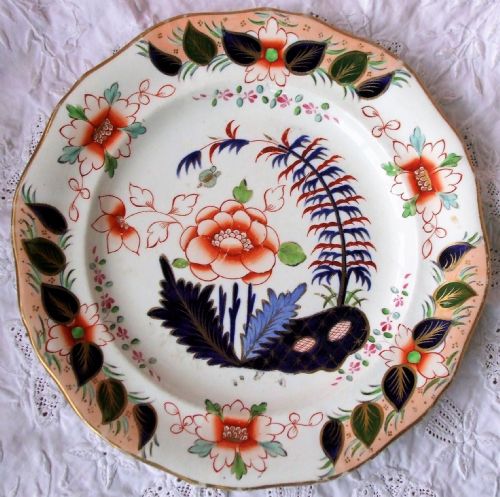
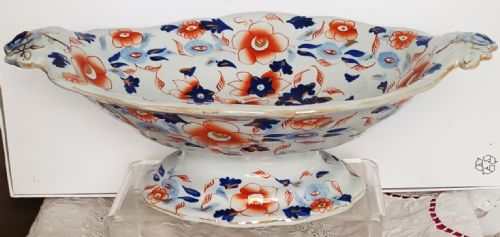


Nineteenth Century Ironstone Dish
A nineteenth century ironstone dish brings robust utility and vibrant pattern to the table, offering the durability of heavy ceramic with the refined look of oriental porcelain.
Nineteenth Century Ironstone Dish
A nineteenth century ironstone dish comprises heavy ceramic serveware, plates, comports, and tureens produced during the Georgian and Victorian eras. These robust pieces were built for practical service while adopting sophisticated aesthetic traditions.
The versions most commonly met on this page include decorative plates, serving platters, and footed comports bearing rich patterns like Imari and Chinoiserie. Makers utilised durable ironstone bodies to create substantial tableware that survived centuries of use.
Originating in English potteries, these items span various forms from large country house platters to specialised vessels like soap dishes and cheese domes. Collectors encounter diverse decorative schemes ranging from blue and white designs to multi-coloured enamel and gilt highlights.
How they were made
Potters formed these items using durable ironstone ceramic and earthenware bodies, creating thick and heavy walls designed to resist chipping and daily wear. This dense composition provided a stable base for rich surface decoration.
Artisans applied complex glazes, enamel colours, and gold leaf highlights to achieve patterns inspired by Regency and Victorian tastes. Skilled hands painted motifs such as Chinoiserie landscapes and Imari palettes directly onto the fired body before final glazing.
Cheese lovers can rejoice knowing dedicated nineteenth century stilton cheese domes kept the dining room smelling civilized.
What varies in quality
The sophistication of the painted decoration and the crispness of the moulded form set the finest pieces apart from standard kitchenware. Hand-poured enamels and intricate gilding require superior artisan skill compared to basic transfer-printed designs.
The weight and purity of the ironstone body also dictate the standard of the piece, with denser ceramics showing superior firing and less distortion. Early examples from prominent makers display sharper detail in relief mouldings and richer colour saturation.
John Davenport of Longport·Copeland White Ironstone·Mason’s Ironstone China
The Nineteenth Century Ironstone Dish Glossary
- Ironstone
- A heavy, durable type of ceramic patented in the nineteenth century to imitate porcelain while offering greater strength. It forms the solid foundation for most plates and platters.
- Comport
- A raised serving dish or footed bowl used for presenting fruit or sweetmeats at the table. These pedestal vessels sit higher than standard plates.
- Imari
- A decorative style featuring rich cobalt blue, iron-red, and gilt details inspired by Japanese export wares. English potteries adopted this palette enthusiastically during the Georgian and Victorian periods.
- Chinoiserie
- European artistic interpretation of Chinese and East Asian decorative motifs, frequently showing imaginary landscapes and figures. It appears across many plates and serving dishes on this page.
- Tureen
- A deep covered bowl designed for serving soup or sauces at formal meals. These substantial vessels often include matching stands and handles.
Nineteenth Century Ironstone Dish: Frequently Asked Questions
What is ironstone china?
Ironstone china is a heavy, vitrified ceramic material developed in the nineteenth century as a durable alternative to imported porcelain. It combines clay, feldspar, and slag to create a robust body suitable for daily dining and service.
Porteries shaped this dense material into thick plates, platters, and tureens that resisted chipping. The robust nature of ironstone ensured its survival through generations of domestic use.
How were nineteenth century dishes used?
These pieces served practical functions in large country houses and modest dining rooms alike, holding everything from roasted meats to fruits and cheeses. Large platters presented main courses, while comports elevated desserts above the table surface.
Specialised items like soap dishes and cheese domes extended the material into the bedroom and larder. Their sturdy construction allowed them to withstand heavy daily handling by household staff.
How do I care for ironstone dishes?
Wash these ceramics gently by hand using mild soap and warm water to protect aged glazes and delicate gold leaf highlights. Avoid harsh detergents and mechanical dishwashers, which can erode hand-painted enamels over time.
Store large platters and comports securely on flat surfaces to prevent tipping or edge damage. Careful handling preserves the historical surface finish and structural integrity.
How can I tell Georgian ironstone from Victorian pieces?
Georgian examples often feature hand-painted Regency Chinoiserie and Imari patterns applied to heavy earthenware bodies around the early decades of the nineteenth century. Makers during this period focused on rich enamel palettes and distinct oriental motifs.
Victorian pieces from the mid-century, such as those marked around eighteen sixty, frequently incorporate moulded white ironstone forms or industrial transfer prints. Stylistic shifts toward naturalistic bamboo patterns and heavy institutional marks also help distinguish later production.