
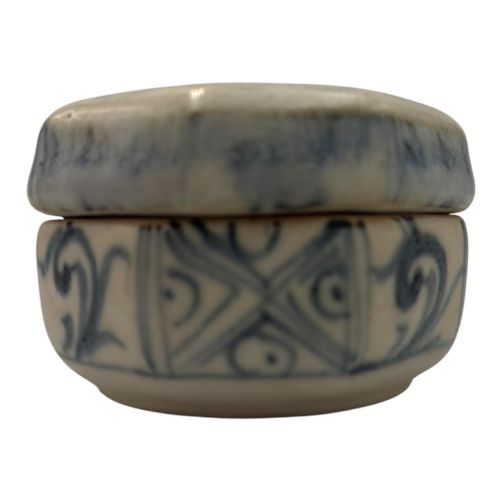
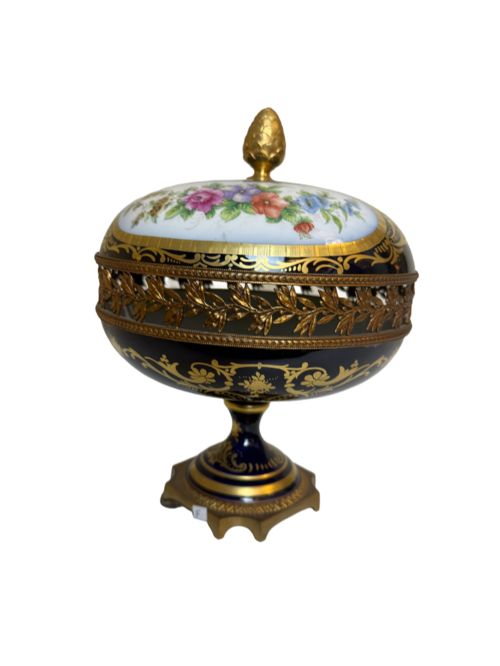


Blue Porcelain Box
A blue porcelain box is a small ceramic container used for storage, and collectors seek them for their hand-painted detail and metal mounts.
Blue Porcelain Box
A blue porcelain box spans several centuries of production, appearing in forms such as jewellery caskets, trinket boxes, powder jars, and sugar boxes. The pieces met most frequently on this page originate from French workshops, particularly Limoges and Sèvres, alongside English factories and earlier Asian dynasties.
Objects range from small pill boxes with gold raised detailing to larger vanity boxes fitted with ormolu mounts. Makers adapted the ceramic medium to suit domestic and dressing table use across Georgian, Victorian, and Art Deco periods.
Asian examples also appear, represented by early Vietnamese blue and white pieces and Japanese Imari wares. These items display distinct regional painting traditions applied to hard-paste and soft-paste ceramic bodies.
Materials and production methods
Makers utilised porcelain and ceramic bodies, finishing them with cobalt blue glazes and hand-painted enamel decoration. Cobalt provided a stable underglaze pigment that withstood high firing temperatures without losing colour intensity.
Many European examples incorporate metal mounts, including ormolu, gilt metal, and silver plate. These brass, bronze, and plated elements were cast and chased to frame the hinged lids and bases of the ceramic containers.
Gilding techniques involved applying gold leaf or gold paint to raised details and borders, which were then fired to fix the metal to the glazed surface.
Listings feature items spanning from the fifteenth-century Lê Dynasty through Georgian and Victorian periods up to Art Deco 1930s ceramics.
Distinguishing quality in production
Quality rests upon the precision of the hand-painting and the execution of the ceramic body. Finer pieces display crisp underglaze cobalt work or detailed enamel painting applied by skilled decorators rather than stencilled transfers.
The integration of the metal mounts indicates the tier of the piece. High-grade boxes feature heavy cast ormolu mounts fitted flush to the porcelain edges with functional hinges, whereas standard items use lighter gilt metal.
The clarity of the porcelain glaze and the crispness of any moulded relief work separate standard domestic items from pieces produced for luxury retail by established factories.
Limoges·Sevres·Ridgway
The Blue Porcelain Box Glossary
- Ormolu
- Gilded bronze mounts applied to furniture, clocks, and porcelain boxes. This technique was widely employed by French makers in the nineteenth century to add decorative frames and secure hinges.
- Sucrier
- A covered sugar bowl or sugar box made to hold loose sugar on the tea table. English factories like Worcester and Ridgway produced these in porcelain during the eighteenth and nineteenth centuries.
- Imari
- A style of Japanese export porcelain characterised by underglaze blue, iron red, and gilt decoration. Pieces show traditional motifs applied to ceramics destined for Western markets.
- Enamel
- Opaque glass-like material fused to ceramic surfaces through firing to add coloured details. This medium allowed artists to paint intricate patterns over the initial glaze.
- Powder box
- A vanity container designed to hold cosmetic face powder on a dressing table. French Art Deco examples often feature ceramic or half-doll figural lids.
Blue Porcelain Box: Frequently Asked Questions
What were blue porcelain boxes used for?
These containers served various domestic functions depending on their size and shape. Smaller examples held pills, trinkets, or stamps on a desk.
Larger versions functioned as jewellery caskets, powder jars, or sugar boxes for the tea table.
How do I identify French pieces?
French boxes from the nineteenth and twentieth centuries frequently combine porcelain with heavy ormolu metal mounts. Workshops in Limoges and Sèvres produced many of these vanity and trinket containers.
Hand-painted floral motifs and gilt detailing are characteristic of these continental workshops.
Are all blue boxes porcelain?
The listings include items described as ceramic alongside traditional porcelain. Some pieces combine the ceramic body with silver-plated or gilt-metal elements.
Materials range from early hard-paste bodies to later Art Deco compositions.
What is an Imari box?
Imari pieces follow Japanese aesthetic traditions using a distinctive palette of blue, red, and gold. These items reflect export ware traditions produced for international buyers.
The decoration is applied directly to the porcelain substrate.