


Gilt Porcelain Box
A gilt porcelain box brings together delicate ceramic bodies and shimmering metallic mounts, offering a decorative vessel for keepsakes.
Gilt Porcelain Box
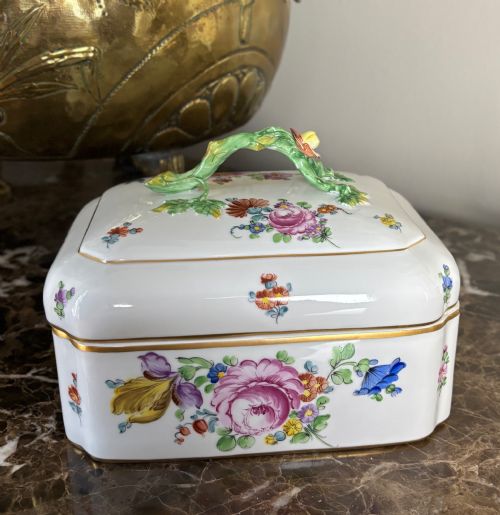
A gilt porcelain box is a container designed for trinkets, jewellery, or sugar, combining ceramic craftsmanship with metallic decoration. When searching for a gilt porcelain box, buyers encounter small lidded vessels, caskets, and sugar boxes originating from European and Japanese workshops. These objects serve both practical storage and ornamental display purposes within domestic settings.
The pieces appearing on this page span from the eighteenth century through to the Art Deco period, with nineteenth-century examples appearing frequently. Common forms include round trinket boxes, lidded dishes, sugar boxes, and larger jewellery caskets mounted in metal. French, German, Italian, and English factories dominate the available selection.
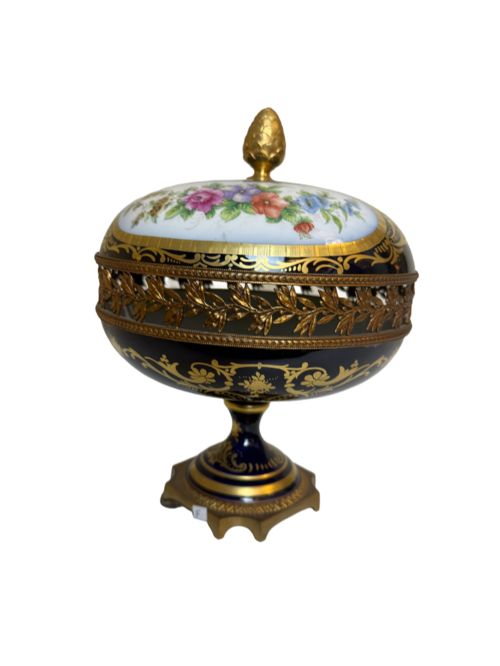
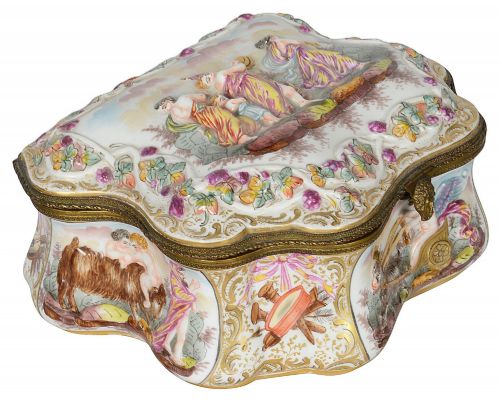
Stylistic influences range from Rococo Revival and Neoclassical designs to French Second Empire and Edwardian tastes. Buyers often find hand-painted floral motifs, cobalt blue grounds, and figurative scenes alongside simpler gilt detailing. Each piece reflects the aesthetic preferences of its specific period of manufacture.
How a gilt porcelain box was made
Makers fashioned the main body of each box from fired porcelain, sometimes applying cobalt blue, red, or white enamel glazes before secondary firing. Artisans then added hand-painted details, including floral motifs and figurative scenes, using specialised ceramic pigments. Gold leaf, ormolu, gilt bronze, and gilt metal mounts were subsequently fitted to the ceramic rims and bases.
Metalwork components such as hinges, clasps, and stands required precise casting and chasing in brass, bronze, or gilt metal to secure the porcelain elements. Craftsmen used adhesives or mechanical pins to join the heavy metal mounts to the fragile ceramic bodies. This multi-stage process combined the skills of the ceramicist and the metalworker.
A few lucky boxes still contain their original nineteenth-century whist counters for card games.
What varies in quality
The refinement of the hand-painted decoration and the precision of the porcelain body set superior examples apart from standard production. Finely executed brushwork on floral panels or portraits indicates skilled atelier work rather than mass-produced transfer printing. The clarity of the glaze and the crispness of moulded ceramic details also signal higher manufacturing standards.
The quality of the metal mounts heavily influences the overall standard of a piece, particularly when ormolu or cast gilt bronze is used instead of basic gilt metal. Substantial, well-chased mounts that fit the ceramic body securely demonstrate superior craftsmanship. The smoothness of the hinge action and the snugness of the lid closure reflect the care taken during assembly.
Meissen·Edme Samson Of Paris·Coalport·Limoges·Royal Crown Derby
The Gilt Porcelain Box Glossary
- Ormolu
- A gilt bronze mount used to decorate and reinforce furniture and ceramic objects. Artisans applied finely ground gold-mercury amalgam to bronze castings to achieve a rich metallic finish.
- Bonbonniere
- A small decorative box designed to hold sweets or confectionery. These miniature vessels often feature hinged lids and elaborate hand-painted porcelain surfaces.
- Casket
- A larger box intended for storing jewellery or precious keepsakes. They frequently incorporate substantial metal framing and secure locking mechanisms.
- Sucriere
- A sugar basin or box fitted with a cover. These pieces often form part of larger ceramic table services.
- Sevres
- A renowned French porcelain factory producing soft-paste and hard-paste ceramic goods. Items bearing this attribution often feature distinctive ground colours and rich gilding.
Gilt Porcelain Box: Frequently Asked Questions
What were gilt porcelain boxes used for?
These boxes served as functional containers for small personal items such as trinkets, jewellery, pills, or sugar. Wealthy owners kept them on dressing tables, desks, or in drawing rooms for easy access.
Over time, their primary role shifted from utilitarian storage to decorative display as interior fashions evolved. Today, they remain popular for holding small keepsakes or functioning as standalone decorative objects.
How do I care for a gilt porcelain box?
Cleaning requires a soft, dry cloth to remove dust from both the ceramic surfaces and the metal mounts. Avoid liquid cleaners, harsh abrasives, or immersion in water, which can damage hand-painted details and delicate gilding.
Metal mounts benefit from occasional gentle dusting to prevent tarnish accumulation. Handling the pieces carefully by their main bodies rather than fragile protruding mounts helps preserve their structural integrity.
How can I tell different periods apart?
Identifying the period relies on examining the painting style, ceramic body characteristics, and the design of the metal mounts. Eighteenth-century pieces often display hand-painted floral reserves on soft-paste porcelain, while nineteenth-century items frequently show heavier Rococo Revival or Second Empire metalwork.
Twentieth-century examples, such as those from the Art Deco period, feature geometric forms or stylised motifs associated with later design movements. Maker marks stamped or painted on the underside provide definitive chronological clues.