


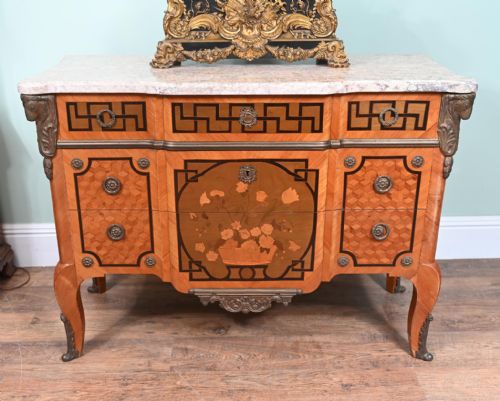
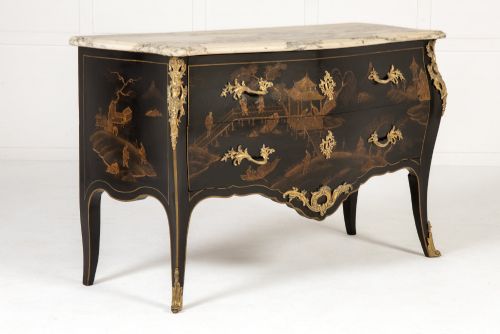
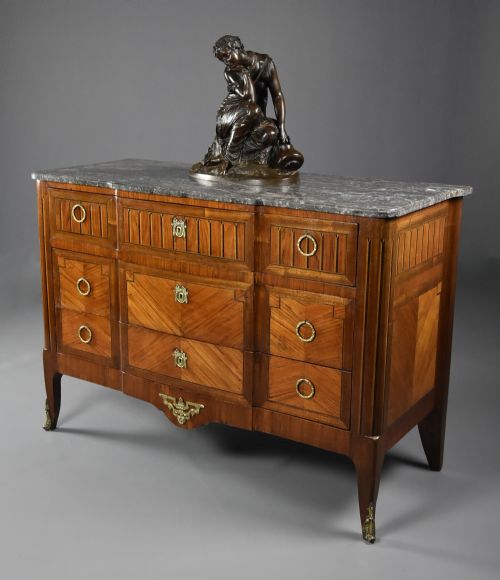


19th Century Marble Sideboard
A 19th century marble sideboard brings solid stone surfaces and rich timbers together for practical storage.

19th Century Marble Sideboard
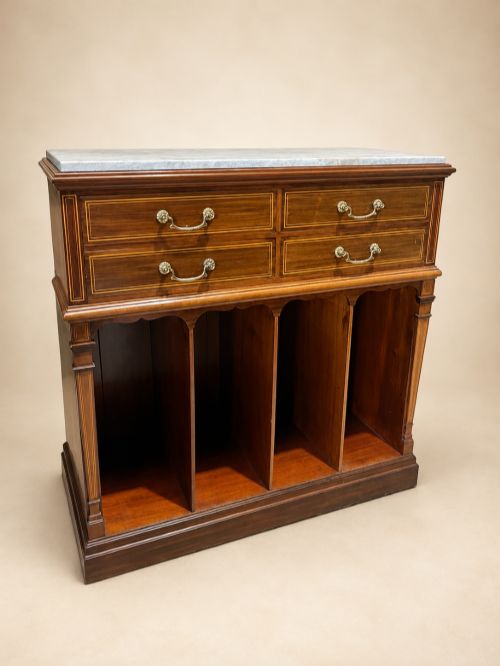
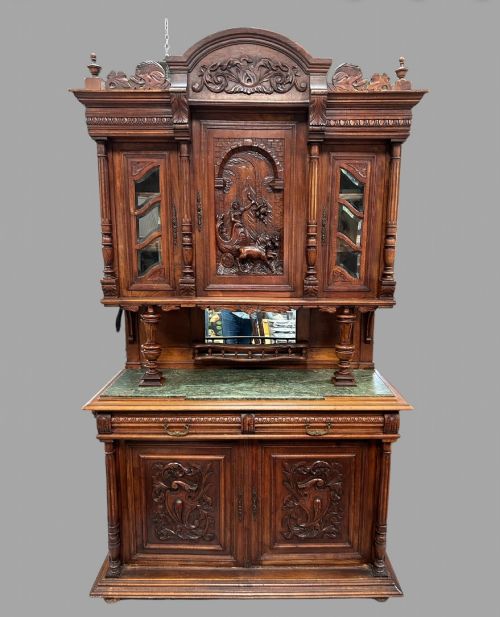
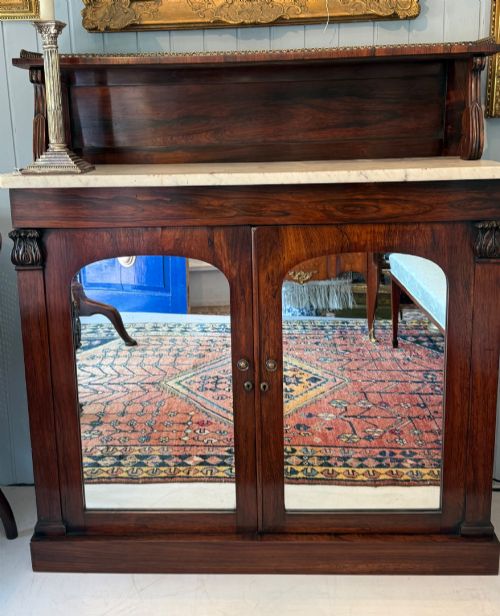
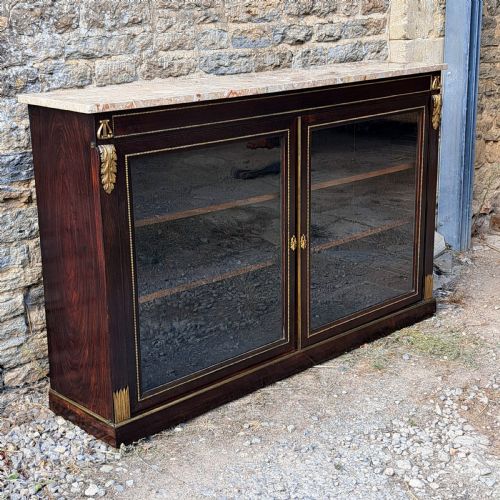
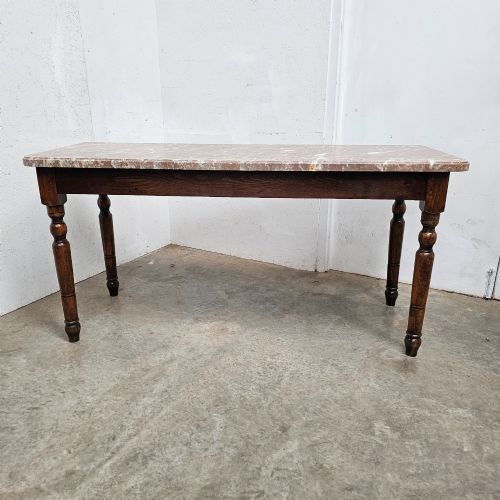
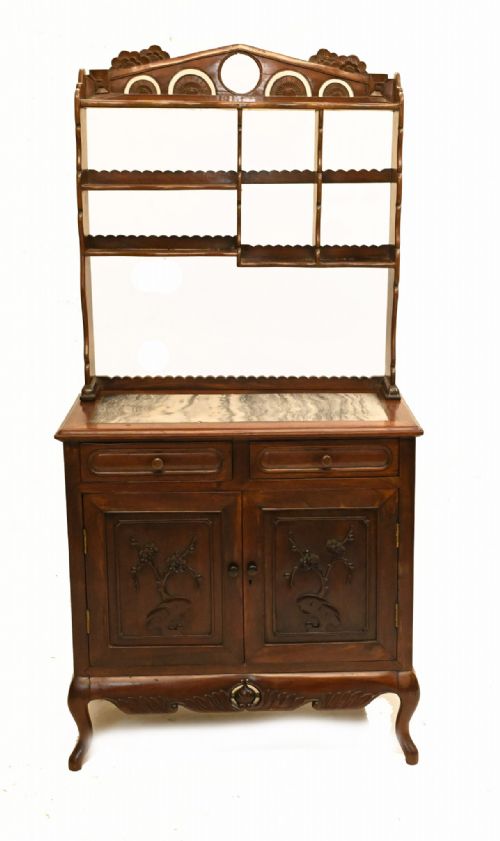
A 19th century marble sideboard encompasses credenzas, commodes, and chiffoniers designed with stone surfaces. These items serve dining rooms and drawing rooms alike, providing surface space and enclosed storage.
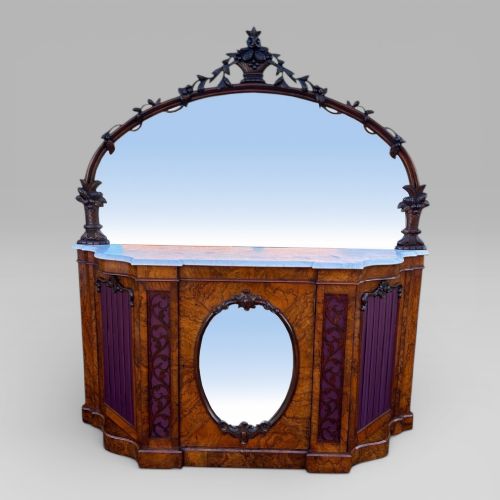
The versions most often met on this page include Victorian burr walnut credenzas and French commodes. Makers constructed these forms to anchor large rooms, combining heavy timber frames with fitted marble tops.
Makers drew on Georgian proportions alongside Louis XVI and French Rococo revival styles. The resulting forms range from breakfront cabinets to open console tables.
What varies in quality
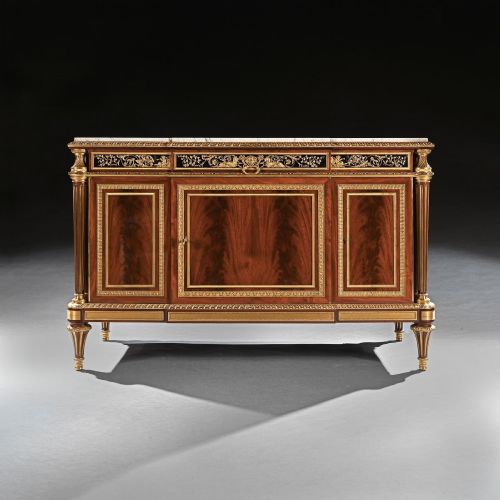
The calibre of a 19th century marble sideboard rests on the selection of timber veneers and the precision of the marquetry. Superior examples display tightly figured burr walnut or detailed floral inlay that aligns seamlessly across doors and drawers.
Construction standards show in the thickness and polish of the marble top and the weight of the ormolu mounts. Finer workshops employed heavier bronze mounts and hand-chased brass details rather than light pressed metal.
Certain commodes hide secret compartments behind japanned lacquer panels designed for secret letters.
Henry Dasson·Weisweiler·Paul Sormani
The 19th Century Marble Sideboard Glossary
- Credenza
- A low cabinet or sideboard typically enclosed by doors, often fitted with a marble top. These pieces originated in Italy before becoming staples of Victorian drawing rooms.
- Ormolu
- Gilt bronze mounts applied to furniture for decoration. Artisans cast and chased these metal elements to highlight corners and door frames.
- Marquetry
- Patterns formed by fitting decorative veneer pieces into a timber background. Cabinet makers used various exotic woods to create floral or geometric designs.
- Chiffonier
- A small sideboard or tall chest featuring shelves or cupboards below. This form developed during the 19th century for domestic storage.
- Commode
- A low chest of drawers or cabinet with doors, frequently topped with marble. French makers refined this form across multiple revival styles.
19th Century Marble Sideboard: Frequently Asked Questions
Where did people place these sideboards?
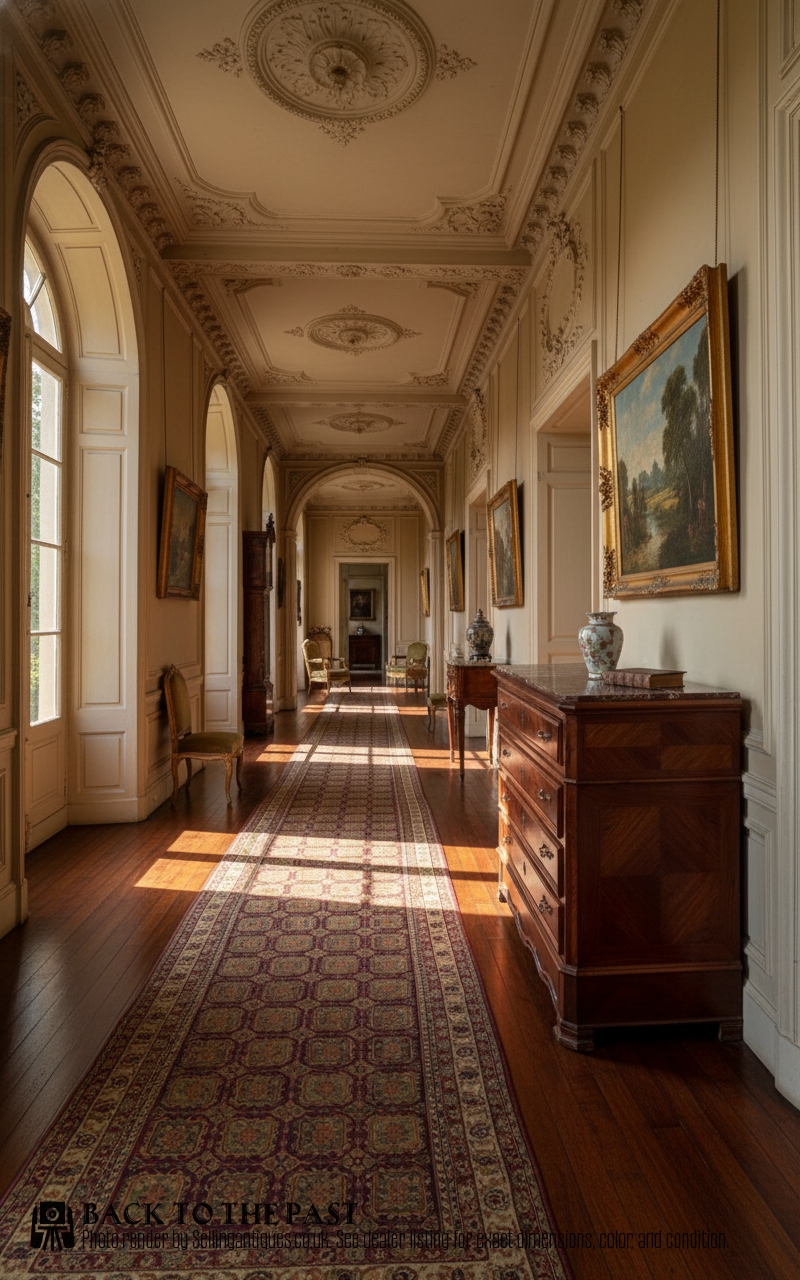
Households positioned these heavy cabinets against dining room walls to hold heavy serving dishes and glassware. They also anchored drawing rooms and formal hallways.
The sturdy stone tops provided a durable surface for display items without risking heat or moisture damage from everyday use.
How do I identify a Victorian piece?
Victorian cabinets often utilise burr walnut or rosewood veneers paired with serpentine marble tops. Makers frequently integrated mirrored backs and carved wooden frames.
These details distinguish English Victorian work from French commodes of the same decade, which favoured marquetry and ormolu mounts.
What woods appear most often?
Walnut, rosewood, and mahogany form the primary carcasses for these items. Workshops also applied kingwood and tulipwood for decorative veneer panels.
Secondary woods like oak or pine support the interior framing beneath the outer decorative layers.
Are the marble tops original?
Many pieces retain their original shaped marble slabs, cut specifically to match the serpentine or breakfront wooden frames. Heavy stone thickness indicates period manufacture.
Replacement marble usually reveals modern underside cutting marks or mismatched corner tolerances against the timber rebate.