



19th Century Mahogany Daybed
A 19th century mahogany daybed brings architectural weight and reclining comfort to a room, drawing on Regency, William IV, and Victorian designs.
19th Century Mahogany Daybed
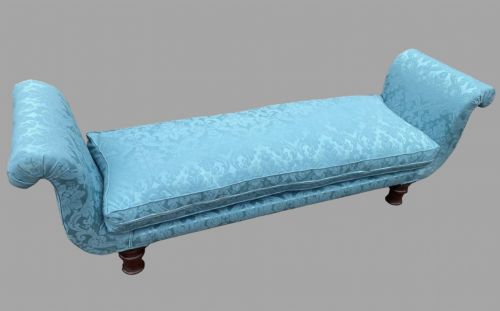
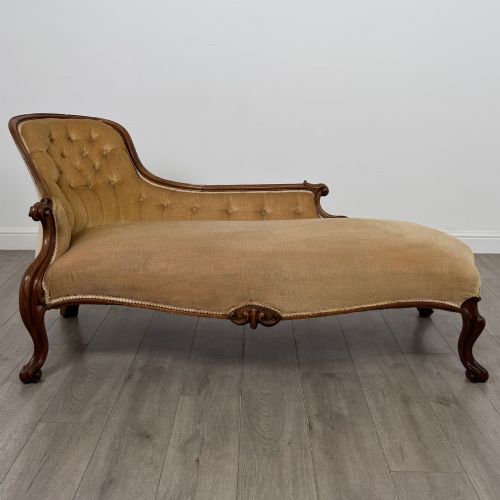
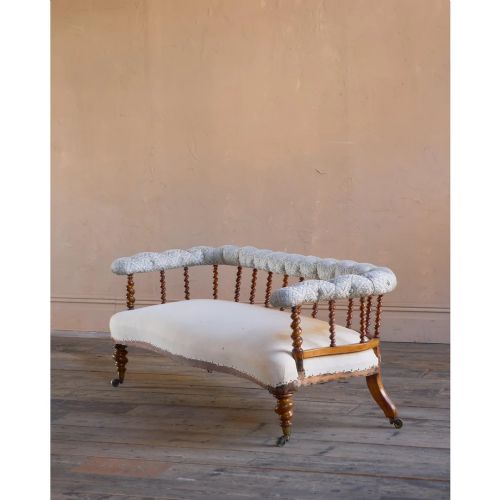
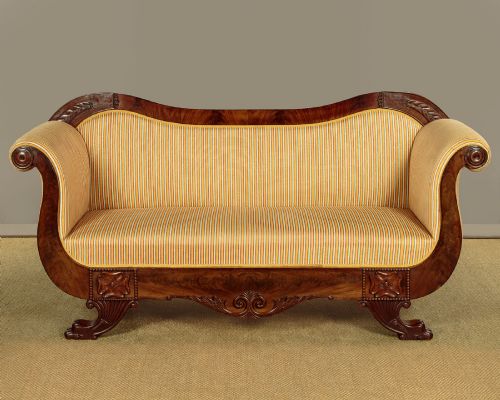
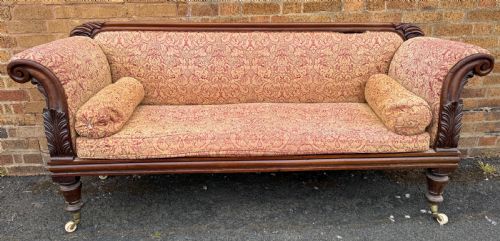
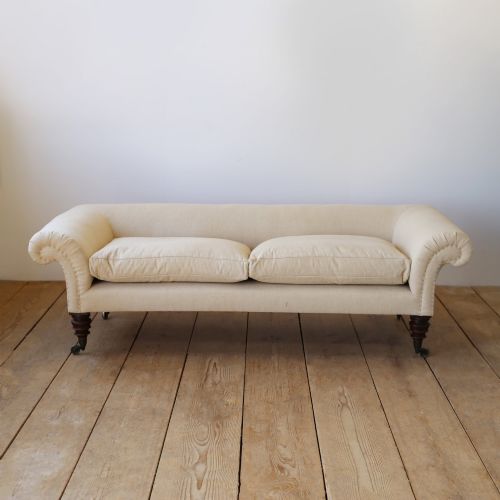
A 19th century mahogany daybed encompasses various forms of long seating, including scroll-end sofas, chaise longues, double-ended settees, and lit bateaux designed for reclining. These pieces emerge from periods spanning the Regency era, the William IV reign, and Victorian decades, each bringing distinct structural silhouettes to domestic interiors.
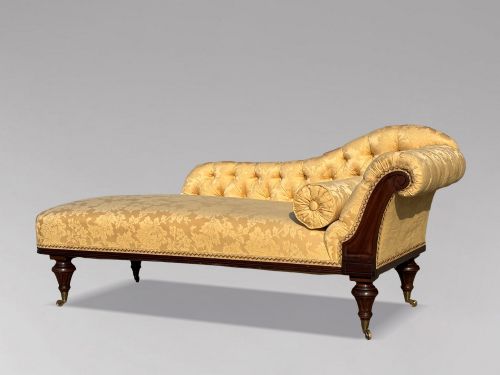
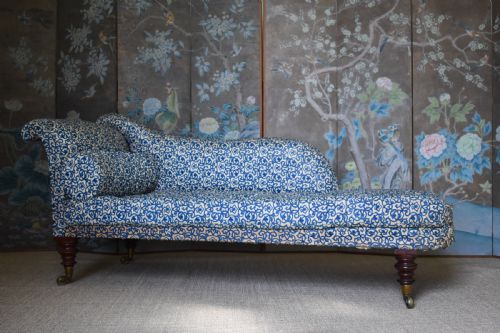
The pieces on this page lean heavily toward the chaise longue and the scroll-end couch, often featuring asymmetrical backs or double ends suited for daytime resting. Makers and workshops from the nineteenth century adapted French Empire and English country house aesthetics into these substantial wooden frames, marrying firm support with upholstered ease.
Materials and Construction
Makers built these frames predominantly from solid mahogany, frequently selecting rich timbers that took a deep polish and accommodated carved scroll arms or spindle backs. Brass fittings occasionally appear on castors, allowing these heavy wooden structures to move across floors.
Upholstery relies on traditional textiles such as velvet, cotton, calico, and fabric over supporting frames, sometimes complemented by leather. These materials are secured to wooden carcasses shaped during the Regency and Victorian periods by hand tools and joinery techniques.
Listings for this phrase include mahogany, brass, velvet, and calico across Regency and Victorian periods.
Assessing Quality
Quality rests in the crispness of the mahogany carving and the architectural balance of the scroll ends, distinguishing workshop-produced seating from simpler vernacular examples. The fluency of the timber's grain and the integrity of the frame's joinery dictate the baseline standard of the piece.
Attribution to documented London firms alters the standing of a daybed, as does the survival of original upholstery methods and secondary woods. Pieces carrying the marks of recognised makers demonstrate superior cabinet-making precision in their structural joints and decorative turnings.
C. Hindley & Sons·Howard & Sons·Holland & Sons·Jas Shoolbred·Miles & Edwards
The 19th Century Mahogany Daybed Glossary
- Chaise longue
- A long upholstered chair for reclining, typically possessing a single backrest at one end or curving along one side. This form dominates nineteenth-century daybed selections.
- Scroll end
- A decorative framing terminal that curls outward in a spiral scroll, frequently seen on Regency and William IV sofas. It defines the profile of many daybeds from this era.
- Lit bateau
- A French bed style featuring parallel head and footboards that curve outward like a boat. Examples appear in nineteenth-century mahogany forms.
- Double-ended sofa
- A settee with matching scroll ends at both sides, allowing a person to recline comfortably facing either direction. These pieces offer symmetrical proportions.
- Mahogany
- A durable, reddish-brown tropical hardwood favored for nineteenth-century furniture framing. It provides the structural strength required for large daybeds and couches.
19th Century Mahogany Daybed: Frequently Asked Questions
How do I tell a Regency daybed from a Victorian one?
Regency daybeds tend to feature cleaner architectural lines, scroll ends, and classical restraint derived from French Empire influences. They often date from the early decades of the nineteenth century.
Victorian pieces generally introduce heavier carving, button-tufted upholstery, and more exuberant profiles such as double spoonbacks. The wood finishes and upholstery styles shift noticeably around the middle of the century.
Were these daybeds meant for sleeping or sitting?
These pieces were primarily designed for daytime lounging, reading, and resting in formal reception rooms or bedrooms rather than overnight sleeping. Their asymmetrical or double-ended forms encouraged semi-recumbent postures.
Wealthy households placed them in drawing rooms, libraries, and country house boudoirs as both decorative seating and functional day furniture.
How do I live with a nineteenth-century daybed?
A daybed functions well as a focal point in a large living room, library, or wide hallway, positioned to display its carved mahogany frame and scroll ends. Because many feature a back on only one side, they work best placed against a wall or floating in a spacious room.
Maintenance involves regular dusting of the timber and careful cleaning of the fabric upholstery. Modern placement often treats them as statement seating rather than everyday resting furniture.
What does attribution to a firm mean?
Attribution indicates that a daybed shares specific construction methods, design vocabularies, and secondary woods with documented pieces by makers such as Howard & Sons or Holland & Sons. Makers often left pieces unmarked, relying on distinct stylistic signatures.
Expert examination of the internal framing and upholstery webbing helps specialists link unsigned daybeds to these notable nineteenth-century workshops.