
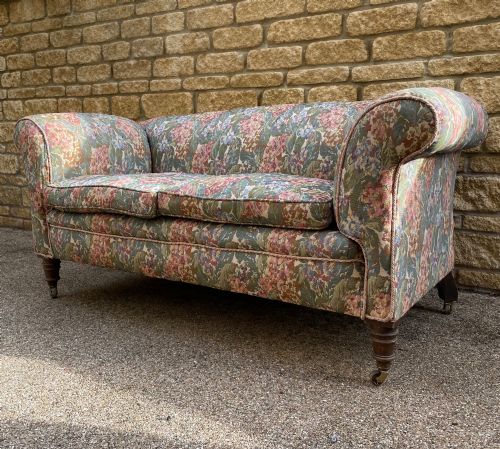
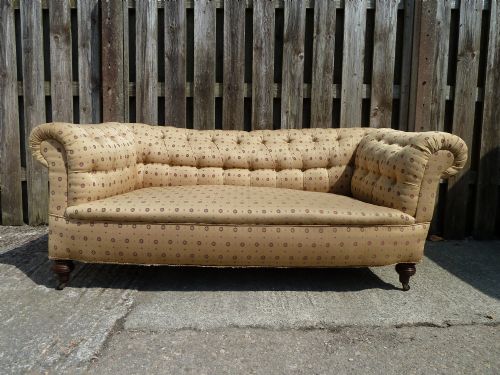
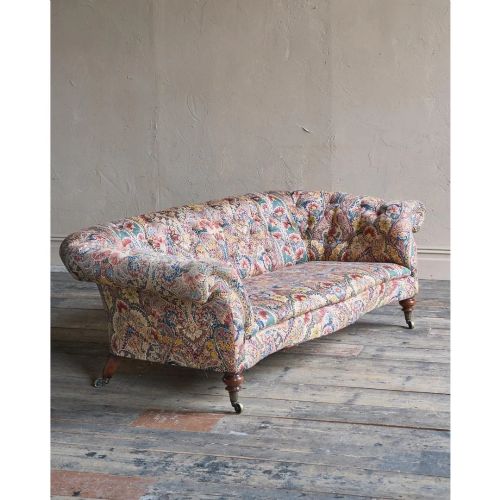
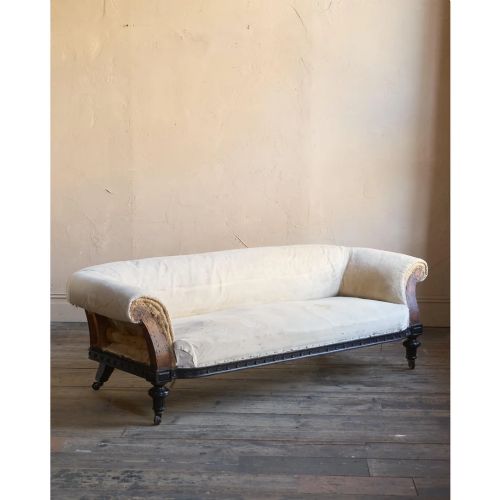



Vintage Scroll Arm Settee
A vintage scroll arm settee brings character and classic lines to a room, offering deep comfort built on traditional frames.
Vintage Scroll Arm Settee
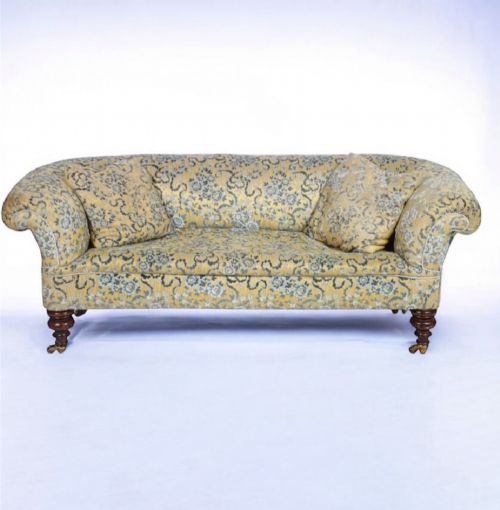
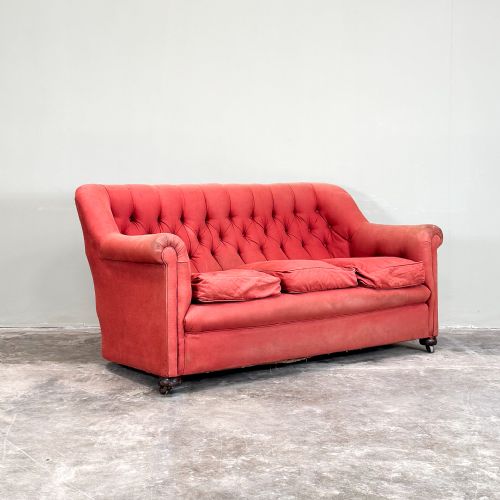
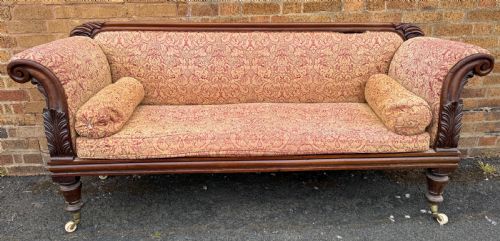
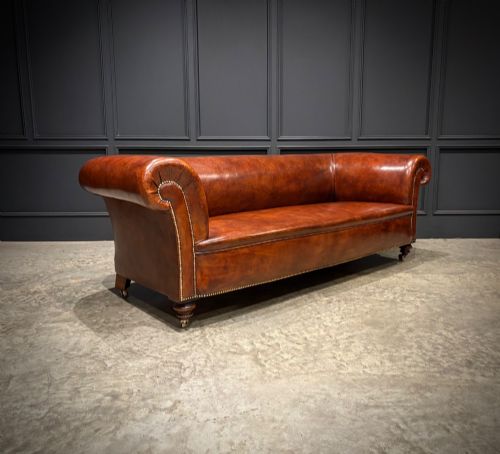
When you search for a vintage scroll arm settee, you encounter a range of traditional seating forms originating from the nineteenth and twentieth centuries. The selection spans Victorian chesterfields, Regency library styles, and William IV carved mahogany pieces with distinctive scroll ends.
The most common examples on this page are nineteenth century pieces, particularly Victorian chesterfields and country house sofas upholstered in fabric, velvet, or leather. These seating options include two-seater settees and deep-seated designs suited to traditional and eclectic interiors.
Makers such as Howard and Sons appear among the listings, alongside English country house and continental workshops. Forms range from show-frame drawing room sofas to double-ended settees and window seats.
How they were made
Frames rely on timbers such as mahogany, walnut, and timber, constructed with sturdy joinery to support heavy sprung upholstery. Show-frames exhibit carved detailing, particularly on William IV and Regency examples.
Upholstery techniques involve traditional stuffing and springing finished in fabric, velvet, leather, or upholstery fabric, often supported by turned wooden legs or brass castors.
Listings span the nineteenth and twentieth centuries, featuring periods from Regency and William IV to the 1930s.
What varies in quality
The distinction between standard production and superior work lies in the crispness of the timber carving and the integrity of the frame construction. Finer examples retain original show-frames and balanced proportions.
Upholstery execution and the selection of covering materials also separate standard pieces from exceptional ones. Maker attribution, such as work bearing Howard and Sons stamps, elevates the standing of a piece.
Howard and Sons
The Vintage Scroll Arm Settee Glossary
- Chesterfield
- A deeply buttoned upholstered sofa featuring arms and back of the same height. This style provides formal yet comfortable seating.
- Scroll end
- A sweeping, curved armrest design found on Regency and William IV sofas. It adds an architectural silhouette to the furniture.
- Show frame
- An exposed wooden structural frame surrounding the upholstered portions of a settee. Mahogany and walnut are typical timbers used.
- Drop arm
- A mechanical or hinged arm mechanism allowing one end of the sofa to lower. This function converts the settee for reclining.
- Double ended
- A sofa design featuring matching scroll or raised ends at both sides. These pieces often serve as daybeds or centrepiece seating.
Vintage Scroll Arm Settee: Frequently Asked Questions
What is a scroll arm settee?
A scroll arm settee is an upholstered seat featuring outward-curving armrests reminiscent of a scroll. These pieces date across the nineteenth and twentieth centuries in various styles.
They serve as principal seating in living rooms, libraries, and drawing rooms, combining decorative presence with deep comfort.
How do I identify a Victorian sofa?
Victorian sofas often feature dark wood frames, deep buttoning, and robust proportions. Many examples utilise walnut or mahogany alongside heavy velvet or leather upholstery.
Details like turned legs, brass castors, and scroll arms help distinguish this period from earlier Regency designs.
Are Howard and Sons sofas comfortable?
Howard and Sons settees utilise traditional sprung upholstery systems designed for deep, supportive lounging. Their construction prioritises ergonomic comfort alongside aesthetic refinement.
These pieces remain sought after for their enduring build quality and classic English country house appeal.
Where should I place a library sofa?
Library sofas suit central room placements or positions against panelled walls, where their finished backs and carved frames remain visible. Regency and William IV models offer striking silhouettes from every angle.
Pair them with reading lamps and low tables to create a functional relaxation zone.
What materials are used in these settees?
Frames consist primarily of hardwoods such as mahogany, walnut, and general timber. Upholstery covers range from leather and velvet to patterned fabric.
Brass hardware, including castors, frequently appears on nineteenth-century pieces to aid mobility.