
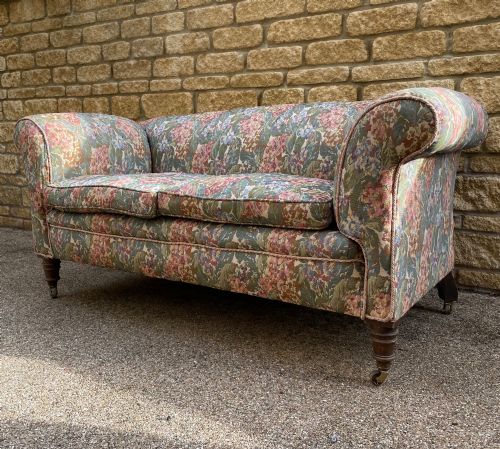
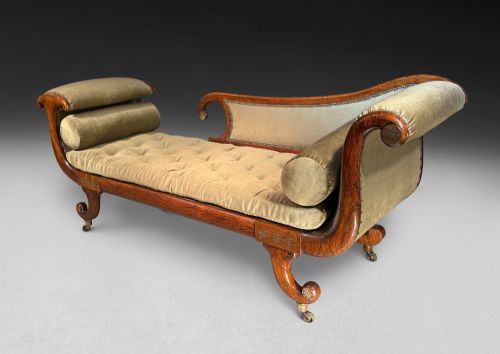
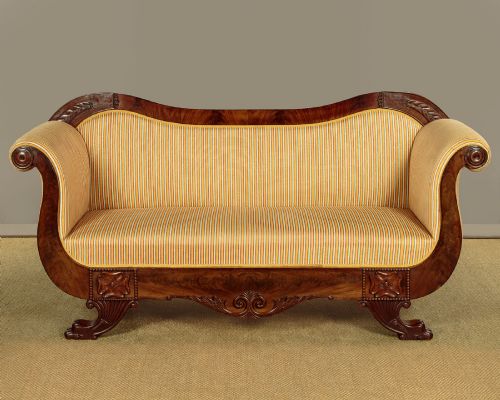
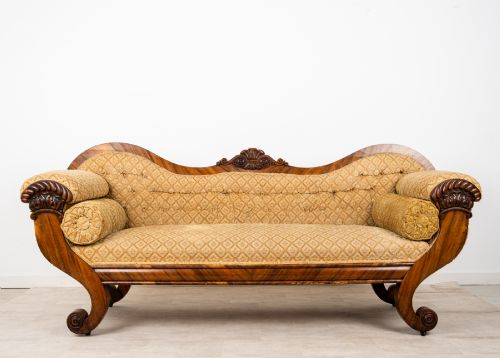
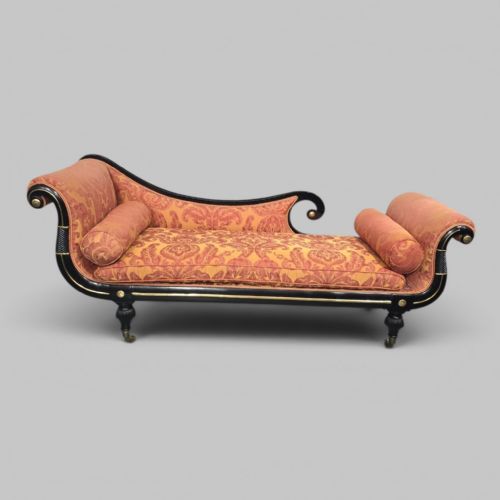
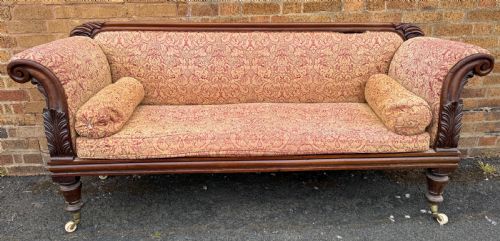
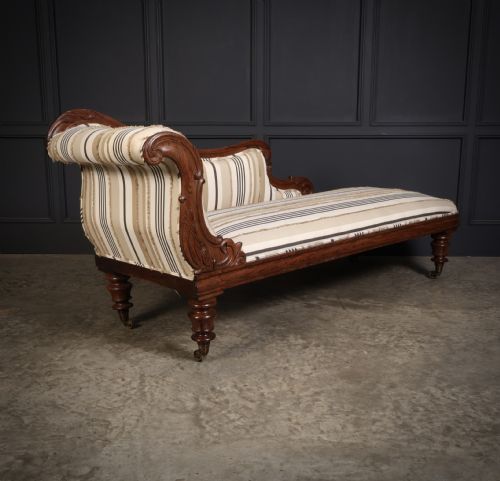


Antique Scroll End Couch
An antique scroll end couch brings dramatic architectural curves and generous lounging space to a period room.
Antique Scroll End Couch
An antique scroll end couch is a seating form defined by its sweeping, rolled armrests or terminals, often taking the shape of a sofa, settee, chaise longue, or daybed. When buyers search for this phrase, they encounter pieces spanning the Regency, William IV, and Victorian periods, alongside later Empire Revival examples.
The most common versions met on this page are mahogany and simulated rosewood frameworks dating from the early nineteenth century. These range from single-ended chaises and double-ended settees to larger country house sofas intended for central placement in a room.
How they were made
Timbers such as solid and veneered mahogany, rosewood, simulated rosewood, and ebonised wood form the structural framework of these couches. Craftsmen frequently applied brass inlay or carved decorative details directly into the timber frames.
Upholstery relies on traditional textiles, including fabric, hessian, and specialised upholstery fabric. Frames often incorporate drop arms, lyre-shaped supports, or painted Scandinavian surfaces depending on the specific revival or period style.
Listings feature mahogany, rosewood, simulated rosewood, and ebonised wood across Regency, William IV, and Victorian periods.
What varies in quality
The degree of refinement in the carved scroll terminals and the crispness of any brass inlay distinguish finer examples from simpler workshops. Timber selection, such as richly figured rosewood versus plain secondary woods, plays a major role in the overall stature of a piece.
Proportion and structural balance dictate the visual impact of the couch, particularly in double-ended and lyre-shaped configurations. Pieces retaining their original frames and structural integrity command greater appreciation than those altered significantly over time.
Willian Trotter
The Antique Scroll End Couch Glossary
- Scroll end
- A rolled, spiral wooden terminal on the arm or back of a couch. This sculptural feature defines the silhouette of Regency and William IV seating.
- Chaise longue
- An elongated upholstered chair designed for reclining. Many examples feature a single raised scroll end with a partial backrest.
- Simulated rosewood
- A painted or stained wood finish designed to imitate expensive rosewood grain. Craftsmen frequently used maple or other pale timbers as a base.
- Récamier
- A type of daybed or couch with two raised ends and no back, or an open back on one side. It is named after the French socialite famously painted resting on one.
- Lyre-shaped
- A structural support or arm shaped like an ancient Greek lyre instrument. This motif appears frequently on Regency and William IV sofas.
Antique Scroll End Couch: Frequently Asked Questions
How do I use a scroll end couch today?
These couches work exceptionally well as statement pieces in drawing rooms, studies, or large bedrooms. Their low profiles allow them to sit in the middle of a room without blocking sightlines.
Because many function as daybeds or chaises, they suit relaxed lounging while maintaining formal nineteenth-century elegance.
How do I date a nineteenth-century couch?
Stylistic markers help narrow the period, such as the crisp brass inlay and simulated rosewood common in Regency pieces. Heavier carved mahogany and rosewood forms usually point toward the subsequent William IV and early Victorian eras.
Construction methods and timber choices further clarify whether a piece originates from the early nineteenth century or a later revival.
Can these couches be reupholstered?
Upholstery on antique seating is frequently updated to suit modern interiors while preserving the internal webbing and frame structure. Many pieces arrive ready for new fabric or retain existing traditional upholstery.
Working with an upholsterer experienced in period furniture ensures the springs and padding match the historical profile of the couch.