
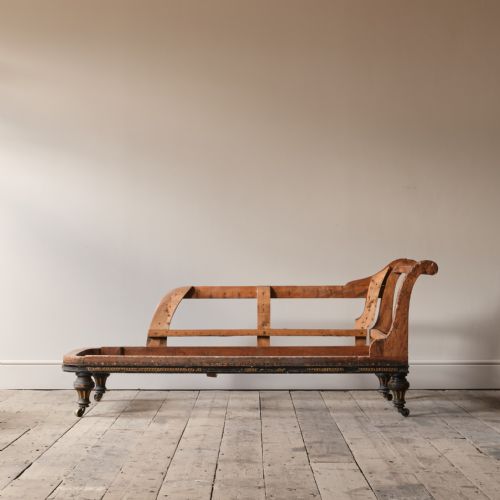
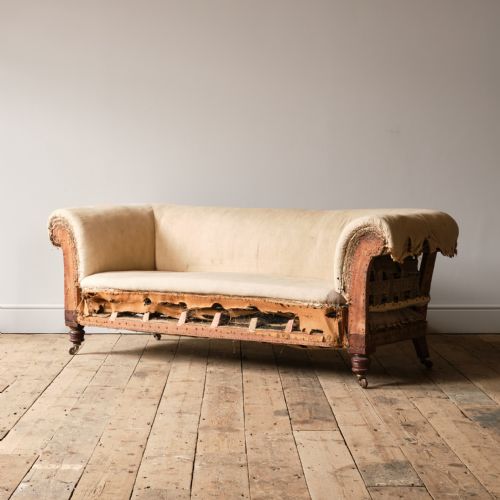
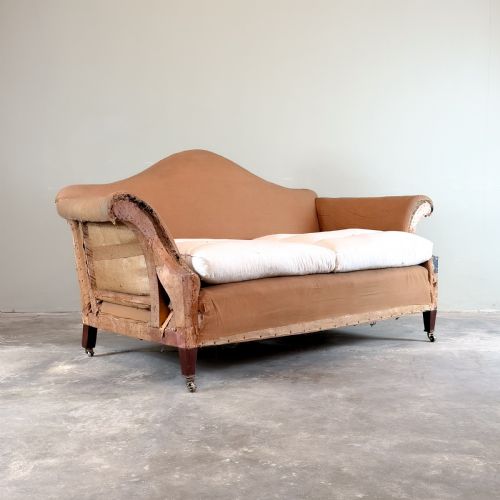
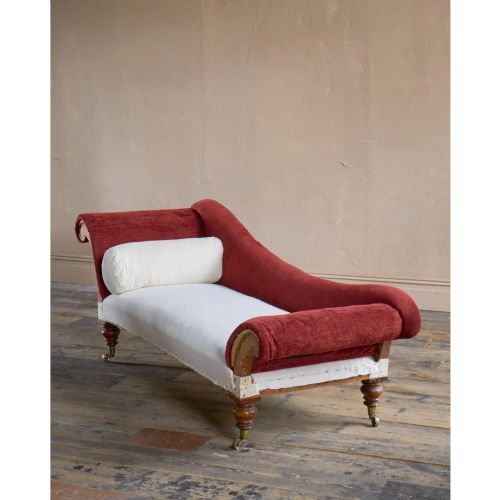


Antique Upholstery Project Sofa
An antique upholstery project sofa offers the rare chance to restore a period frame to its exact original splendour.
Antique Upholstery Project Sofa
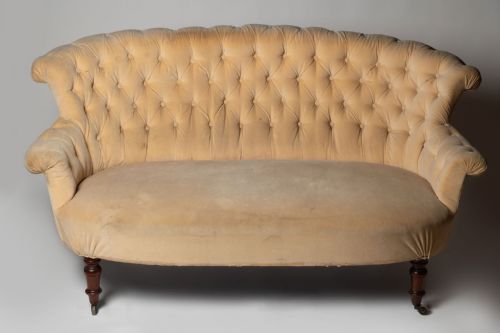
Buyers encounter pieces spanning distinct eras such as the Regency period, Victorian epoch, and Edwardian years. Frames constructed during these times often display classic profiles like the camel back, alongside distinctive stylistic touches from the Aesthetic Movement and French Provincial designs.
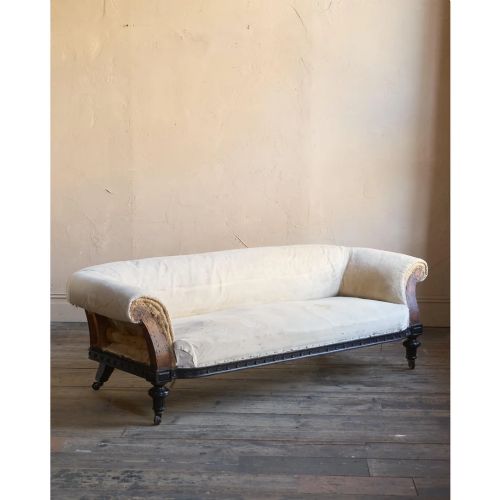
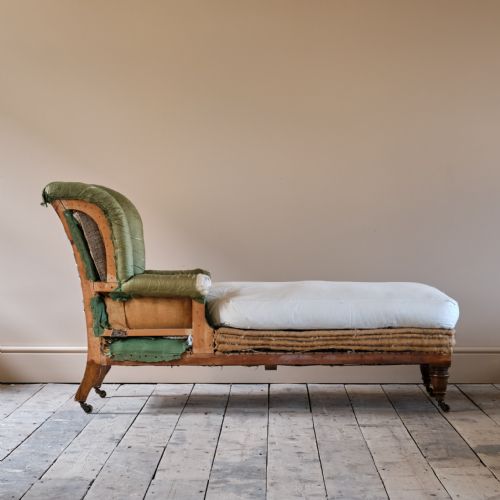
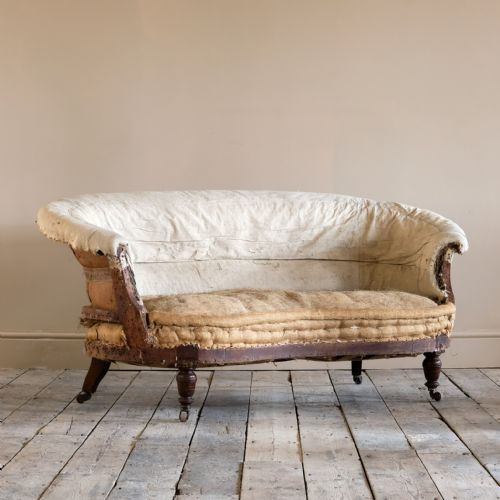
The primary focus when seeking an antique upholstery project sofa centres upon the structural integrity of the bare timber framework. Many items are sold stripped down to their essential webbing and Hessian foundation, leaving the wood exposed for inspection before new calico and top covers are applied.
How They Were Made
Traditional frames rely heavily on solid timbers, predominantly mahogany and ebonised wood, joined with durable construction methods that withstand decades of use. Brass details and castors frequently appear on nineteenth-century pieces to assist with movement across heavy carpets.
Internal upholstery techniques utilise natural supporting materials including Hessian cloth, jute webbing, and cotton stuffing to build the comfortable curves characteristic of period seating. These layered foundations require careful hand-stitching by skilled craftspeople during the restoration process.
Antique Upholstery Project Sofa Retail Price Guide 2026
Typical asking prices for upholstery project sofa among the pieces listed under this phrase on Sellingantiques today, from the lower quarter to the upper quarter. They describe what is for sale here now, not the wider market.
Listings feature periods spanning from the eighteenth century through the 1930s, using materials such as brass, mahogany, and Hessian.
What Varies in Quality
The distinction between ordinary and exceptional frames lies in the quality of the timber carving and the elegance of the silhouette. Finer examples exhibit meticulous craftsmanship in the woodwork, particularly on exposed mahogany legs and arm supports.
Maker attribution elevates certain pieces significantly, as workshop provenance indicates superior structural proportions and higher-grade materials from the outset. The complexity of the original design, whether a simple salon settee or a substantial country house sofa, determines the scale of the restoration undertaking.
Holland & Sons·Hampton & Sons·Willian Trotter
The Antique Upholstery Project Sofa Glossary
- Calico
- A plain-woven cotton fabric used as an initial tight upholstery layer over the internal stuffing before the final decorative cover is fitted.
- Hessian
- A coarse woven fabric made from jute fibres, traditionally employed as a foundational support layer for springs and stuffing.
- Ebonised wood
- Timber treated with a special stain or finish to imitate expensive ebony, frequently utilised on nineteenth-century frames.
- Chaise longue
- An elongated seating form designed for reclining, combining elements of a chair and a daybed.
- Webbing
- Strong woven strips stretched across the frame base to support the internal weight and spring systems.
Antique Upholstery Project Sofa: Frequently Asked Questions
What is an upholstery project sofa?
An upholstery project sofa is a period seating frame sold without its final fabric cover and often stripped back to the bare internal webbing. This allows the buyer to choose custom materials that match their specific interior decoration.
Restoring these items involves rebuilding the internal layers of cotton, Hessian, and jute before applying the exterior textile of choice.
How do I choose the right frame?
Selecting the appropriate frame depends on the desired period style, ranging from Regency mahogany designs to Victorian chesterfields and Edwardian salon settees. Consider the overall scale of the piece and the complexity of the wooden framework before committing to a restoration.
Examine the exposed woodwork carefully to ensure the timber remains solid and free from structural alterations.
Can I keep the original stuffing?
Original stuffing materials such as loose cotton and horsehair generally require complete replacement due to age and degradation. Stripping the piece down to the bare frame ensures a clean foundation and a comfortable seat.
Retaining historic padding is rarely practical for daily use, though traditional methods are replicated during the rebuild.
What tools are needed for restoration?
Upholstering a historic sofa requires specialised tools including tack lifters, webbing stretchers, curved needles, and a magnetic tack hammer. Precision is essential when handling delicate wooden frames to avoid marking the antique timber.
Many buyers prefer to source the frame themselves and pass the physical restoration work to a professional craftsperson.