


19th Century Kneehole Desk
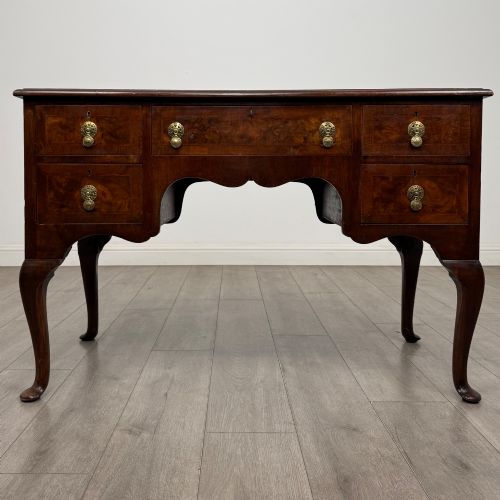
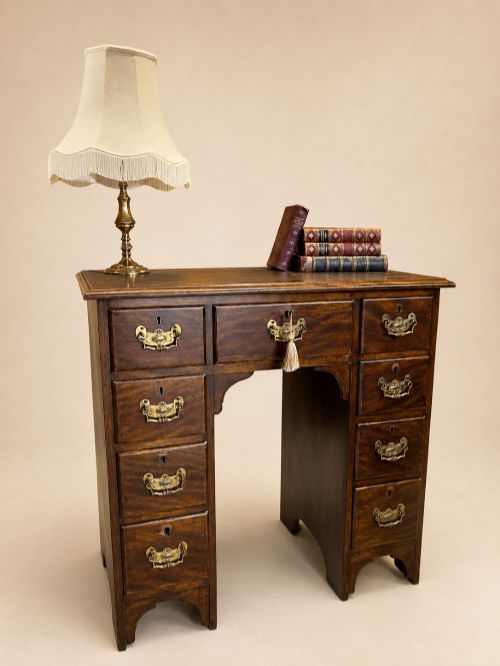
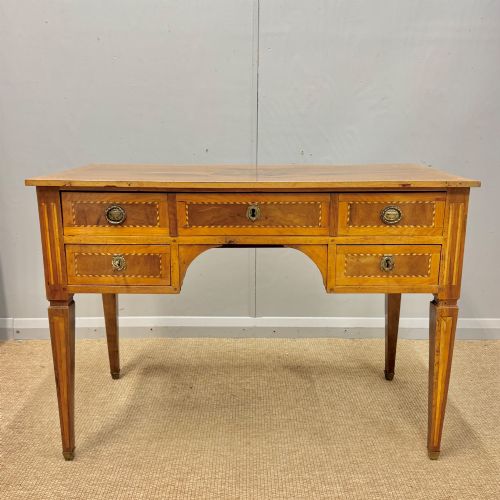
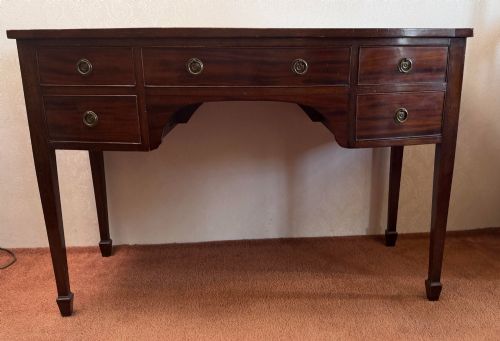
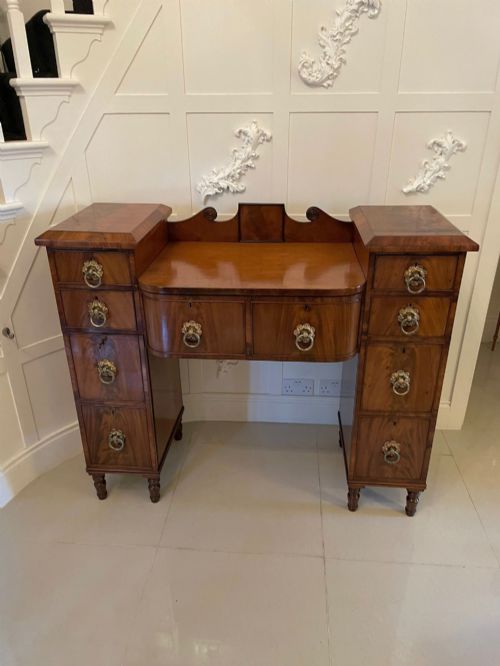
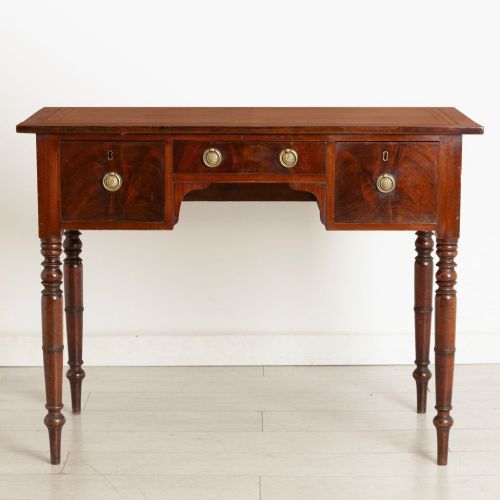
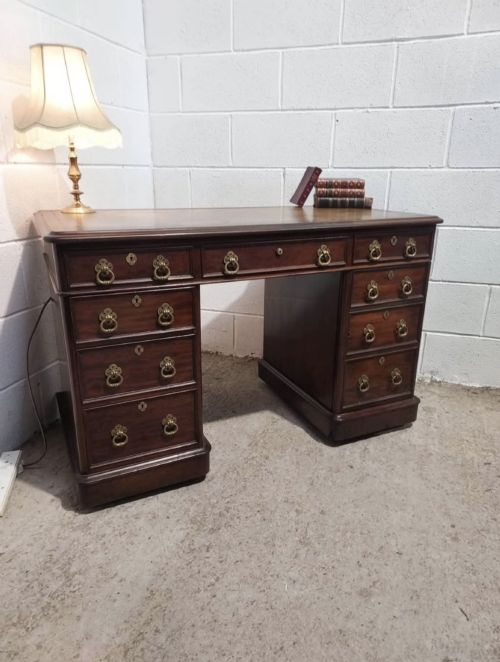
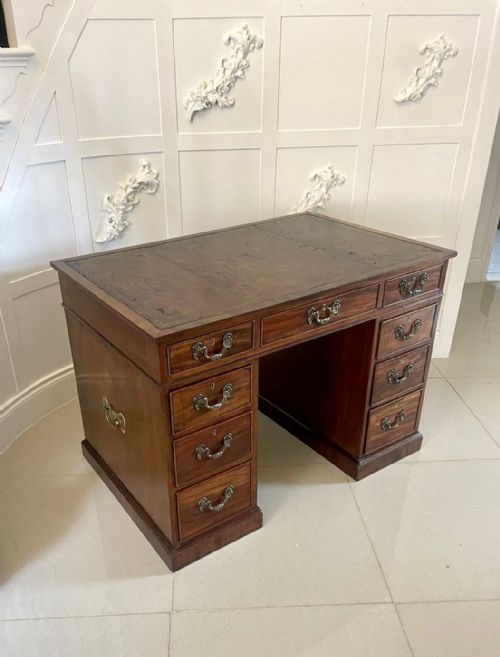
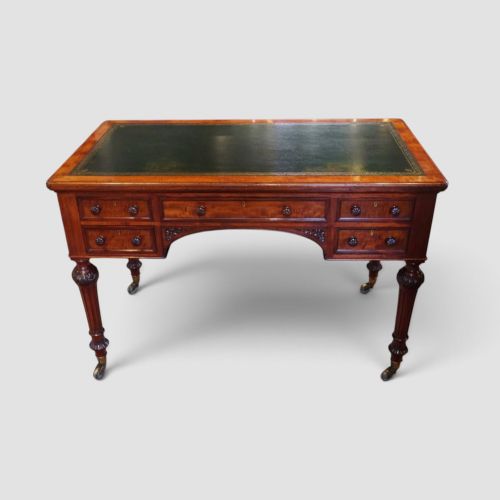
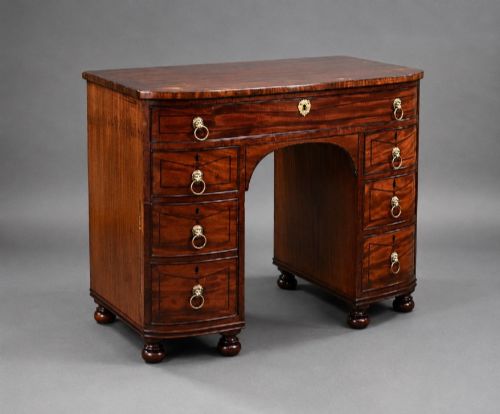
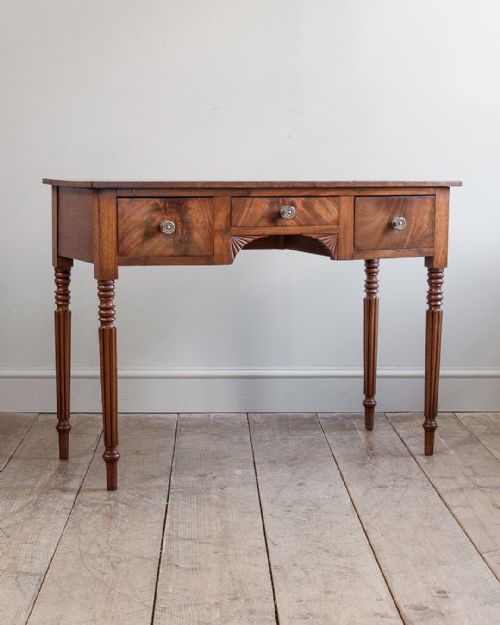
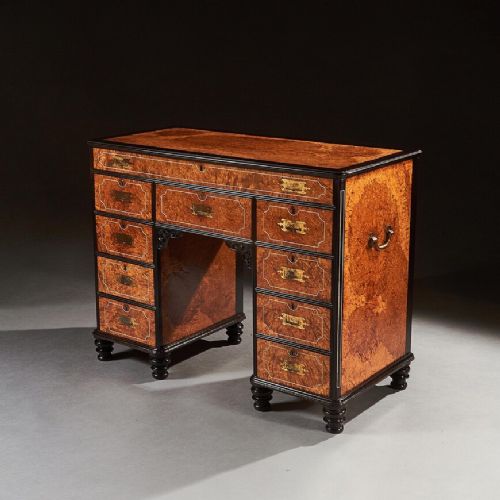
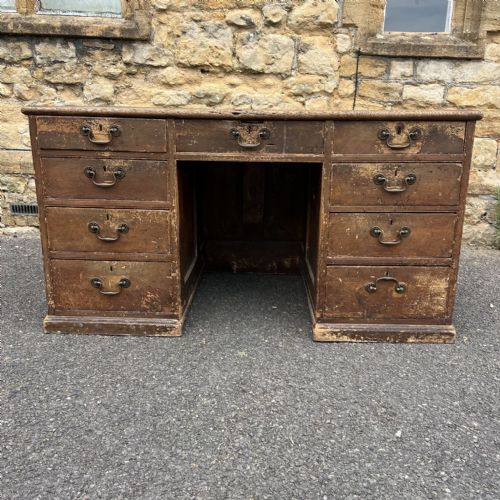
When you search for a 19th century kneehole desk, you find substantial writing furniture built with central recesses and flanking drawer pedestals.
19th Century Kneehole Desk
The format appears in several timber varieties, ranging from formal mahogany and burr walnut to utilitarian pine, oak, and satinbirch. Makers constructed them as twin pedestal units, three-part campaign pieces, or freestanding desks finished on all sides for placement in the middle of a room.
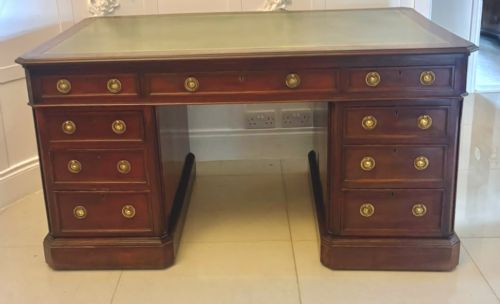
Buyers encounter examples fitted with leather or faux leather writing surfaces, stationery compartments, and integrated slides. These functional additions demonstrate the domestic and professional utility demanded by nineteenth-century writers and administrators.
Craftsmanship and Materials
Quality separates ordinary utility pieces from exceptional cabinetwork through the selection of timber figure, such as richly grained burr walnut or figured mahogany veneers. Superior examples display meticulous hand-cut dovetailing in the drawer construction and retain original brass hardware.
The sophistication of internal fittings, including secret compartments, fitted stationery drawers, and writing slides, distinguishes high-grade workshop production from simpler domestic furniture. Additionally, pieces finished on the reverse side for freestanding use indicate a higher tier of original design and commission cost.
Listings demonstrate that mahogany remains the predominant timber used for nineteenth-century pedestal and kneehole writing desks.
Trollope & Sons·Holland & Sons·Edwards and Roberts·Johnstone & Jeanes
The 19th Century Kneehole Desk Glossary
- Kneehole desk
- A writing desk with a central recess for the user's legs, positioned between two supporting pedestals of drawers.
- Pedestal desk
- A heavy writing table comprising two separate drawer units that support a single top board.
- Campaign desk
- Portable furniture constructed in multiple sections with recessed brass fittings, designed for easy transport on military campaigns.
- Writing slide
- A pull-out shelf housed beneath the desk top to provide extra surface area for paperwork.
- Partners desk
- A large pedestal desk designed with drawer units on both sides so two people can work facing each other.
19th Century Kneehole Desk: Frequently Asked Questions
What is a kneehole desk?
A kneehole desk is a form of writing furniture defined by a central open space beneath the top, allowing the user to sit close to the drawers.
These pieces typically incorporate two vertical stacks of drawers flanking the recess, providing substantial storage while maintaining a compact footprint.
Were these desks used by partners?
Standard kneehole desks feature a finished front and a panelled or enclosed back designed to sit against a wall.
Partners desks, by contrast, feature drawers and cupboards on both sides to accommodate two users working opposite each other.
How do I care for the leather top?
Leather writing surfaces require gentle cleaning with a slightly damp cloth, avoiding harsh chemical solvents that dry out the hide.
Applying a neutral leather cream periodically helps maintain the suppleness and preserves the gilt tooling along the edges.
Can these desks be taken apart?
Many pedestal desks disassemble into three distinct components: the top and the two supporting drawer pedestals.
This modular construction allows for easier transportation through narrow doorways and staircases, a method particularly common in campaign and large library furniture.