



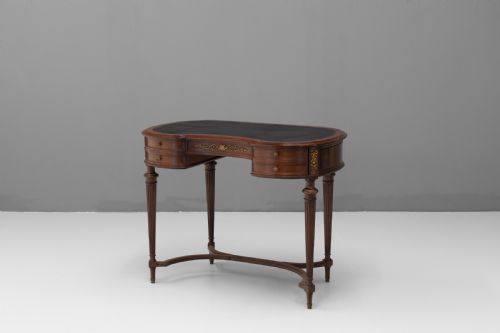


Antique Black Bureau
An antique black bureau brings deep ebonised finishes, lacquer, and japanning to a room, offering a dedicated writing surface with enclosed storage.
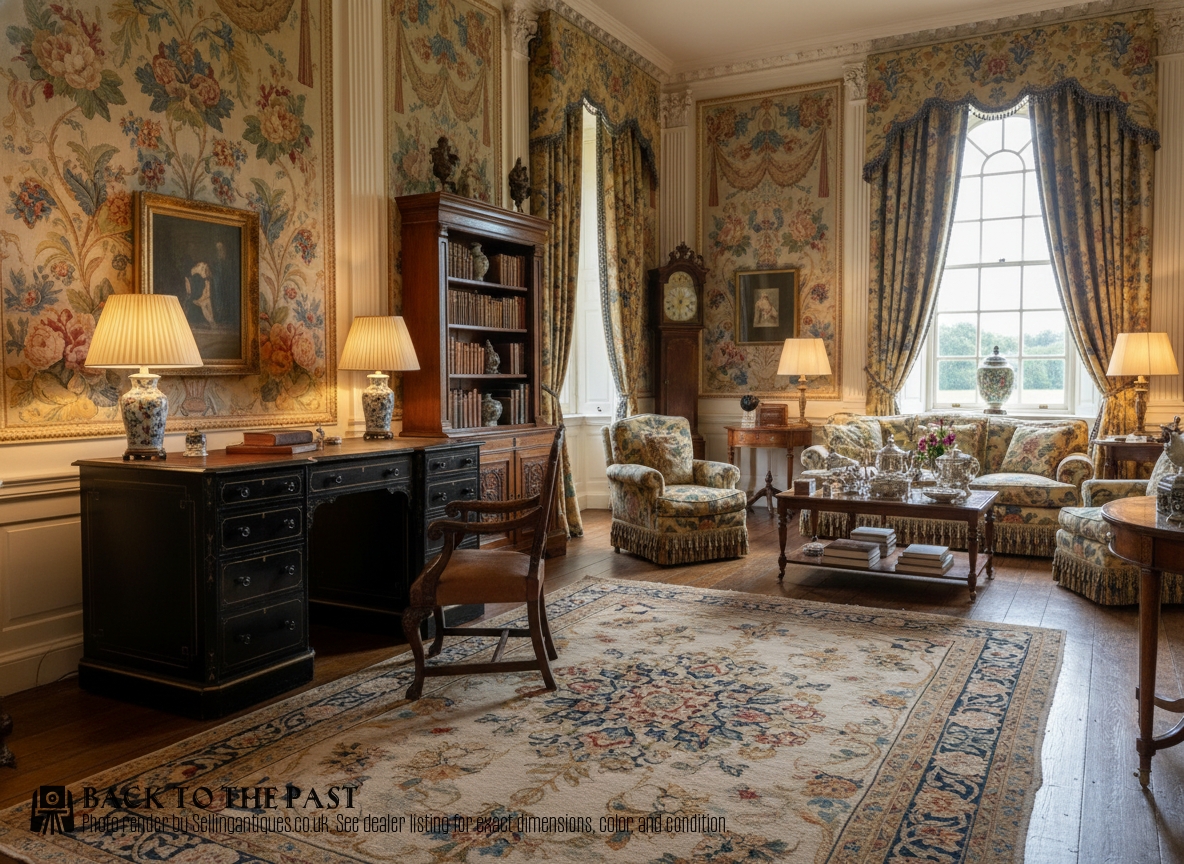
Antique Black Bureau
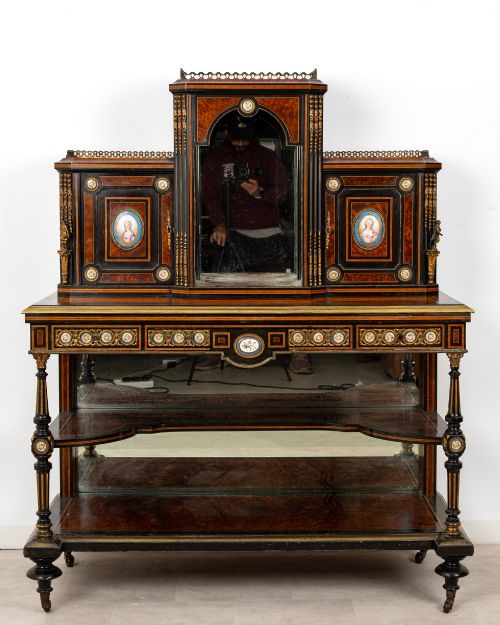
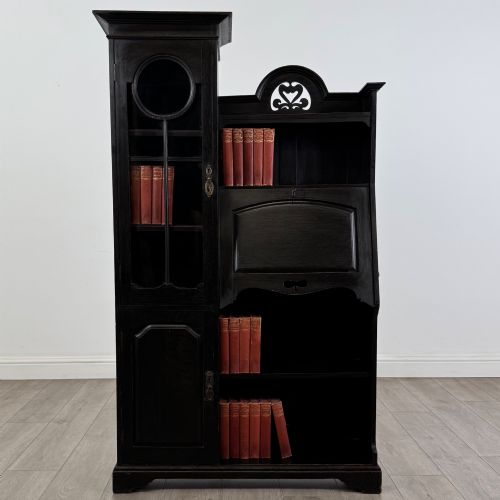
An antique black bureau combines a sloping writing flap or flat writing surface with internal compartments, drawers, and sometimes upper bookcase sections. These pieces span the eighteenth, nineteenth, and early twentieth centuries, with Victorian, Edwardian, and French Napoleon III examples appearing frequently alongside Chinese export lacquer.
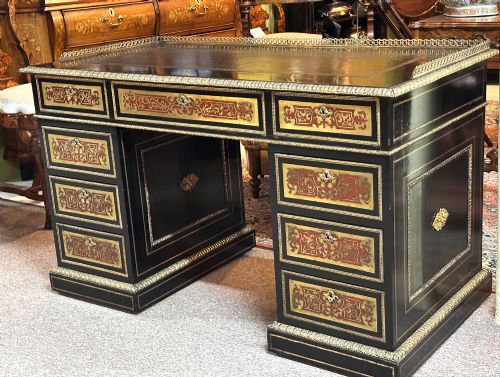
The materials range from ebonised wood and pine to lacquered wood, accented with brass, ormolu, and leather writing inserts. Styles stretch from French Empire and Louis XVI to Chinoiserie and the Aesthetic Movement, giving buyers a wide variety of dark-finished writing furniture.
How they were made
Cabinetmakers utilised dense timbers such as oak, birch, walnut, and pine as the structural foundation for these pieces. Surfaces were then ebonised through staining and polishing, or finished with complex layers of black lacquer and japanning.
Metal mounts in brass, ormolu, and gilt bronze were cast and chased to frame drawers, legs, and corners, while fine leather was often inset into the desktop surfaces to provide a smooth writing plane.
Some nineteenth-century writing desks include hidden compartments designed for secret correspondence and private ledgers.
What varies in quality
The refinement of the surface finish determines much of the distinction, separating deep, hand-polished ebonising and layered lacquer from simpler painted pine. Cabinetmaking skill shows in the precision of the dovetail joints within the drawers and the crisp execution of cast ormolu mounts.
Original hardware, intact leather inserts, and well-preserved decorative details such as marquetry or hand-painted Chinoiserie scenes elevate a piece above later adaptations or heavily restored surfaces.
Paul Sormani·Diehl Paris·Mathieu Befort
The Antique Black Bureau Glossary
- Ebonised
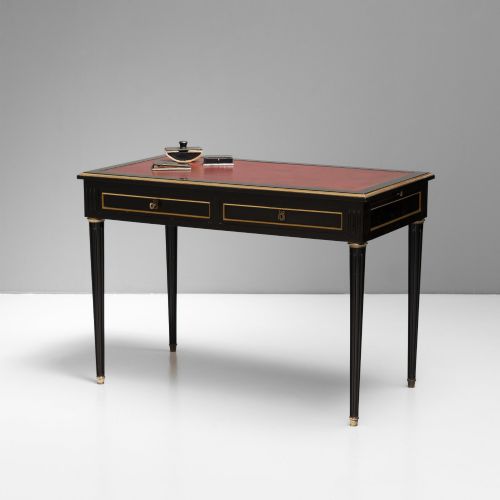
- Wood treated with stain or polish to imitate the deep black appearance of ebony. This technique gained immense popularity during the Victorian and Aesthetic periods.
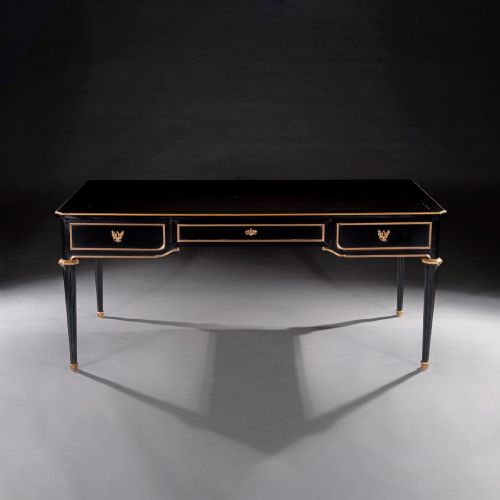
- Bureau plat
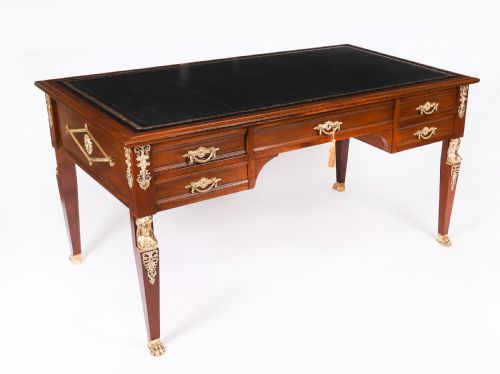
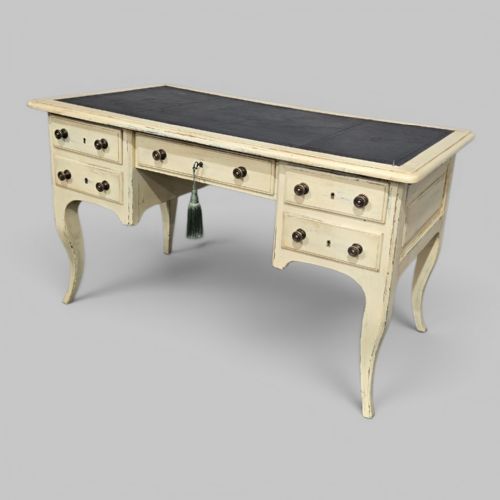
- A freestanding French writing table featuring a rectangular top and drawers in the frieze. These tables often stand on slender cabriole or tapered legs.
- Japanning
- A European imitation of East Asian lacquerwork involving layered varnishes and decorative motifs. Artisans baked the finish to achieve a hard, glossy black surface.
- Ormolu
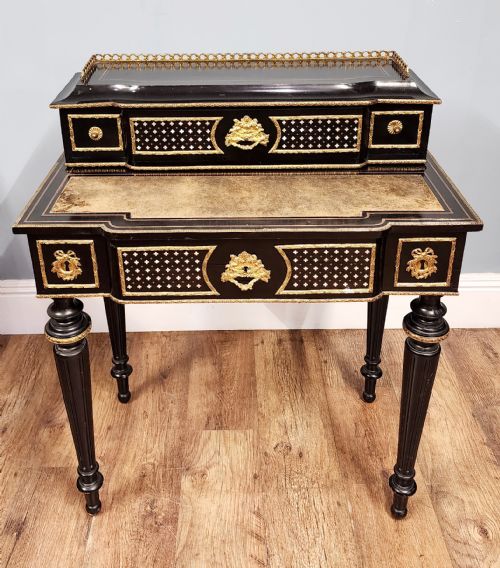
- Gilded bronze mounts applied to furniture for decoration. High-quality mounts exhibit sharp chisel work and deep, rich gilding.
- Bonheur-du-jour
- A light ladies' writing desk featuring a small cabinet or set of shelves above the main desk surface. Originating in France, these desks became fashionable in various revival styles.
Antique Black Bureau: Frequently Asked Questions
What is an antique black bureau?
An antique black bureau is a writing desk finished in dark ebonised wood or black lacquer, often featuring a sloping lid or a flat writing surface with internal compartments.
These pieces were produced across several centuries in various European and Asian workshops, serving as both practical writing furniture and decorative focal points.
How do I identify the period?
Period identification relies on examining the underlying construction timber, the method of ebonising or lacquering, and the characteristic decorative hardware. Styles such as French Empire, Victorian Aesthetic, and Chinoiserie carry distinct aesthetic markers tied to their decades of manufacture.
Cabinet joints and secondary woods inside the drawers also provide reliable clues to the age of the piece.
How should I care for ebonised wood?
Ebonised and lacquered surfaces require gentle dusting with a soft, dry cloth to prevent abrasion. Avoid placing the bureau in direct sunlight or near heat sources, which can cause the dark finish to fade or crack.
Periodic application of appropriate wax polish helps maintain the deep lustre of the wooden surface.