

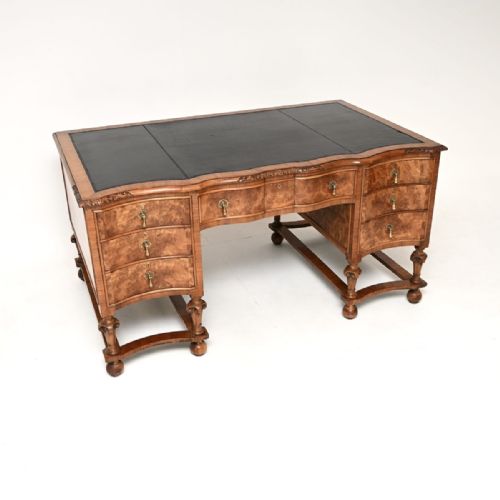
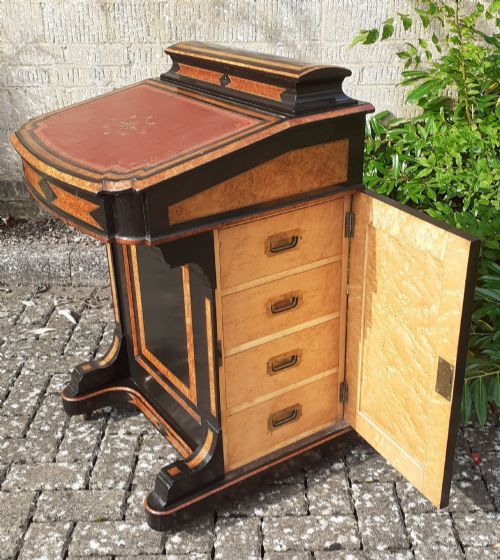
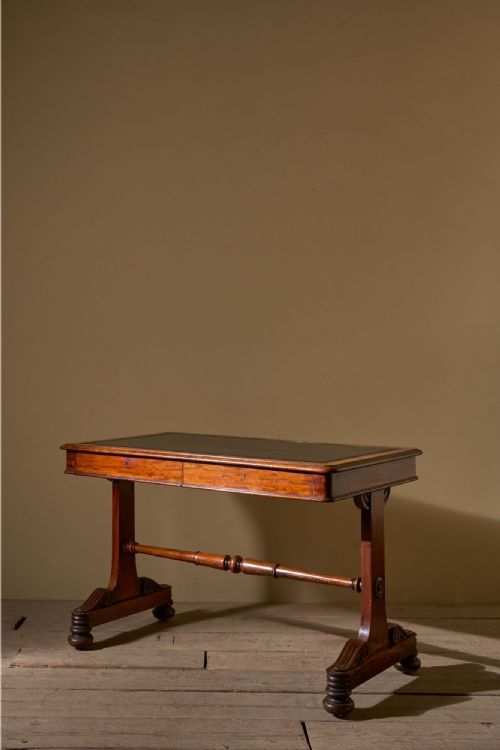
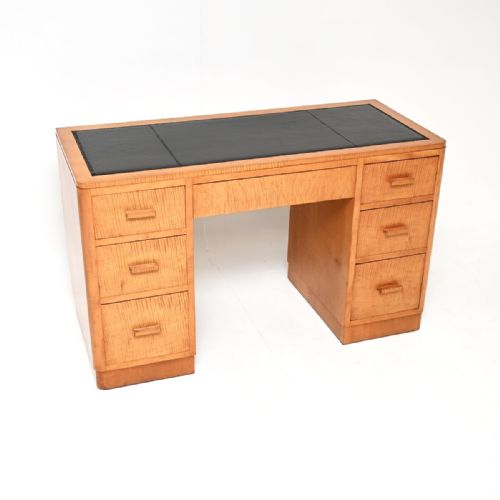
Black Writing Desk
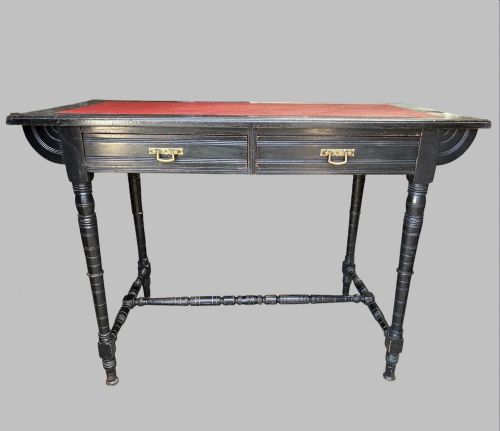
A black writing desk brings deep ebonised finishes and dark leather into a room, offering a serious surface for correspondence.
Black Writing Desk
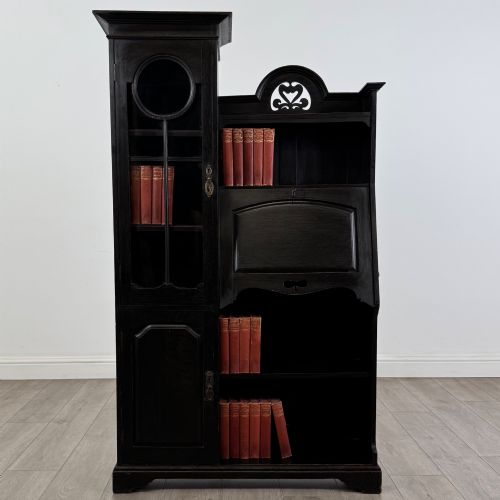
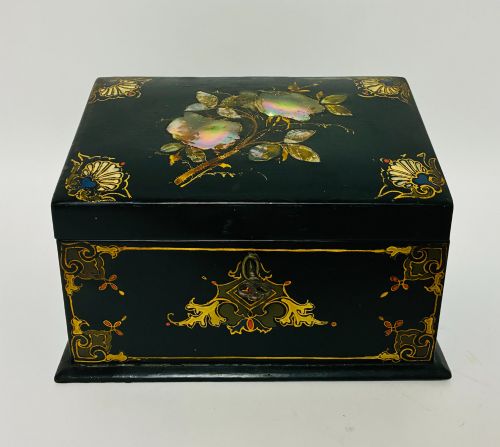
A search for a black writing desk uncovers everything from compact Victorian papier-mâché writing boxes and Davenport desks to substantial partners desks and pedestal tables. You will encounter ebonised wood, black lacquer, and dark leather surfaces across periods stretching from the Georgian era through the Victorian decades into Art Deco and the twentieth century.
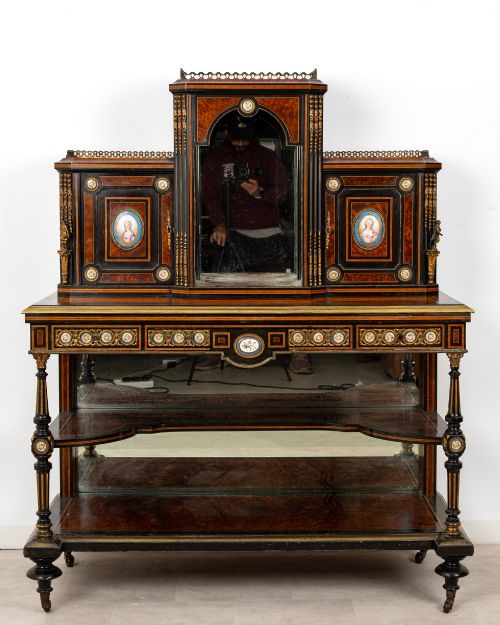
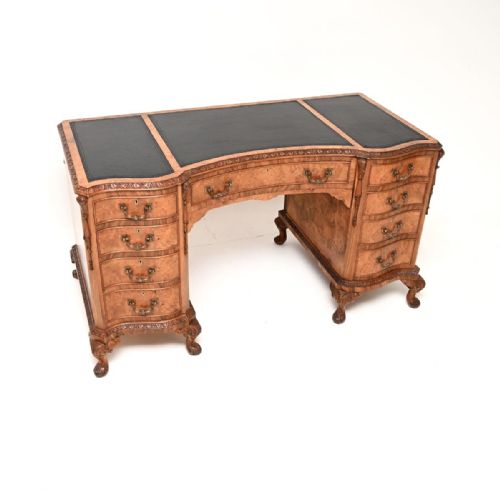
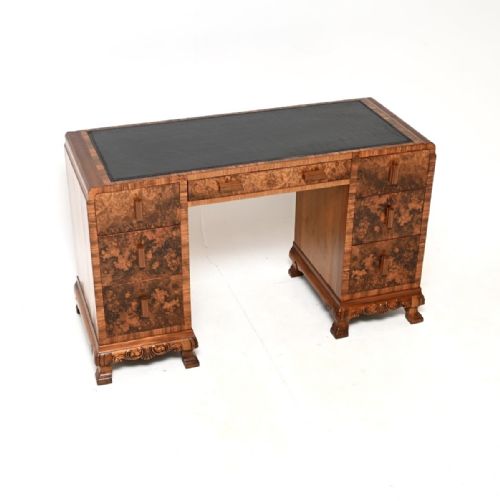
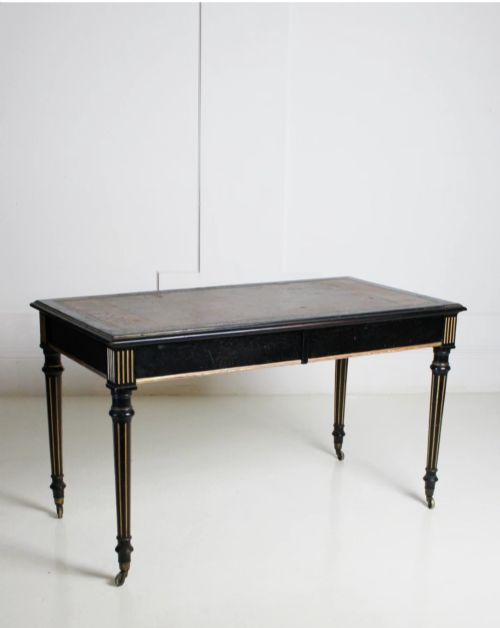
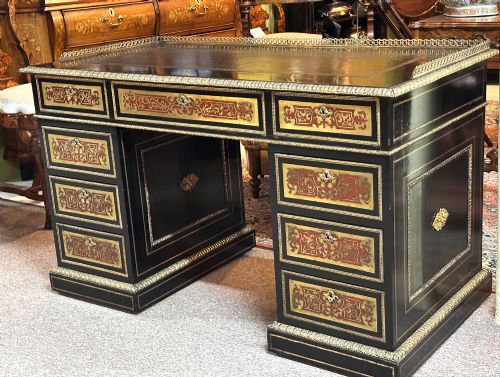
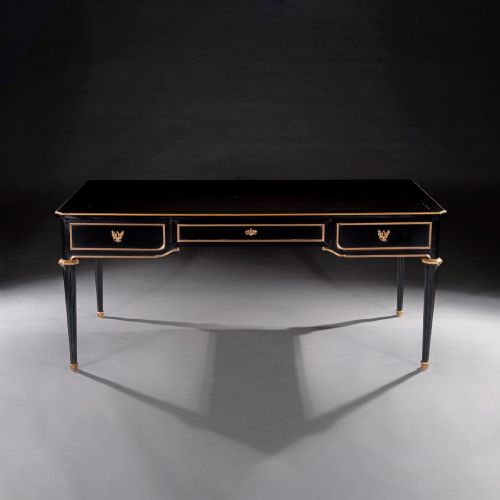
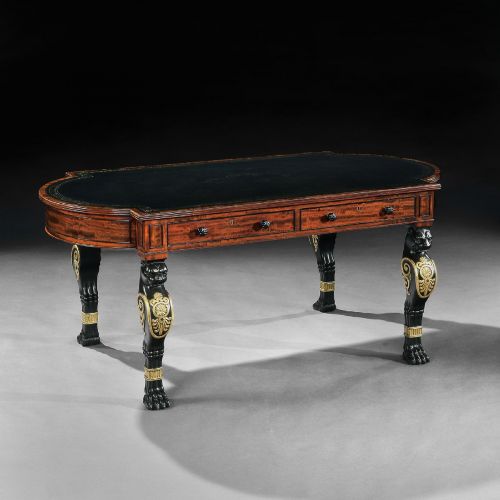
The pieces appearing on this page take multiple forms, including bureau plat writing tables, kneehole desks, and occasional writing boxes with fitted interiors. French Napoleon III and Empire pieces sit alongside English mahogany and walnut examples, often featuring inset leather writing surfaces and gilt bronze mounts.
Edwardian ladies writing desks and bamboo black lacquered variants represent lighter forms designed for boudoirs and drawing rooms. Meanwhile, larger office desks and pedestal partners variants cater to heavier studies and libraries.
Materials and construction
Cabinet makers utilised foundational timbers such as mahogany, oak, and walnut, transforming them through ebonising or applying deep black lacquer finishes. Surfaces often receive inset panels of black or dark leather, frequently tooled with blind or gilt decoration.
Decoration relies on contrasting elements, incorporating brass hardware, ormolu mounts, boulle work, and hand-painted Chinoiserie motifs. Papier-mâché and papier-mâché lacquer provide smooth dark canvases for intricate ornamentation on smaller boxes and stationery cabinets.
Several writing boxes double as lap desks, designed for correspondents who preferred drafting letters while travelling.
Craftsmanship and distinction
Quality rests on the integrity of the timber framing and the depth of the ebonised finish or lacquer application. Superior examples display crisp inlay, disciplined gilt bronze mounts, and well-executed hand-painted details rather than superficial surface treatments.
Internal secondary woods, original drawer linings, and the survival of fitted compartments separate standard utility pieces from workshop-attributed items. The condition of the leather writing surface and the precision of joinery define the upper tier of surviving examples.
Maple and Co·Johnstone and Jeanes·Sampson Mordan and Co·Maison Millet·A. Cohen and Co Ltd
The Black Writing Desk Glossary
- Ebonised
- Wood stained or painted to imitate ebony. This dark finish gained widespread popularity during the Victorian and Aesthetic periods.
- Bureau Plat
- A freestanding French writing table featuring a rectangular top and one or more drawers in the frieze. These tables often stand on cabriole or tapered legs.
- Partners Desk
- A large double-sided pedestal desk designed for two people to work opposite each other. Cupboards and drawers typically duplicate on both sides.
- Papier-Mâché
- A composite material made of paper pulp or sheets mixed with glue, pressed and dried. It forms a sturdy base for lacquer and painted decoration.
- Ormolu
- Gilt bronze ornamentation applied to furniture and decorative objects. It provides bright metallic contrast against dark wood and ebonised surfaces.
Black Writing Desk: Frequently Asked Questions
What is a bureau plat?
A bureau plat is a freestanding writing table finished on all sides so it can sit in the middle of a room. It typically has a rectangular top inset with leather and drawers built into the frieze.
originating in France, these tables often feature decorative mounts or detailed woodwork that distinguishes them from standard office desks.
How do I care for ebonised wood?
Ebonised surfaces require gentle dusting with a dry, soft cloth to prevent scratching the dark finish. Avoid harsh chemical cleaners and keep the furniture away from direct sunlight.
Applying a suitable wax occasionally helps maintain the lustre of the black surface without building up excessive residue.
What is a partners desk?
A partners desk is a large double-sided desk built with drawers and cupboards accessible from both the front and the back. This configuration allowed two people to work face to face.
These desks often feature extensive leather writing surfaces and substantial timber construction suited for large studies.
Are black writing desks Victorian?
Many black writing desks date from the Victorian period, when ebonised wood and dark japanned finishes enjoyed great popularity. However, similar desks also appear from Georgian, Regency, and Art Deco periods.
Stylistic details and construction methods help determine the specific era in which a piece was made.