



19th Century Kilim
These 19th century kilim pieces bring flatweave textile history into a room with rich regional character and authentic tribal designs.
19th Century Kilim
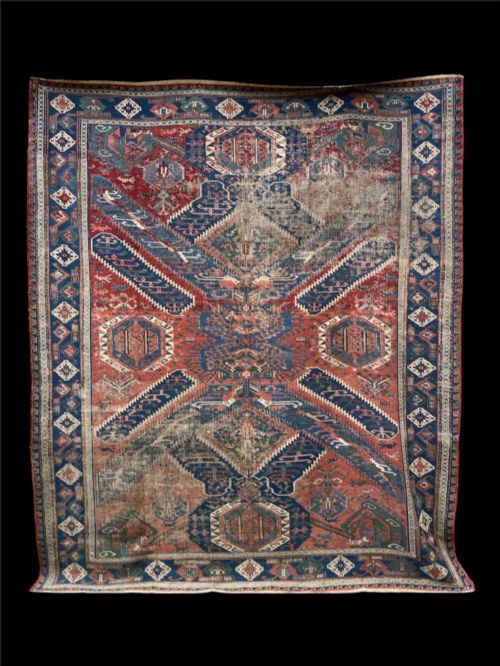
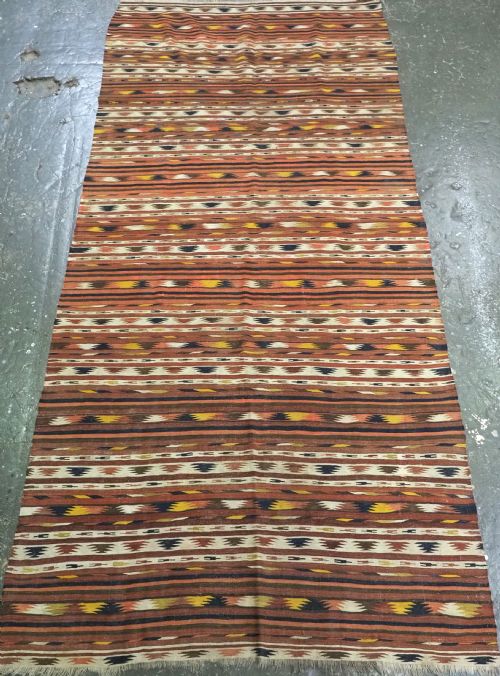
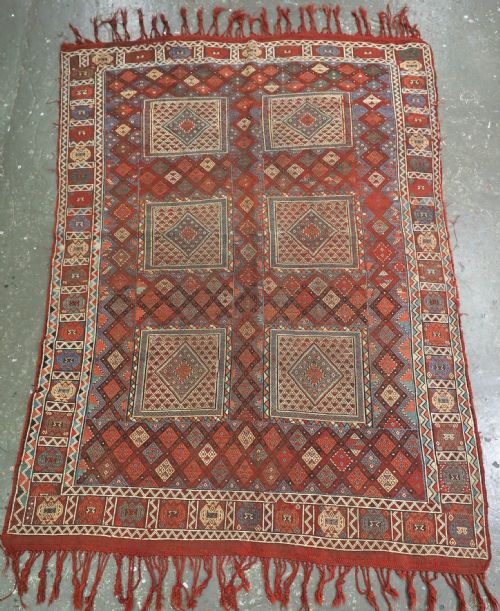
A 19th century kilim is a flatweave textile originating from regions spanning Anatolia, the Caucasus, Persia, Central Asia, and Eastern Europe. These items function as floor rugs, runners, prayer rugs, and upholstery coverings or storage panel fragments. The pieces available most frequently reflect Turkish, Caucasian, and Persian origins produced during the latter half of the nineteenth century.
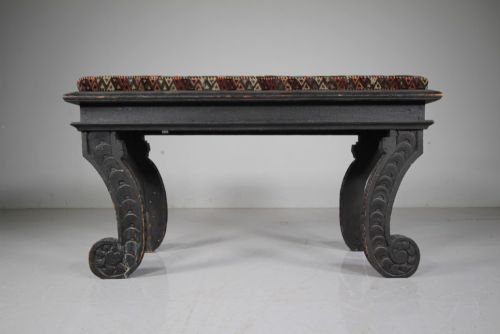
Makers fashioned these flatweaves in distinct regional styles such as Anatolian Tribal, Caucasian, and Central Asian Tribal. Examples range from large format carpets and banded Shirvan designs to prayer formats from Erzurum and Aleppo. Buyers encounter both complete rugs and domestic items like covered trunks or furniture upholstery.
The aesthetic derives from geometric motifs, bold graphic compositions, and large scale floral layouts. Turkic and Persian tribal groups utilised local dyeing traditions to produce saturated colour palettes on wool foundations. Each piece carries the distinct structural markers of its specific weaving village or nomadic camp.
Materials and construction
Weavers constructed these flatweaves entirely from wool, utilising slit tapestry weaving techniques where individual colour blocks interlock or leave small vertical openings. This method creates a reversible textile without a pile, resulting in a firm, flat fabric suited for both floor use and utilitarian domestic objects.
Artisans built larger formats by weaving narrow strips or separate parts on horizontal looms and subsequently joining them together by hand. Finished pieces often incorporate extended kilim ends and braided or secured margins to prevent unravelling along the borders.
19th Century Kilim Retail Price Guide 2026
Typical asking prices for 19th century kilim among the pieces listed under this phrase on Sellingantiques today, from the lower quarter to the upper quarter. They describe what is for sale here now, not the wider market.
The inventory records rugs, runners, prayer kilims, and upholstered trunks.
Distinctions in quality
Quality rests upon the tightness of the weave, the precision of the geometric or floral layout, and the complexity of the regional design. Finer examples display a high knot or density count and crisp transitions between slit tapestry colour areas.
The distinction between standard and superior pieces also depends upon the depth and saturation of the natural dyes used in the wool. Intact structural integrity across larger formats or multi part joins elevates a flatweave within the range.
The 19th Century Kilim Glossary
- Kilim
- A flatweave textile produced without a pile by tightly inter-weaving warp and weft threads. This technique creates a smooth, reversible fabric utilised for floor coverings and domestic furnishings.
- Slit tapestry
- A weaving method where the weft threads are returned at the edge of a colour area, leaving a small vertical slit in the fabric. Weavers use this technique to define sharp geometric pattern changes.
- Prayer kilim
- A flatweave featuring a pointed architectural mihrab niche design intended for directional use during daily prayers. These rugs originate from specific Anatolian and Syrian centres.
- Mafrash
- A nomadic storage chest or compartment constructed from flatwoven panels. Surviving sections often appear as isolated side panels or bases.
- Warp
- The stationary vertical threads stretched upon a loom that form the structural foundation of the textile. Wefts are passed across these underlying cords to build the pattern.
19th Century Kilim: Frequently Asked Questions
How were 19th century kilims used originally?
Nomadic and village communities utilised these flatweaves as floor coverings, blankets, wall hangings, and functional storage containers. They served practical domestic purposes across households in Anatolia, Persia, and the Caucasus.
Families also integrated them into furniture upholstery and structural horse or pack equipment. Their flat, durable construction made them adaptable for heavy daily use.
Where did these flatweaves originate?
The pieces originate from traditional weaving centres across Turkey, the Caucasus, Persia, Central Asia, and Eastern Europe. Specific regions include Shirvan, Erzurum, Malatya, and Qashqai territories.
Each area developed distinct weaving structures, wool types, and colour palettes specific to local tribal or village traditions.
How should I care for a vintage flatweave?
Vacuum these wool textiles gently with a low suction attachment without using a rotating beater bar. Protect them from direct, prolonged sunlight to prevent natural dye fading.
Rotate the rug periodically to ensure even wear across high traffic areas. Professional textile cleaning is recommended for deep maintenance.
Can I place a flatweave on the floor?
These textiles function effectively as floor coverings when paired with a quality non slip underlay. The sturdy wool construction handles normal foot traffic while maintaining its structural flatness.
Large formats and runners suit hallways and living spaces, while smaller fragments often find placement as decorative accent pieces.