


19th Century Hunt Scene
When you encounter a 19th century hunt scene, you are looking at spirited depictions of hounds, horses, and riders captured in oils, engravings, and ceramics.
19th Century Hunt Scene
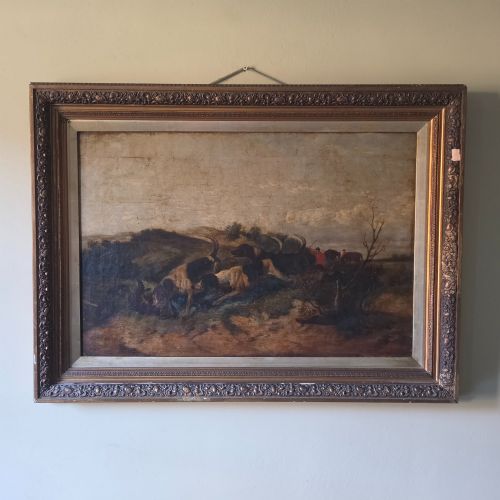
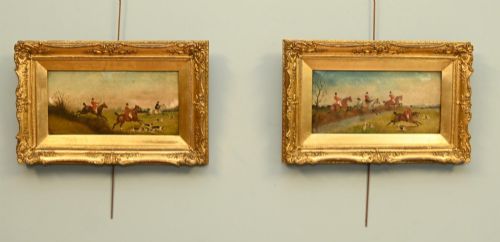
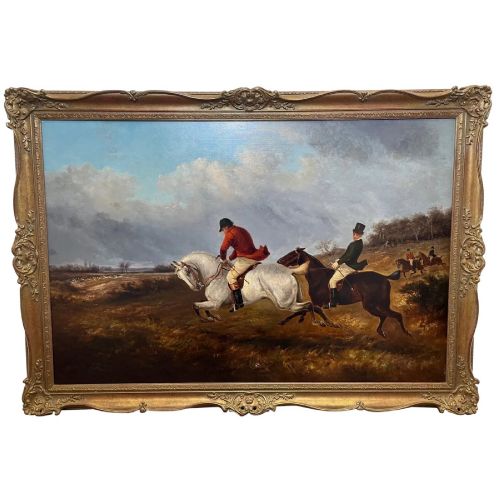
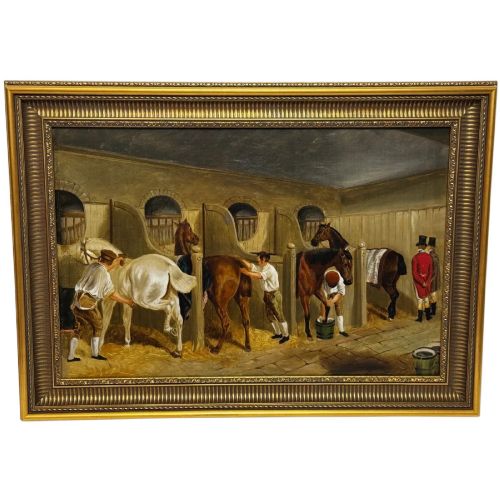
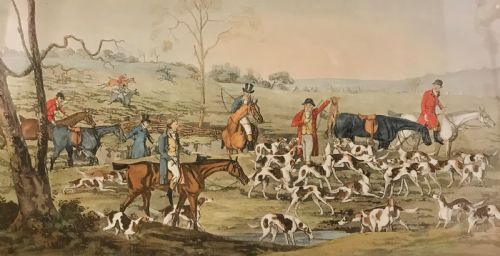
A 19th century hunt scene typically presents equestrian subjects, hounds, and country pursuits across canvas, paper, and pottery. These works document the social and sporting life of the Victorian and Georgian periods through structured compositions of hounds on the scent and riders in full cry.
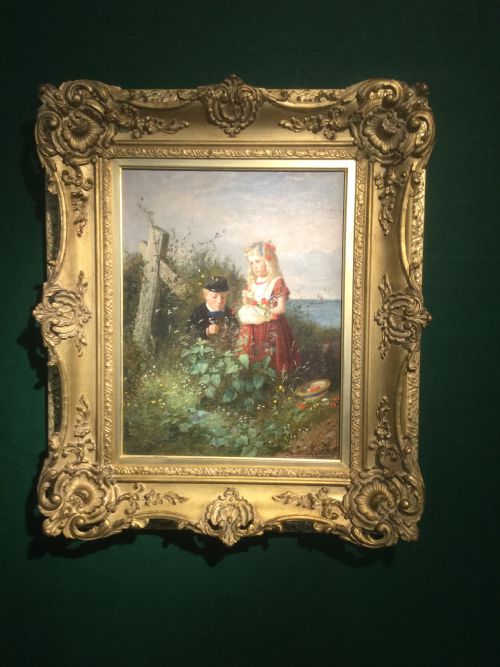
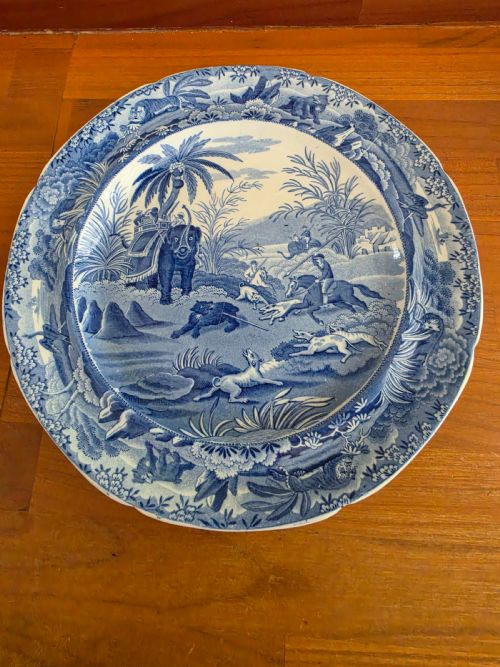
The objects bearing these subjects range from framed oil paintings and watercolours to lithographs, engravings, and transfer-printed ceramic jugs and plates. Many pieces capture specific moments such as the meet, the chase, or the kill in pastoral landscapes.
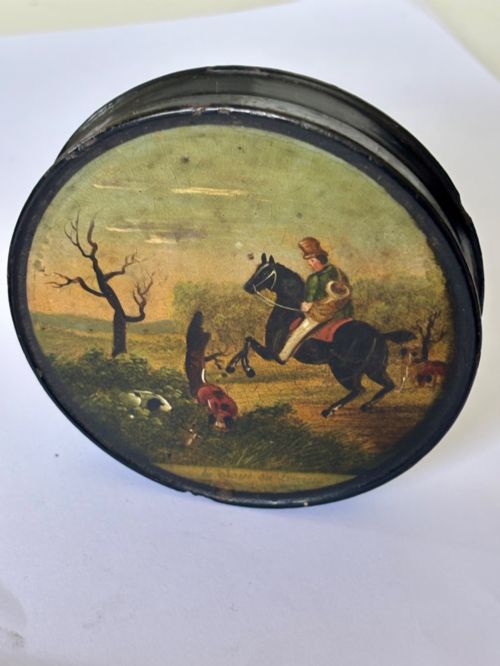
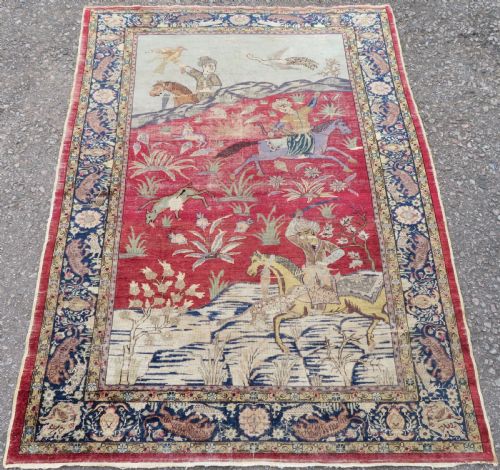
Works on this page appear in various forms, including reverse glass silhouettes, papier-mâché snuff boxes, and silk rugs alongside traditional framed art. These varied media demonstrate how widely sporting motifs were applied to domestic objects during the nineteenth century.
Materials and Methods
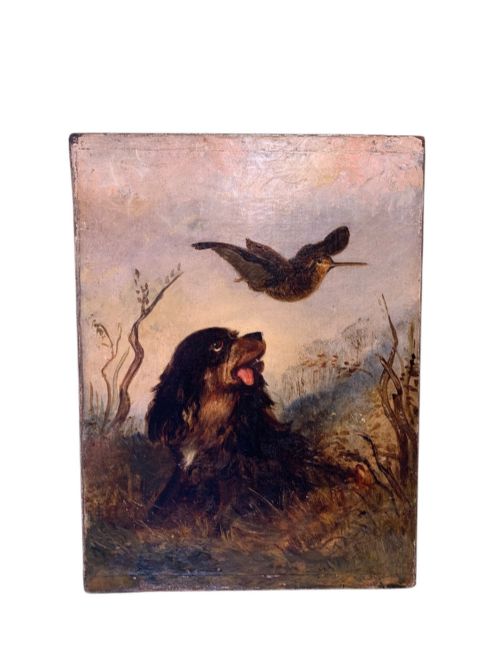
Painters utilised oil on canvas, wood panel, and board, often layering pigments to render the texture of horses' coats and the landscape. Engravers and lithographers worked on paper and card, sometimes applying hand-colouring to printed outlines.
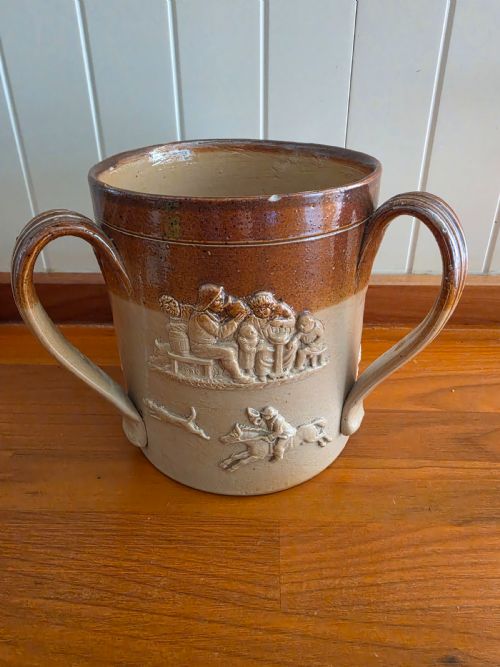
Potters employed stoneware, earthenware, and transfer printing to place imagery onto jugs, loving mugs, and pate jars. Carvers shaped oak, birch wood, and papier-mâché into relief panels and boxes bearing hunting motifs.
Framing materials commonly include gilt wood and moulded frames that complement the tonal palette of the paintings and prints. Glass protected delicate paper works and reverse silhouette paintings.
Listings feature oil paintings, watercolours, engravings, lithographs, ceramics, carved wood, and papier-mâché.
Assessing Quality and Execution
Anatomical accuracy in the depiction of horses and hounds distinguishes superior works from standard decorative pieces. Master painters rendered muscle structure, movement, and expression with precision, whereas lesser examples rely on formulaic postures.
The handling of the landscape and atmospheric perspective contributes significantly to the success of an oil painting or watercolour. Strong works integrate figures into the natural terrain with coherent lighting and depth.
The clarity of transfer printing on ceramics and the crispness of lines in engravings determine the visual impact of printed items. Finer ceramic pieces exhibit clean transfers and well-defined relief moulding.
Thomas Smythe·Charles Hunt·George Armfield·Charles Faulkner·John Frederick Herring Jnr·Henri Schouten·Heywood Hardy·Robert Cleminson·Guillaume Urban Régamey·George Goodwin Kilburne·Edgar Hunt·William J Hodgson·Thomas Blinks·Francis Calcraft Turner·Myles Birket Foster·John Nost Sartorius
The 19th Century Hunt Scene Glossary
- Tyg
- A large drinking vessel with three or more handles. These ceramic pieces were often made for communal sharing.
- Lithograph
- A print made from a flat stone or metal plate on which an image is drawn with a greasy substance. This technique allowed for the reproduction of detailed illustrations.
- Transfer printing
- A method of applying a design to pottery by pressing paper printed with ceramic pigment onto the glazed surface. This process enabled consistent decorative patterns on domestic wares.
- Giltwood
- Wood that has been coated with a thin layer of gold leaf. Frames and decorative objects frequently utilised this finish to add reflective warmth.
- Relief carving
- Sculpture in which figures project slightly from a background plane. This technique appears on wooden boxes and panels depicting sporting subjects.
19th Century Hunt Scene: Frequently Asked Questions
What subjects appear in a hunt scene?
These pieces generally depict horses, hounds, riders, and rural landscapes associated with fox hunting and sporting pursuits. Specific moments include the initial meet, hounds following a scent, and full pursuit.
Animals feature prominently, with particular attention given to the conformation of hunting dogs and horses in motion. Human figures include huntsmen in traditional attire and spectators in country settings.
How were ceramic hunting scenes made?
Potters used transfer printing to apply black and white or coloured hunting motifs onto stoneware and earthenware vessels. Relief moulding was also employed on jugs and mugs to create raised decorative elements.
Some ceramic items incorporate specific dates or commemorative details within the glaze or body of the piece. These techniques allowed functional vessels to display narrative sporting decoration.
Where were these paintings and prints displayed?
Original oil paintings and large engravings typically hung in country houses, sporting estates, and domestic parlours during the nineteenth century. Smaller items like snuff boxes and decorative trays served as personal accessories.
Framed works on paper and canvas brought rural pursuits into urban and country interiors alike. The variety of formats ensured that sporting imagery suited both public rooms and private studies.
How do I care for an oil painting?
Oil paintings on canvas or wood require stable environmental conditions away from direct sunlight and excessive humidity. Regular gentle dusting with a soft, dry brush helps maintain the surface.
Avoid using liquid cleaners or abrasive materials on the paint layer or the surrounding gilt wood frame. Professional conservation should be sought for any structural repairs to canvas or panel.