
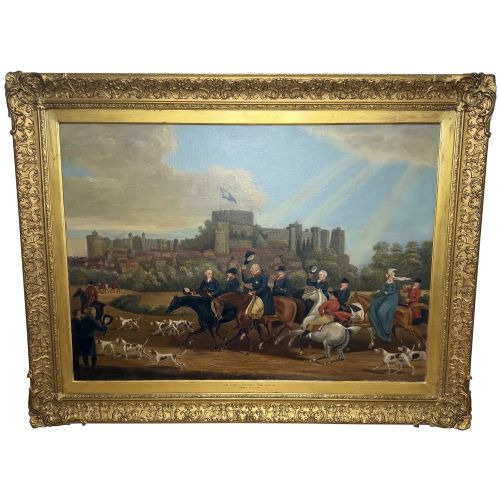

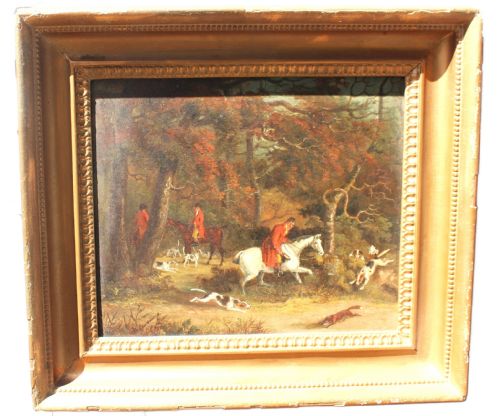


Georgian Hunt Oil Painting
A georgian hunt oil painting brings the drama of the field and covert directly onto the wall in rich canvas and pigment.
Georgian Hunt Oil Painting
When you search for a georgian hunt oil painting, you encounter works capturing the energy of hounds, huntsmen, and sporting pursuits from the eighteenth and nineteenth centuries. The subjects range from formal portraits with dogs and falcons to spirited scenes of foxes, hounds, and mail coaches navigating winter landscapes.
You are most likely to meet pieces originating from the Georgian period through to the nineteenth century, executed in oil on canvas or wood. These wall art pieces reflect British sporting traditions, depicting lords, sportsmen, and their animals in detailed countryside settings.
How they were made
The artists painted primarily in oil paint upon prepared canvas or wood panels, building depth through layered brushwork and rich pigments. Many surviving works retain their original wood and giltwood or gesso frames, which complement the depth of the painted scenes.
Canvases were stretched over wooden frames, while panel paintings utilised stable timbers to support the oil paint. The application of paint captures fine details in the clothing, animals, and natural foliage characteristic of British sporting art.
Listings feature works spanning the Georgian period and the nineteenth century, created using oil on canvas, wood, and gesso.
What varies in quality
Quality in these works rests upon the precision of the brushwork and the anatomical accuracy of the figures and animals. Finer paintings demonstrate a skilled handling of light within wooded clearances and skies, bringing movement and narrative clarity to the scene.
The sophistication of the composition and the condition of the pigment and support distinguish different pieces. Furthermore, the craftsmanship of the accompanying gilt wood or gesso frame contributes significantly to the overall integrity of the piece.
Samuel Raven·Thomas Beach·James Ward RA·Samuel John Egbert Jones·Dean Wolstenholme·James Pollard
The Georgian Hunt Oil Painting Glossary
- Oil on Canvas
- Pigment mixed with drying oil applied to a stretched woven fabric support. This combination allows for rich blending of colours and enduring flexibility.
- Gesso
- A plaster-like mixture applied to wood or canvas as a base for painting or gilding. It provides a smooth, bright surface for the final layers.
- Sporting Art
- Depictions of rural sports, animals, and field pursuits that flourished in British painting. This genre documents the social history of the countryside.
- Wood Panel
- A rigid support fashioned from timber used by artists before or alongside canvas. Panels offer a durable surface that preserves fine brush detail.
Georgian Hunt Oil Painting: Frequently Asked Questions
What subjects appear in these paintings?
The works depict traditional rural pursuits, including fox hunting, hounds on the scent, shooting parties with spaniels, and mail coaches in winter landscapes. Portraits of sportsmen with their dogs and falcons also feature prominently.
These subjects reflect the sporting life and countryside interests of the Georgian and nineteenth-century periods, capturing specific moments in the field.
How do I date a painting?
Dating relies on stylistic evidence, costume details such as top hats and riding attire, and recorded details of the artists or sitters. Reference to nineteenth-century and Georgian conventions helps place the work in its era.
Frame styles and canvas construction methods also offer clues to the age of the piece, aligning with the periods documented in British sporting art.
Where should I hang one?
These works suit traditional reception rooms, studies, or hallways where wall art of a sporting nature complements period interiors. Positioning them away from direct sunlight protects the oil paint and canvas.
Matching the gilt wood or gesso frame to the surrounding room decor ensures the painting becomes a natural focal point.
How do I care for the canvas?
Maintenance involves keeping the painting in a stable environment with moderate humidity to prevent the canvas or wood panel from warping. Dusting should be done gently with a soft, dry brush.
Avoid using liquid cleaners on the paint surface or the giltwood frame to preserve the original materials and finish.