


Gilt Framed Sporting Print
A gilt framed sporting print brings the chase, the pitch and the paddock directly to the wall in a polished border.
Gilt Framed Sporting Print
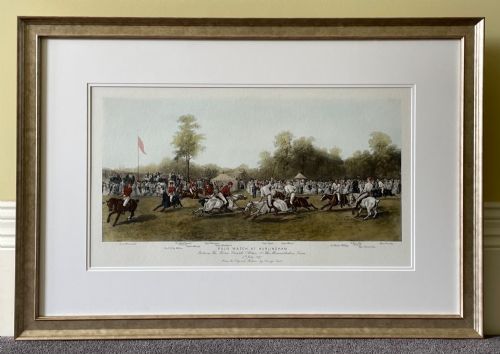
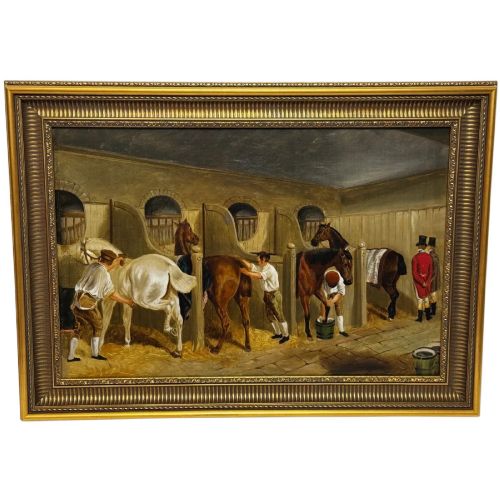
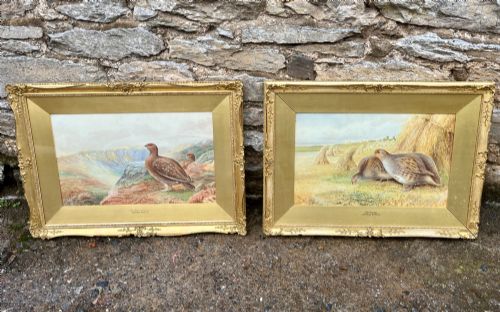
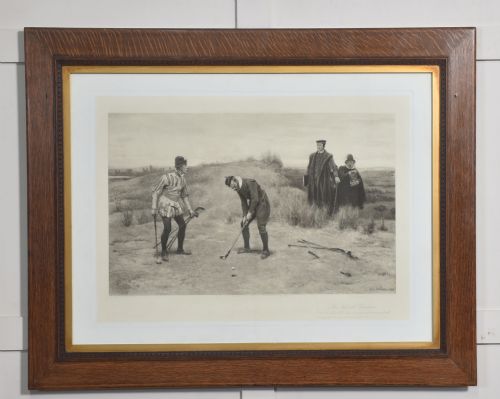
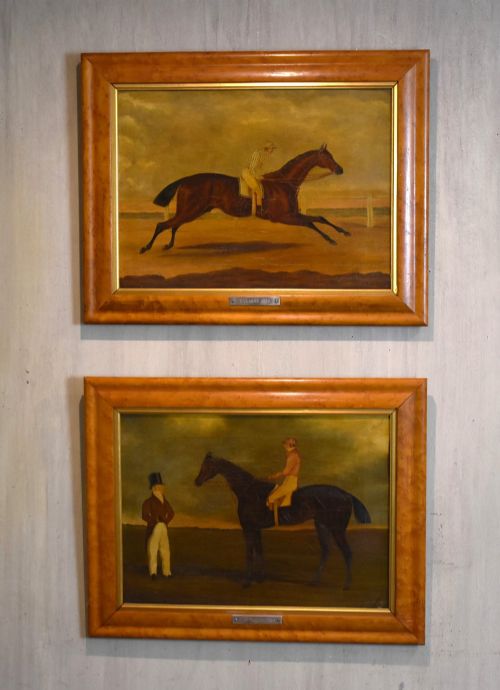
When you search for a gilt framed sporting print, you meet works that capture horses, hounds, game birds and field matches framed in gold-toned wood. These pieces span the Georgian era through the mid-twentieth century, recording equestrian meets, hunting scenes and field sports.
The selections on this page range from nineteenth-century lithographs and engravings to watercolours and oil paintings. Victorian sporting art forms the core of what appears here, alongside Edwardian and mid-century depictions of riders, hounds and game.
How they were made
These works utilise paper, canvas and watercolour supported by wood frames finished in gilt, gold leaf or giltwood. Many prints rely on early reproductive techniques such as lithography and engraving, while others are original paintings executed in oil or watercolour.
Glass protects the paper works and watercolours, while oil paintings on canvas or panel remain open to the room. The frames combine timber mouldings with applied gilt surfaces to provide a traditional metallic border around the imagery.
Watch for the intense expressions on the hounds' faces; nineteenth-century artists took the emotional lives of hunting dogs remarkably seriously.
What varies in quality
The distinction in quality rests upon the fidelity of the draughtsmanship and the character of the surrounding frame. Stronger examples display crisp lines in the engraving or confident brushwork in the oils, capturing anatomical movement and atmospheric light accurately.
The application of the gilt finish also separates standard examples from finer pieces. Genuine gold leaf and well-carved wood mouldings create a deeper warmth than simpler modern metallic paints applied to plain timber.
C. H. Weigall·George Rankin·J. C. Dollman·John Frederick Herring Snr·Charles Faulkner·Alfred Wheeler·Isaac Cullin·Charles Hunt·Francis Calcroft Turner·Frank Dadd
The Gilt Framed Sporting Print Glossary
- Lithograph
- A print made from a design drawn on limestone or a metal plate. This technique allows for subtle tonal gradations across the image surface.
- Engraving
- An intaglio printmaking process where an artist cuts lines into a metal plate. The resulting impressions show sharp, precise detail.
- Aquatint
- A variant of etching that produces areas of tone rather than fine lines. It is frequently seen in nineteenth-century sporting prints to render watercolour-like washes.
- Giltwood
- Wood that has been coated with gold leaf or a gold-coloured finish. This material forms the ornate border typical of traditional picture frames.
Gilt Framed Sporting Print: Frequently Asked Questions
How do I date a sporting print?
Examine the paper type, the framing style and any signatures or publication dates inscribed in the margin. Victorian and Georgian pieces often carry specific publisher stamps or dates that help place them in time.
Compare the clothing and equipment of the figures shown with historical periods, as sporting fashions shifted distinctly between the early nineteenth century and the Edwardian era.
Are these works original prints?
Some items are original watercolours or oil paintings, while others are antique printed reproductions created via engraving or lithography. Reproductive prints were published in large numbers for collectors of the period.
Check the surface through glass to see if you can spot plate marks from an engraving press or the flat ink application of a lithograph.
How should I hang a framed sporting piece?
Hang these works at eye level in rooms with stable humidity away from direct sunlight. Sunlight can fade delicate watercolours and discolour antique paper over time.
Pair several framed pieces together to recreate the traditional aesthetic of a nineteenth-century country house study or hallway gallery wall.
What subjects are most common?
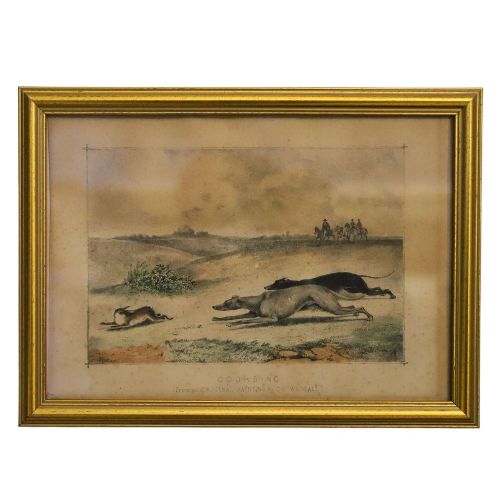
Fox hunting, horse racing, shooting and coursing dominate the imagery of this period. Scenes of hounds in pursuit, riders taking fences and portraits of famous racehorses appear frequently.
Other less common subjects include football matches and track events, reflecting the broader scope of British recreation through the centuries.