
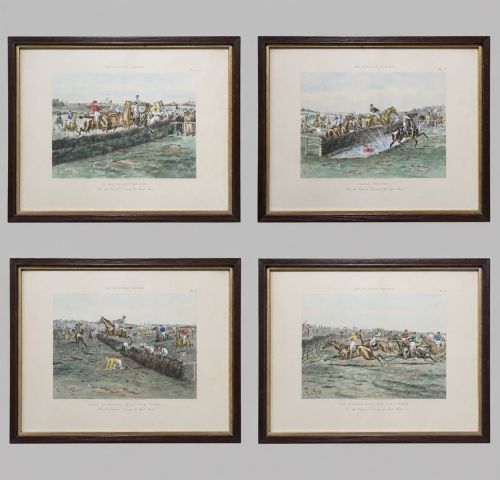
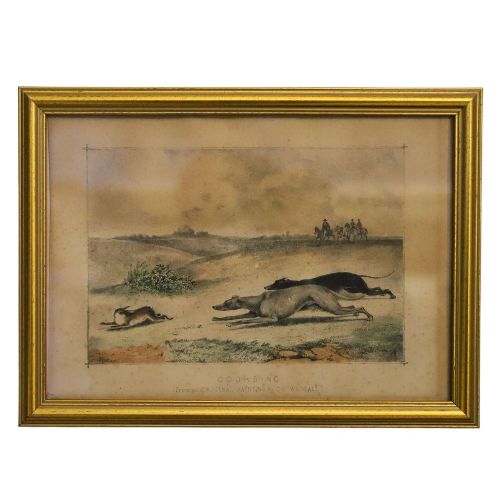
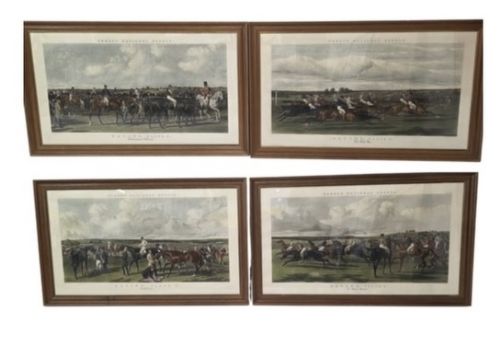
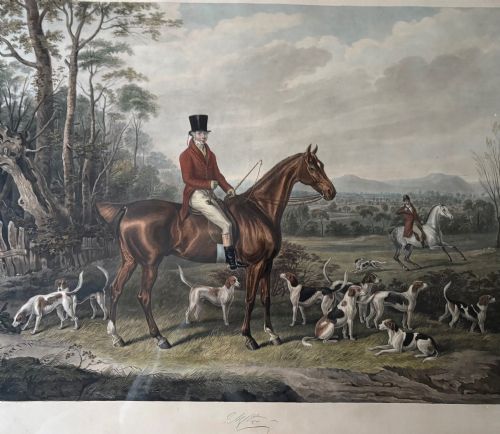


English Sporting Prints
English sporting prints capture the speed of the racecourse and the field, offering a window into traditional pastimes through period illustration.
English Sporting Prints
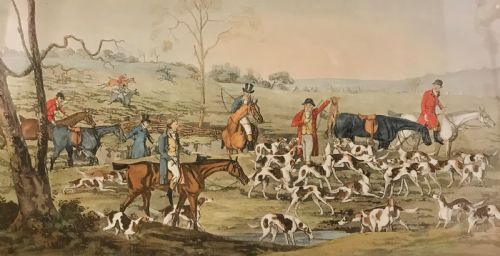
When you search for English sporting prints, you look at historical works depicting horse racing, hunting, hare coursing, golf, and field sports. These pieces range from Georgian and Regency hand-coloured engravings to Victorian lithographs and mid-century paintings.
You are most likely to meet framed prints and engravings on paper, often preserved under glass with wood or gilt wood frames. The subjects celebrate classic rural pursuits and notable racehorses through the eyes of period artists and publishers.
The selection spans from eighteenth-century prints through the nineteenth-century Victorian era up to mid-century works. These items function as wall art that records the history of British field sports and equestrian events.
Materials and Techniques
Makers produced these works on paper using engraving, etching, aquatint, and lithography techniques, frequently adding hand-colouring to heighten the visual detail. Publishers issued sets of prints that captured dynamic scenes of horses, hounds, and riders.
Artists also worked directly in watercolour, gouache, ink, and oil on canvas to create original paintings of sporting subjects. Finished pieces were typically housed in wooden or gilt wood frames, sometimes protected behind glass.
Listings feature works spanning from the Georgian period through the Victorian era into mid-century modern painting.
Quality and Distinction
Quality rests in the clarity of the printed line, the precision of the hand-colouring, and the fidelity of the impression. Early strikes from copper plates or stones retain sharper detail than worn later printings.
The sophistication of the draughtsmanship and the preservation of the paper surface distinguish finer works from standard decorative examples. Original artist signatures and period framing also elevate the standing of a piece.
George Finch Mason·C. H. Weigall·H. Alken·John Rattenbury Skeaping·Charles Faulkner·James Dobie·John Atkinson·Tom Carr·Isaac Cullin·Charles Hunt·Francis Calcroft Turner·Snaffles
The English Sporting Prints Glossary
- Aquatint
- An intaglio printmaking technique that produces tonal areas resembling watercolour washes. It was frequently utilised for reproducing sporting watercolours.
- Engraving
- A method of cutting a design into a metal plate with a sharp tool to hold ink. Clean lines define the figures in early impressions.
- Lithography
- A planographic printing process based on the antipathy of oil and water. It allowed artists to draw directly on limestone to produce subtle tonal prints.
- Hand-coloured
- The application of watercolour by hand to a printed outline. This process brought vibrancy to nineteenth-century sporting scenes.
- Etching
- A process where acid bites lines into a metal plate protected by a ground. It allowed artists great freedom of line in rendering horses and riders.
English Sporting Prints: Frequently Asked Questions
How do I date an English sporting print?
Examine the paper quality, the printing technique, and any publisher publication lines printed in the margin. Styles of dress and framing materials also offer strong clues to the decade of production.
Compare the artistic conventions to known periods like the Georgian era or Victorian times. Early impressions often display crisp plate marks absent in later reproductions.
What subjects are common in sporting prints?
Horse racing, fox hunting, hare coursing, and shooting dominate the imagery. You will also find depictions of boxing, golf, coaching, and rural pastimes.
These subjects reflect the recreational interests of the British gentry and sporting public across the eighteenth and nineteenth centuries.
Are these prints original works of art?
Many are original antique prints produced via hand-engraving, etching, or lithography by period craftsmen after works by noted artists. Others are unique original paintings executed in oil or watercolour.
Printed editions were published in multiple impressions, whilst paintings and watercolours exist as singular creations.
How should I display framed prints at home?
Keep framed pieces away from direct sunlight to prevent the paper from fading and the hand-colouring from bleaching. Stable humidity protects both the paper and the wooden or gilt wood frames.
Group matched sets together on walls with neutral backgrounds to highlight the historical character of the artwork.