

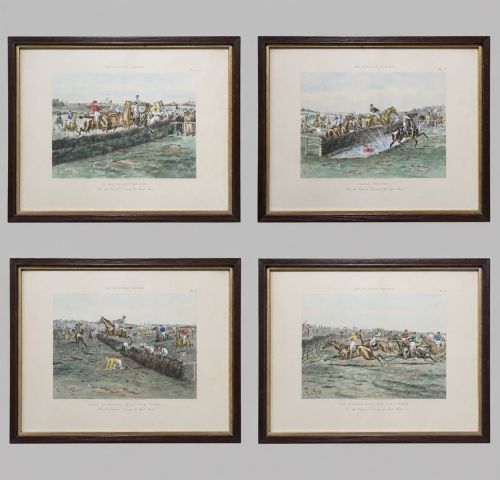
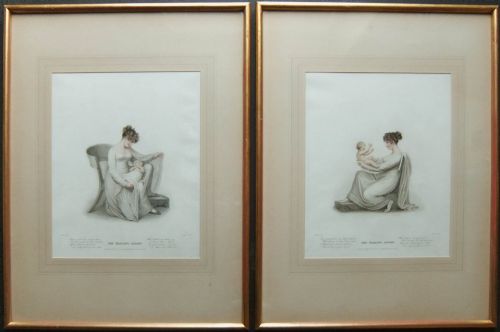


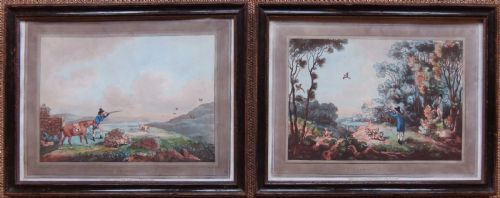


Framed Paper Aquatints
These framed paper aquatints combine tonal delicacy with strong historical themes, offering a refined wall display for any traditional interior.
Framed Paper Aquatints
When you search for framed paper aquatints, you encounter tonal prints housed behind glass in timber mouldings, often dating from the Georgian, Regency, and Victorian eras. These works rely on an etching technique that mimics watercolours, producing soft washes of tone rather than hard engraved lines.
You are most likely to meet sporting subjects, coastal views, and figural pairs on this page, originating from the nineteenth century. These pieces usually arrive ready to hang in period frames of wood or gilt.
The selection ranges from early nineteenth-century pairs to later Victorian sets, capturing subjects from horse racing and shooting to domestic scenes. Each item demonstrates the distinct plate marks and paper textures characteristic of traditional printing methods.
How they were made
Makers produced these works by etching copper plates with acid through a porous resin ground, which created tonal areas resembling watercolour washes. Printers then applied ink to the dampened paper using a hand press, sometimes adding hand-colouring directly onto the sheet.
Framing involved protected glass set over wood or gilt wood mouldings, often finished with gold leaf accents to complement the interior artwork. These materials preserved the delicate paper from atmospheric moisture and handling damage.
Framed Paper Aquatints Retail Price Guide 2026
Typical asking prices for framed paper aquatints among the pieces listed under this phrase on Sellingantiques today, from the lower quarter to the upper quarter. They describe what is for sale here now, not the wider market.
Listings feature paper works spanning the Georgian, Regency, and Victorian periods, utilising ink, gold leaf, and hand-coloured techniques.
What varies in quality
The strength and clarity of the plate impression distinguish finer prints from worn examples, as repeated printing softens the delicate resin grain. Strong tonal contrast and well-preserved hand-colouring elevate the visual impact of an individual sheet.
The integrity of the original frame and mount influences the overall standard of the piece, with period wood and gilt mouldings holding more character than later replacements. Intact margins around the paper add to the desirability of the work.
The Framed Paper Aquatints Glossary
- Aquatint
- A printmaking technique that uses acid-resistant resin to create tonal areas resembling watercolours. It allows artists to achieve subtle gradients of tone instead of simple lines.
- Plate mark
- The indentation left on the paper by the metal printing plate under pressure. Its presence confirms the traditional intaglio printing process.
- Hand-coloured
- The application of watercolours or ink by hand after the initial printing process. This adds individual character and vibrant hues to the monochrome base.
- Gilt wood
- Wood coated with a thin layer of gold leaf or metallic paint. It provides a bright, reflective border popular in nineteenth-century framing.
- Drypoint
- An intaglio printmaking process where an artist scratches directly into the metal plate with a sharp needle. This creates a characteristic velvety burr in the printed lines.
Framed Paper Aquatints: Frequently Asked Questions
How do I care for framed paper aquatints?
Keep these works away from direct sunlight to prevent the ink and hand-colouring from fading over time. Maintaining a stable room temperature protects the paper and the wooden frame from warping.
Ensure the glass remains clean using gentle methods that do not introduce moisture beneath the frame. Professional framing advice helps when checking the backing boards for archival safety.
Are these prints original to their frames?
Many pieces retain their period wooden or gilt frames, which show appropriate signs of age. Matching the style of the moulding to the period of the print is a key indicator of original pairing.
Some works may have been reframed later in their lifespan to ensure better preservation behind clean glass. Inspecting the backing and fixings often reveals clues about the framing history.
What subjects are most common?
Sporting scenes, including horse racing, shooting, and hunting, appear frequently in this medium. These subjects reflect the popular tastes of Georgian and Victorian collectors.
Figural studies, coastal views, and literary illustrations also feature among the available sheets. Each subject genre utilises the soft tonal qualities of the technique to create atmosphere.
How can I tell the age of a print?
The paper characteristics, including watermark evidence and rag content, help determine the manufacturing period. Early nineteenth-century papers often feel heavier and show different texture to later commercial stocks.
Typography, stylistic clues in the clothing, and the engraved signatures of publishers or artists provide further dating evidence. Comparing the plate style with known historical engravers narrows down the timeframe.