



Vintage Fox Hunt Print
A vintage fox hunt print brings the vigorous energy of British sporting art onto your wall through hand-coloured engravings and watercolours.
Vintage Fox Hunt Print
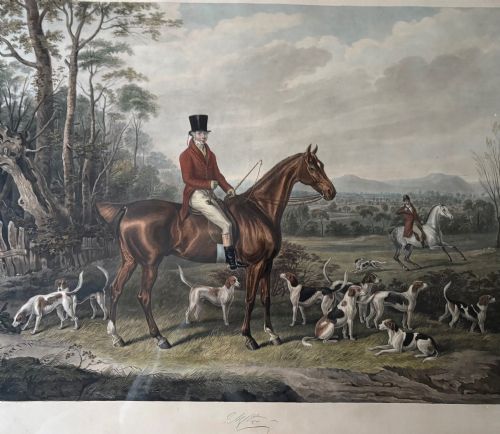
When you search for a vintage fox hunt print, you encounter framed works spanning the nineteenth and twentieth centuries, including Victorian and Edwardian examples. These pieces capture countryside pursuits through framed prints, engravings, and watercolour paintings originating from British sporting art traditions.
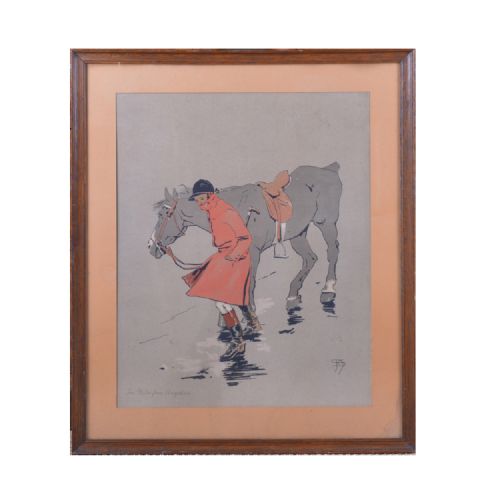
The selection ranges from individual framed art prints to sets depicting famous hunts like the Quorn, Belvoir, and Cottesmore. Many works take the form of original prints or watercolours mounted behind glass in wooden or oak frames, often highlighted with gold leaf.
Earlier nineteenth-century examples often appear as hand-coloured engravings, while twentieth-century pieces frequently showcase the distinct work of military and sporting artists. These depictions focus on horses, hounds, riders, and the sweeping British countryside.
Materials and methods behind the artwork
Makers produced these works using paper, cardboard, and occasionally delicate watercolour or ink applied by hand. Engravings and aquatints provided the foundational lines, which artisans then hand-coloured using vibrant pigments.
Framing materials typically comprise wood, specifically oak, combined with glass to protect the paper surfaces. Some frames incorporate gold leaf detailing, complementing the rich tones of the sporting scenes within.
Some hunting prints feature horses with expressions more skeptical than the riders on their backs.
Distinguishing quality in sporting prints
Quality rests primarily on the crispness of the original engraving lines and the precision of the hand-colouring. Stronger works retain vibrant pigments on paper without excessive fading, while weaker examples show muddy tones or degraded paper.
The presence of renowned artists and distinct publishers elevates certain pieces above standard decorative prints. Original watercolours and signed prints command greater attention than mass-produced reproductions of the same subjects.
Charles Johnson Payne Snaffles·Francis Calcroft Turner·Frank Algernon Stewart·J F Herring·Charles Hunt
The Vintage Fox Hunt Print Glossary
- Aquatint
- An etching technique that produces tonal areas resembling watercolours. This method allowed printmakers to achieve subtle shades of grey and brown before colour was applied.
- Chromolithograph
- A multicoloured print produced using lithographic stones. Each colour required a separate stone, resulting in rich and layered pictorial surfaces.
- Engraving
- A method of cutting design lines into a metal plate using a sharp tool. The incised lines hold ink to transfer the image onto paper under pressure.
- Hand coloured
- The manual addition of watercolour or ink to a printed black and white image. Artisans painted details by hand to enhance the visual appeal of sporting scenes.
- Sporting Art
- Artwork dedicated to equestrian subjects, hunting, and rural pastimes. This genre flourished in Britain throughout the nineteenth and twentieth centuries.
Vintage Fox Hunt Print: Frequently Asked Questions
How do I date a fox hunt print?
Examine the framing materials, paper type, and printing method to establish an era. Nineteenth-century works frequently utilise hand-coloured engravings on heavier paper stocks.
Twentieth-century pieces often bear signatures or publishing details associated with specific artists active during the Edwardian period or later decades.
What is the difference between an engraving and a watercolour?
An engraving relies on transferred ink from an etched metal plate, sometimes enhanced with manual colour. Watercolours are entirely hand-painted unique works on paper.
Original watercolours display direct brushwork and pigment pooling that mechanical printing cannot replicate.
How should I frame and display these prints?
Protect paper surfaces from direct sunlight by using conservation glass and stable wooden frames. Oak mouldings with gold leaf accents complement the traditional aesthetic of these works.
Keep them away from moisture sources to preserve both the paper support and any watercolour pigments.
Who were the notable artists in this genre?
Prominent figures include Charles Johnson Payne Snaffles, known for his characterful depictions of riders and horses. Other notable names comprise J F Herring and Francis Calcroft Turner.
Their works defined British sporting art through detailed portrayals of hounds, huntsmen, and country house traditions.