


19th Century French Sofa
When you search for a 19th century french sofa, you are looking for seating that brings elegance and historical character to a room.
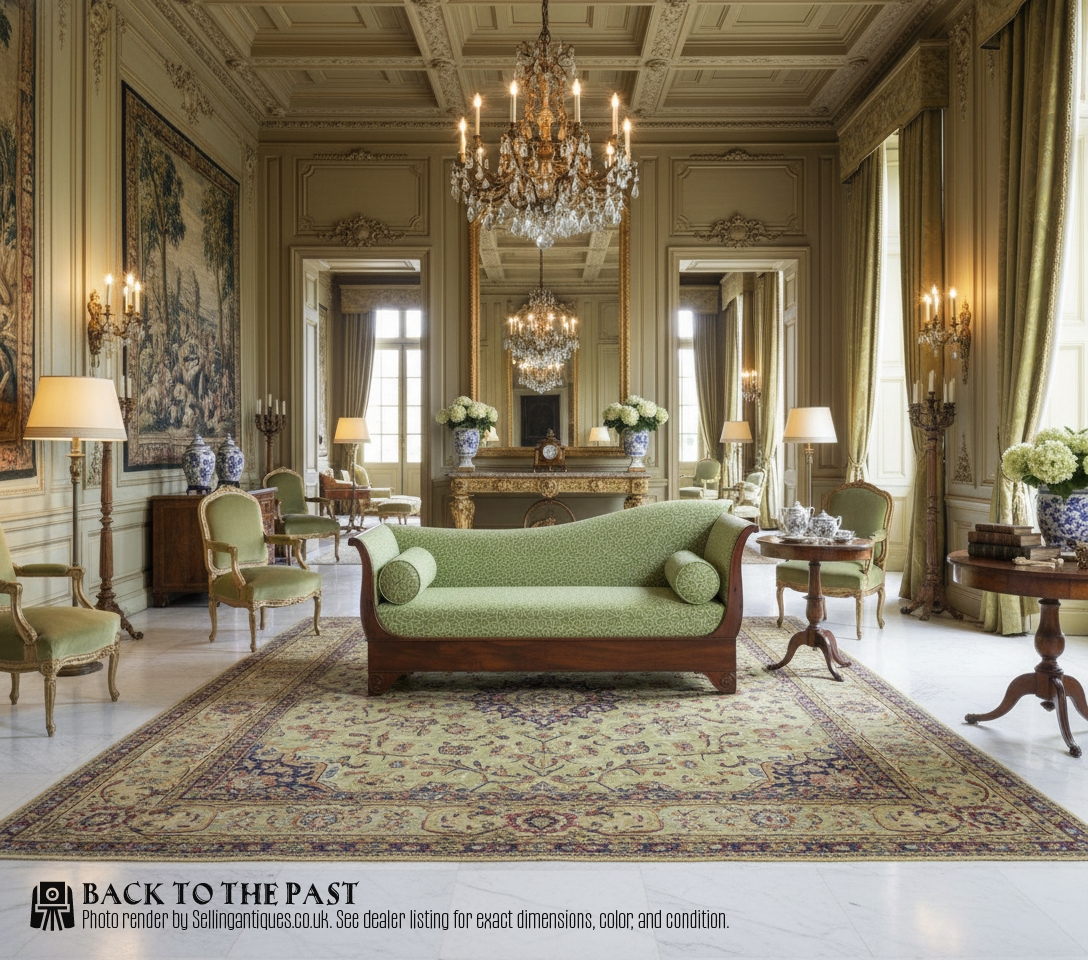
What a 19th Century French Sofa Is
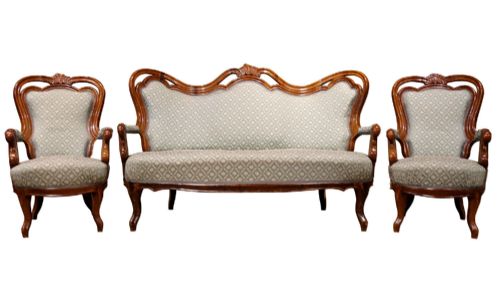
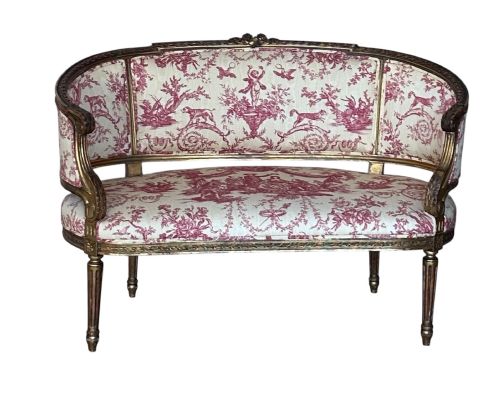
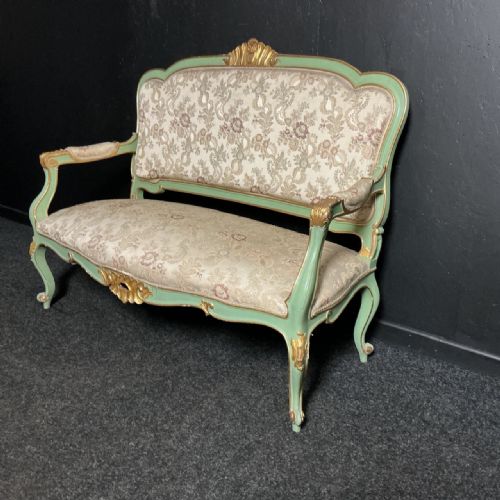
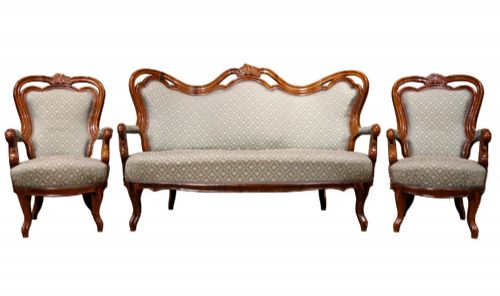
A 19th century french sofa encompasses a variety of seating forms from the nineteenth century, including canapés, settees, and salon sofas. These pieces reflect the evolving tastes of French design across different periods and styles.
You will frequently encounter pieces shaped by the Louis XV style, Louis XVI style, Napoleon III period, and French Empire. Forms range from large gilded frames to country house seating in walnut, beech, and fruitwood.
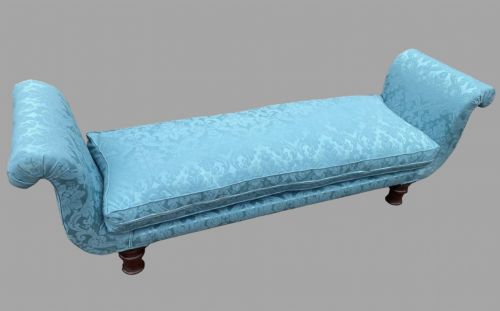
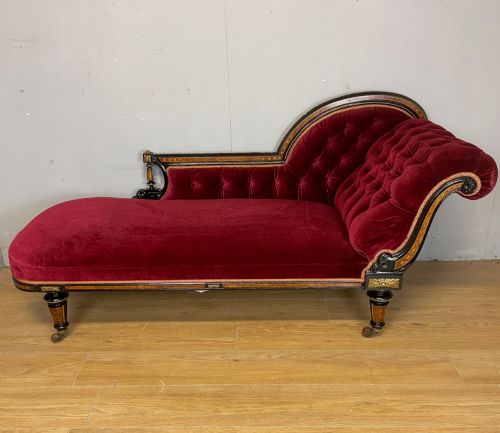
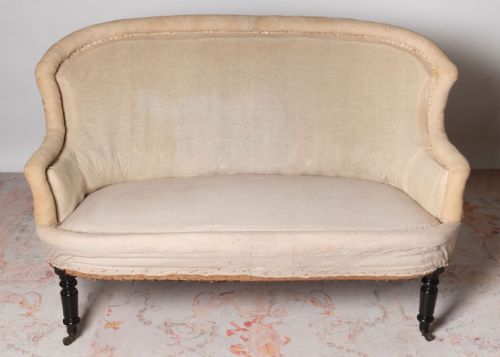
The selection includes specialised configurations such as scroll end sofas, curved back designs, and sofa chaises. Frames appear in original paint, giltwood, mahogany, and parcel-gilt finishes.
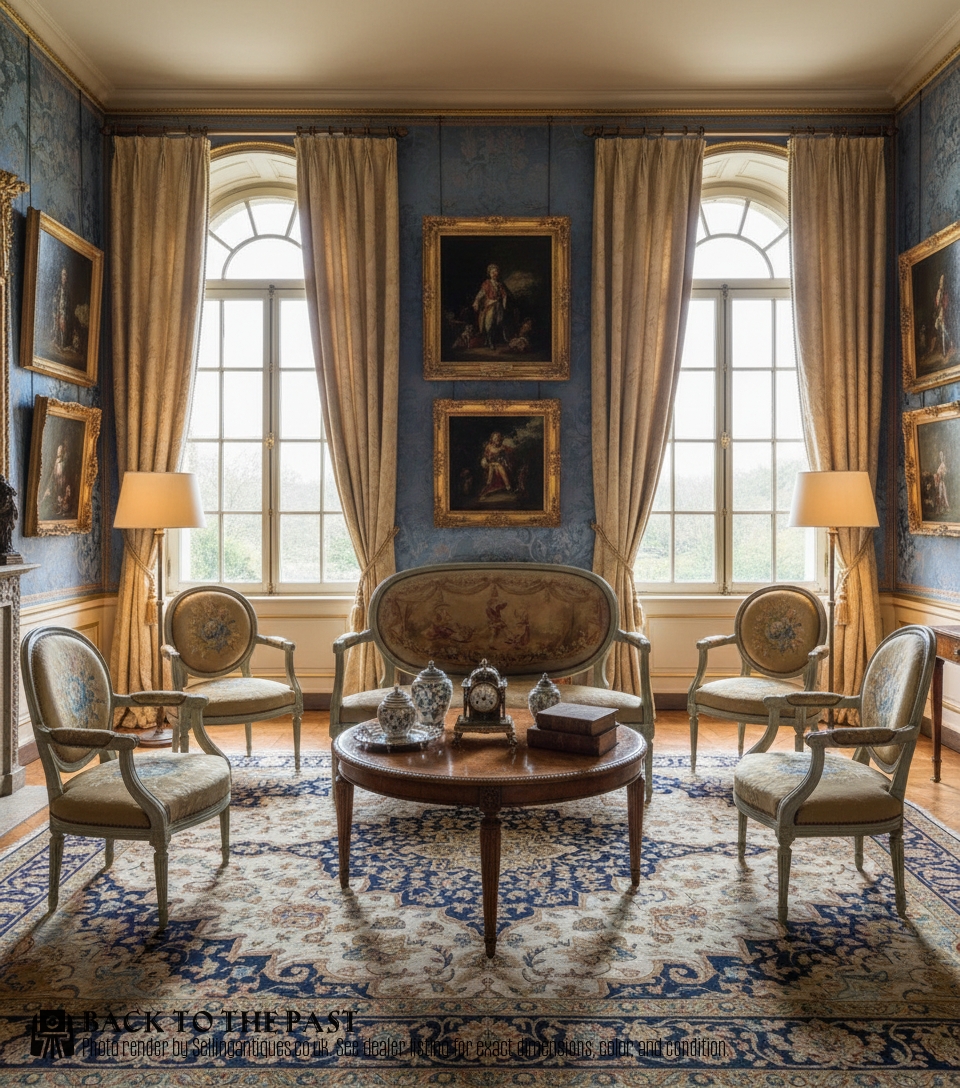
Materials and Construction
Frames are constructed from solid timbers including beech, walnut, mahogany, fruitwood, cherry wood, and giltwood. Carved details and gilt wood finishes define the more ornate formal seating.
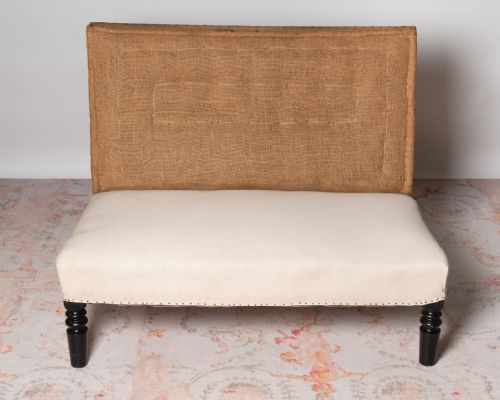
Upholstery relies on traditional textiles such as linen, cotton, calico, jute, tapestry, and custom fabrics. Buttoned upholstery and exposed wooden frames show the standard carpentry and textile methods of the era.
Retail Price Guide 2026
Typical UK retail prices for 19th century french sofa, calculated from the Sellingantiques database of over a million retail prices indexed since 2003. This retail price guide relies exclusively on Sellingantiques data; no external sources or auction records are used, so the figures do not describe the wider market.
Some nineteenth century frames hide intricate hand-carved floral motifs beneath layers of historic paint waiting to be admired.
Judging Quality
Quality in these pieces rests on the crispness of the wood carving and the integrity of the underlying timber frame. Finer examples display deeply carved details in giltwood or walnut rather than simple moulded lines.
The retention of original paint or original gilding elevates a piece significantly. Upholstery choices, from historic tapestry to modern designer fabrics, also influence the character of the seating.
The 19th Century French Sofa Glossary
- Canapé
- A traditional French sofa featuring an upholstered back and seat with exposed wooden legs and frame. This term often applies to formal Louis XV and Louis XVI style settees.
- Giltwood
- Timber treated with gold leaf or gilt paint to create a brilliant decorative surface. It is commonly found on formal nineteenth century salon seating.
- Napoleon III
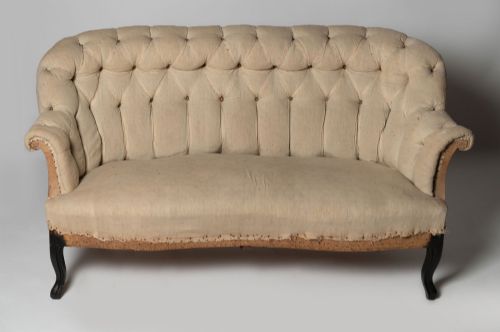
- A stylistic period spanning the mid nineteenth century known for buttoned upholstery and curved, comfortable forms. Pieces from this era often utilise rich textiles and padded backs.
- Directoire
- A transitional style bridging the eighteenth century and the Empire period characterised by restrained neoclassical lines. Pieces from this style often feature clean wood frames and simplified classical motifs.
- Scroll end
- A sofa design where the arms curve outward in a scroll formation. This silhouette appears frequently in nineteenth century French salon and scroll end seating.
Frequently Asked Questions
What is the difference between Empire and Napoleon III sofas?
Empire sofas draw inspiration from classical antiquity, featuring dark mahogany woods, bold architectural lines, and occasional brass mounts. They project a formal, monumental presence.
Napoleon III sofas prioritize comfort through deep buttoning, curved backs, and plush upholstery. They are more indulgent and heavily upholstered compared to the structured Empire style.
Are these sofas suitable for daily use?
Nineteenth century seating can function well in modern homes when the frame remains structurally sound. Many pieces have undergone reupholstery to support everyday sitting.
Buyers should assess the internal webbing and padding condition before daily use. Consulting a professional upholsterer helps ensure the structural integrity matches your requirements.
What does original paint mean on a frame?
Original paint refers to the historic decorative surface applied to the wooden frame when the sofa was first made. It has not been stripped or repainted in later eras.
Collectors value original paint for its authentic patina and visual depth. This surface shows the natural ageing of pigments and binders over time.