


French Empire Sofa
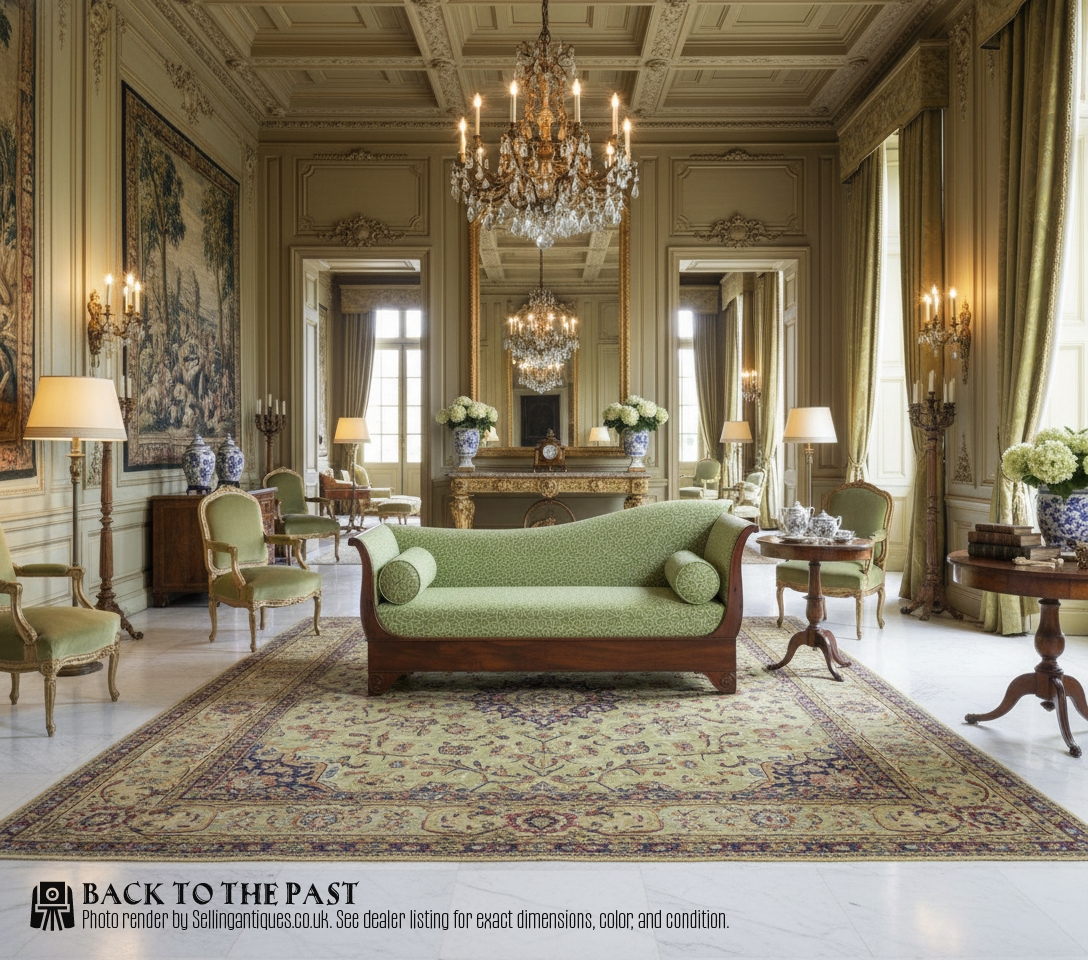
A french empire sofa brings architectural dignity and classical proportion to a grand room.
French Empire Sofa
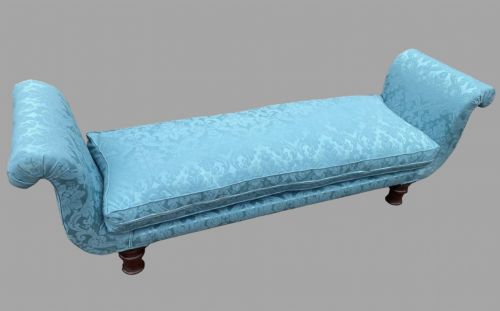
When you search for a french empire sofa, you encounter substantial seating designed with strong linear forms and classical restraint. The most common examples on this page date from the nineteenth century, featuring rich mahogany timbers and architectural silhouettes.
These pieces encompass both authentic period pieces and later revival iterations. You will find standard settees alongside daybeds, lit bateau designs, and large salon suites sharing the same vocabulary.
Origins span classical French workshops as well as Continental interpretations including Swedish Empire and Regency variants. Each iteration maintains the characteristic low backrest and prominent scrolling arm supports.
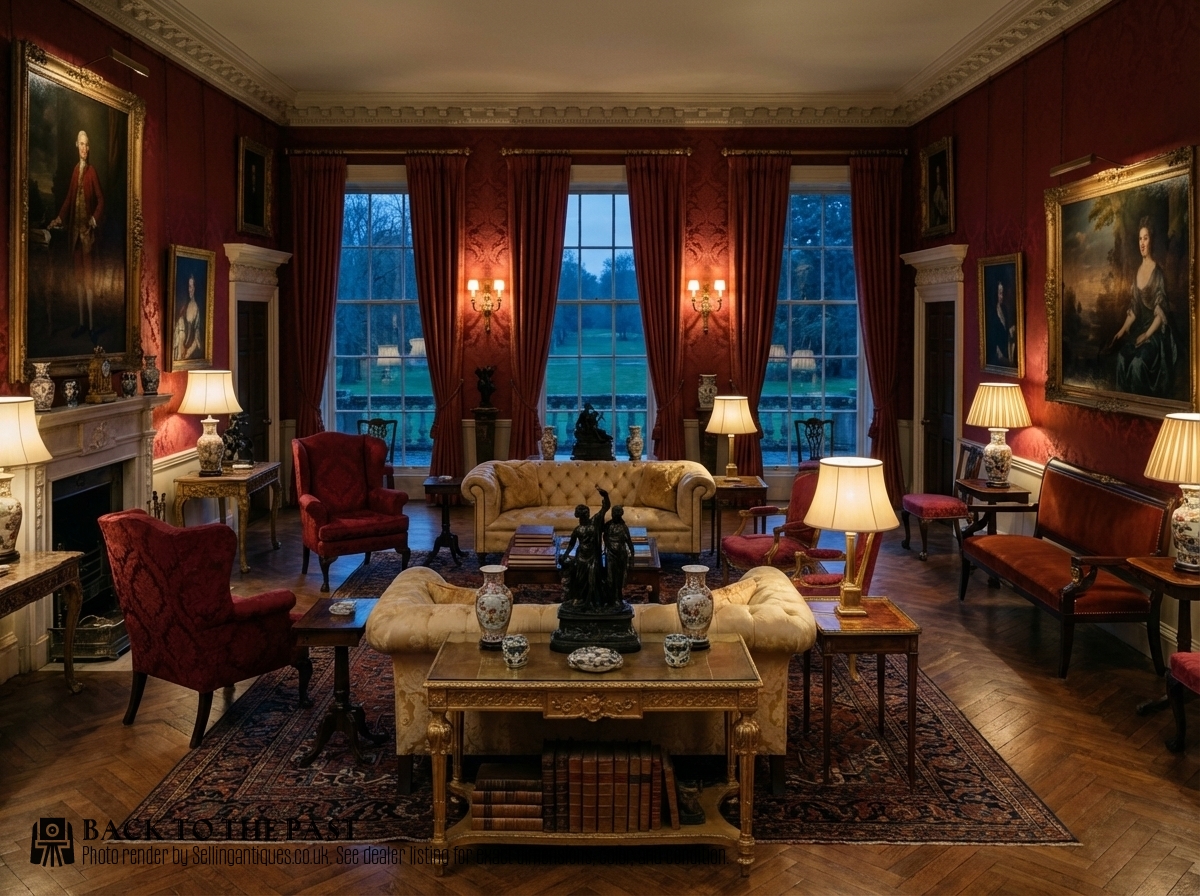
Materials and Construction
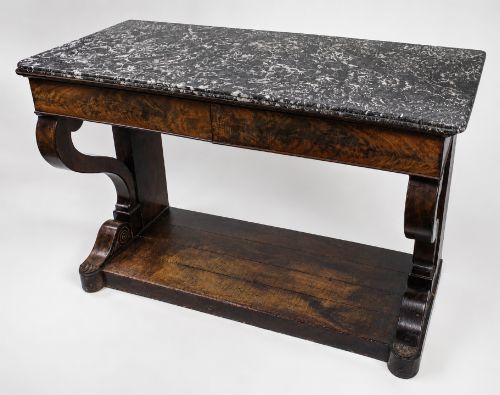
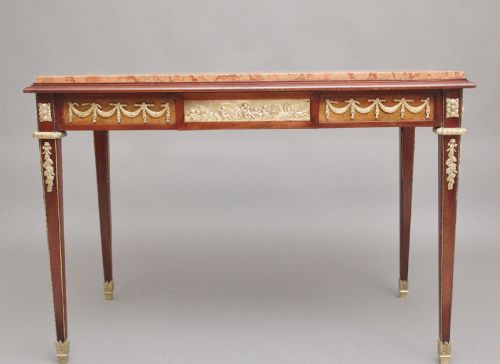
Cabinetmakers constructed the structural framework predominantly from dense timbers like mahogany and walnut, frequently selecting flame veneers for visual depth. Ormolu mounts in cast brass provided gleaming classical contrast against the dark wood surfaces.
Upholstery techniques involved traditional stuffing secured within structured frames, finished in textiles ranging from simple fabrics to silk. Giltwood accents and carved details completed the formal appearance of these seating pieces.
Listings feature mahogany, walnut, and burr birch alongside marble tops and giltwood frames.
Evaluating Quality
The distinction between ordinary and exceptional pieces rests upon the crispness of the carving and the quality of the timber selection. Superior examples display dense flame mahogany with deep patination rather than flat, uniform surfaces.
Ormolu mounts separate the finest pieces from simpler iterations through their weight, chased detail, and secure application to the frame. The architectural harmony of the proportions dictates the overall success of the design.
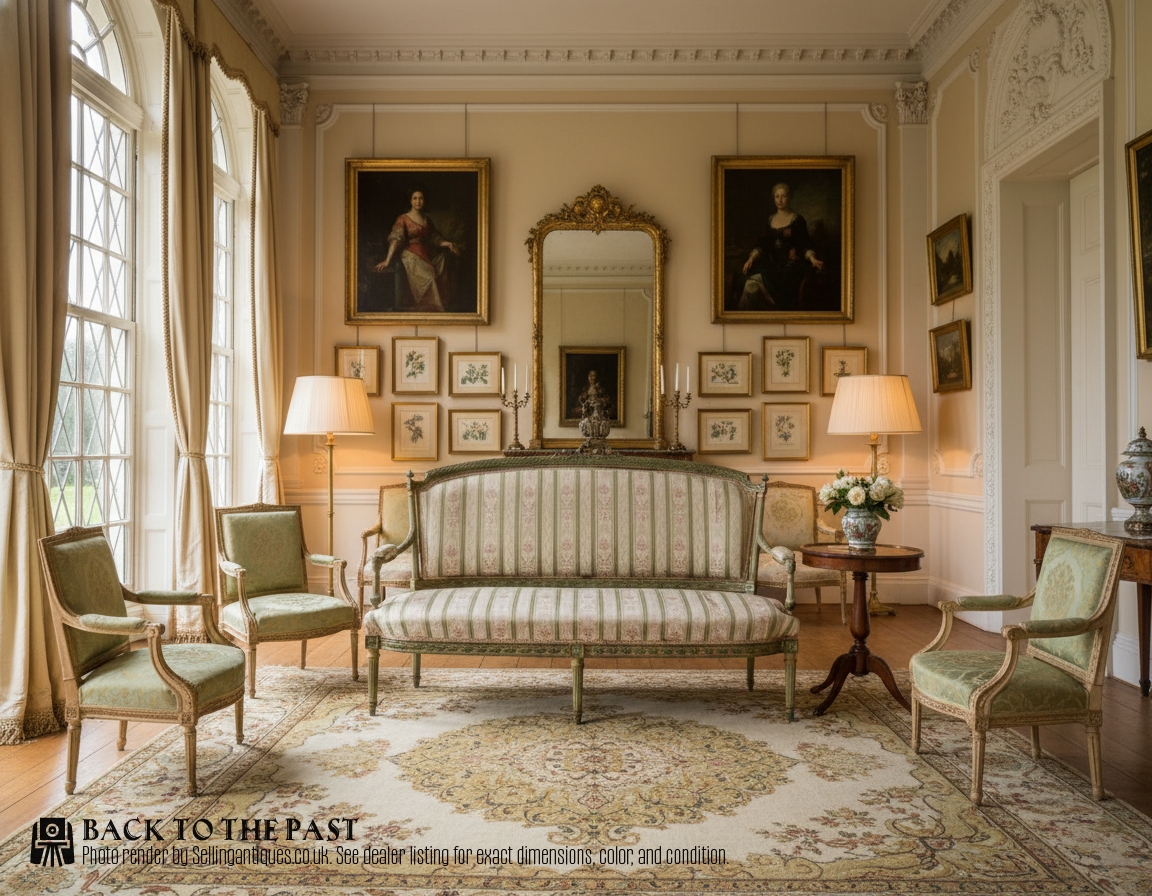
Jean-Joseph Chapuis
The French Empire Sofa Glossary
- Ormolu
- Gilded bronze or brass applied as decorative mounts to furniture. It provides bright metallic highlights against dark cabinet timbers.
- Lit Bateau
- A boat bed design featuring scrolled head and footboards of equal height. It often functions as a daybed or day sofa in formal rooms.
- Flame Mahogany
- Timber cut to reveal a characteristic flamelike grain pattern. Cabinetmakers utilised this veneer on prominent surfaces for visual impact.
- Giltwood
- Timber treated with gold leaf or gold paint to simulate solid gold. It appears on revival frames and decorative seating details.
- Marquetry
- Decorative inlay utilising various wood veneers to create geometric or pictorial patterns. It adorns table tops and structural panels.
French Empire Sofa: Frequently Asked Questions
What defines a french empire sofa?
A french empire sofa is characterised by heavy classical proportions, dark mahogany timbers, and polished ormolu mounts. The design draws inspiration from ancient Roman and Greek architecture.
These pieces typically feature rectilinear frames, scrolled arm supports, and restrained ornamentation that emphasises structural mass.
How do I date a period sofa?
Dating relies upon timber selection, construction methods, and the style of the metal mounts. Early nineteenth-century examples show hand-cut joinery and heavy fire-gilt bronze.
Later revival pieces from the late nineteenth century often employ machine-sawn timbers and different finishing techniques. Comparing the carcass construction provides clarity on the exact age.
Where should I place this seating?
These substantial sofas suit formal drawing rooms, large studies, or central spaces where they can be viewed from multiple angles. Their architectural presence requires adequate room to breathe.
Positioning them away from direct sunlight protects the timber patina and fragile silk or fabric upholstery from fading.
How do I care for the wood?
Maintain the timber surfaces by dusting gently with a dry, soft cloth and avoiding silicone polishes. Feeding the wood occasionally with traditional wax preserves the natural sheen.
Keep the furniture away from direct heat sources to prevent the mahogany or walnut veneers from drying and lifting.