




French Salon Furniture
French salon furniture brings together giltwood, walnut, and elaborate revival styles for formal reception spaces.
French Salon Furniture
French salon furniture comprises seating suites, armchairs, and tables designed for formal entertaining and reception rooms. Buyers encounter multi-piece salon suites alongside individual side chairs, coffee tables, and occasional tables.
The selection ranges across the nineteenth and early twentieth centuries, spanning periods from 1800 to 1930. Pieces frequently display revival aesthetics, including Louis XVI, Louis XV, and Empire styles.
How they were made
Construction relies heavily on hardwoods such as walnut, mahogany, and kingwood, shaped into curved frames and detailed supports. Giltwood surfaces receive layers of gold leaf over carved timber bases.
Upholstery techniques integrate traditional stuffing with decorative textiles, damask, and deep buttoned finishes. Marquetry inlay and brass mountings are applied to tables and cabinetwork for visual depth.
French Salon Furniture Retail Price Guide 2026
Typical asking prices for french salon furniture among the pieces listed under this phrase on Sellingantiques today, from the lower quarter to the upper quarter. They describe what is for sale here now, not the wider market.
What varies in quality
Quality separates through the crispness of wood carving and the precision of gilded surfaces. Hand-carved giltwood and intricate marquetry demonstrate higher workshop standards than simpler moulded forms.
The integrity of the structural joinery and the selection of fine primary timbers like kingwood determine the durability and standing of each piece. Maker signatures and documented provenance elevate specific items above standard commercial production.
Joseph-Emmanuel Zwiener·Jacob-Desmalter·F. Linke·Morison & Co of Edinburgh·Baumann
The French Salon Furniture Glossary
- Giltwood
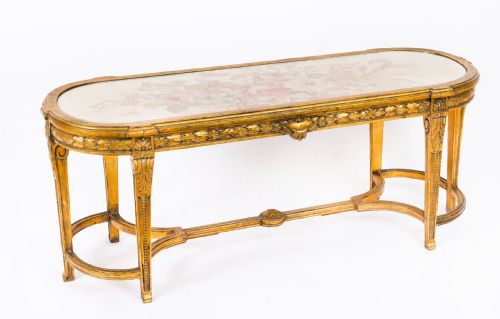
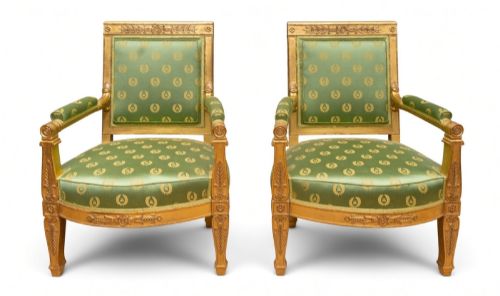
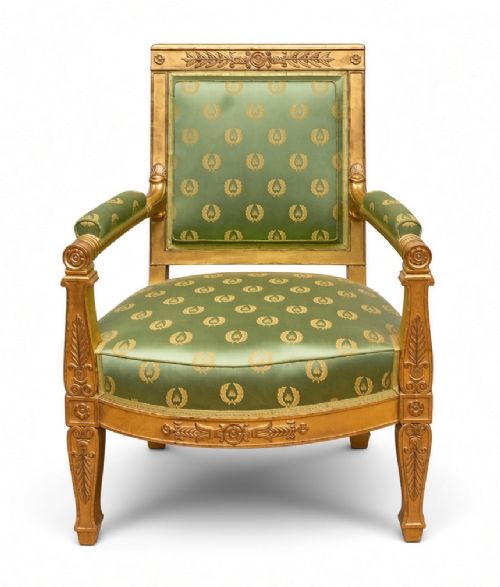
- Timber coated with gold leaf or powder to give a metallic golden finish. This surface treatment appears frequently on nineteenth-century frames and tables.
- Fauteuil
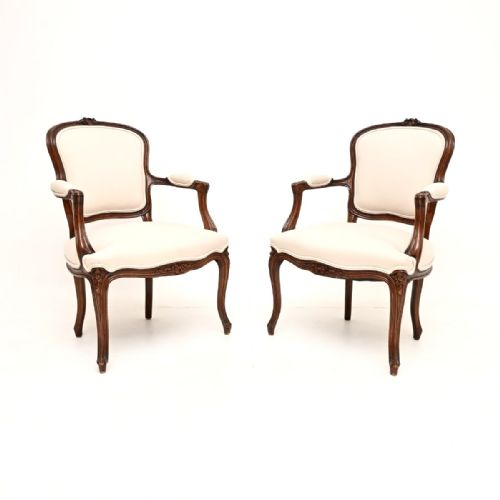
- An open-armed upholstered armchair with exposed wooden armrests. These chairs are characteristic of formal French seating arrangements.
- Damask
- A reversible figured fabric woven on a jacquard loom with patterns formed by contrasting warp and weft threads. It serves as a traditional upholstery covering for salon suites.
- Kingwood
- A dense, heavily figured exotic wood used for fine cabinetwork and marquetry. Its distinctive dark grain patterns feature on specialised tables.
- Marquetry
- Decorative veneer applied to furniture structures in geometrical or pictorial patterns. This technique utilises various contrasting timber tones to create surface imagery.
French Salon Furniture: Frequently Asked Questions
What pieces comprise a salon suite?
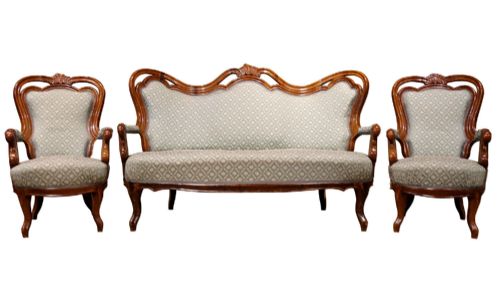
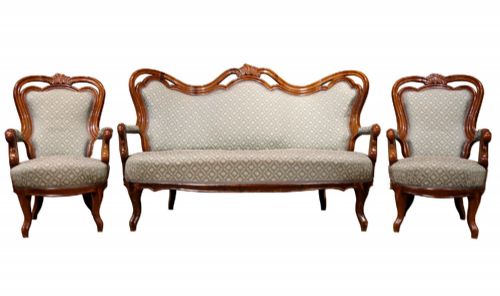
A salon suite typically includes a matching set of seating furniture, combining a small sofa or settee with a matching pair or group of armchairs. These groupings were manufactured to coordinate visually for formal reception spaces.
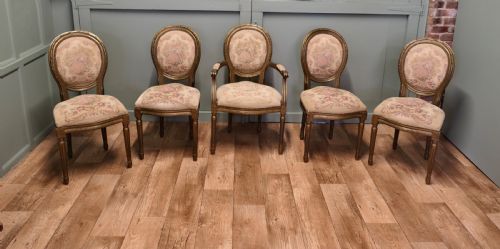
Individual side chairs and centre tables are occasionally added to complete the ensemble depending on the room layout.
How do I identify Louis revival styles?
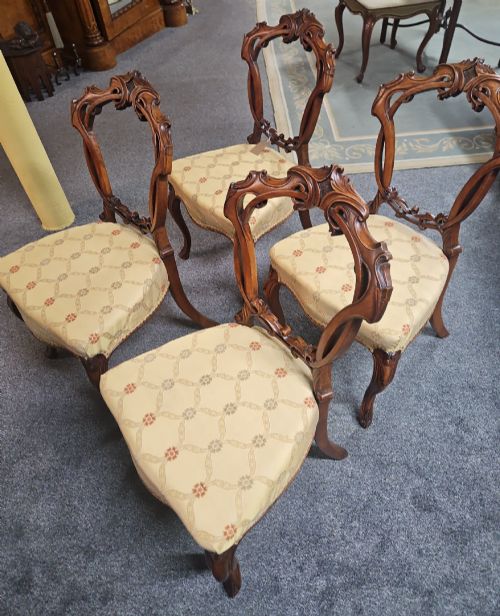
Louis XVI revival pieces generally display straight tapered legs, neoclassical carved motifs, and geometric symmetry. Louis XV and Rococo revival versions feature asymmetrical curves, scrolling foliage, and cabriole legs.
Empire revival designs incorporate heavier classical proportions, mahogany surfaces, and gilt-bronze mounts.
Where were these pieces used?
These furnishings were designed for drawing rooms, reception rooms, and formal parlours where guests were received. They functioned both as practical seating and as visual displays of household status.
Smaller occasional and coffee tables held decorative objects, lighting, or reading materials within the entertaining space.
How should I care for giltwood furniture?
Giltwood surfaces require protection from direct sunlight and moisture to prevent the gold leaf from flaking or tarnishing. Dusting should be performed gently with a dry, soft brush rather than a damp cloth.
Harsh chemical polishes must be avoided entirely to preserve the fragile metallic finish.
What is the difference between walnut and mahogany?
Walnut offers a rich, figured grain that lends itself to fluid carving and nineteenth-century revival styles. It appears frequently in pale or dark tones across salon suites and chairs.
Mahogany provides a denser, reddish-brown substrate often utilised in Empire period furniture and heavy structural frames.