


19th Century Flatweave
19th century flatweave textiles encompass pileless carpets, rugs, and storage bags originating from tribal and European traditions.
19th Century Flatweave
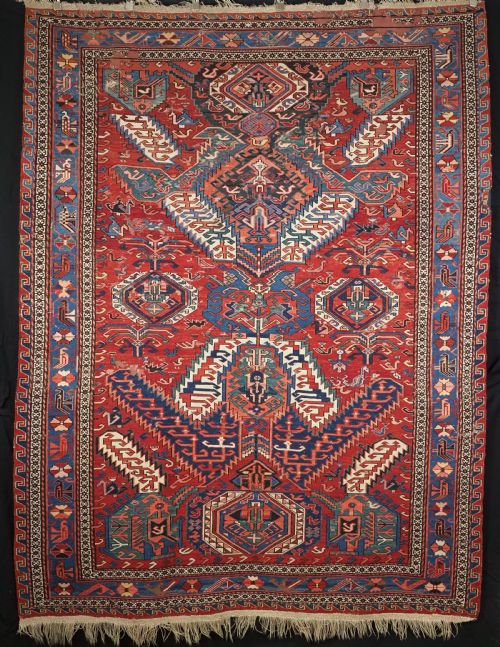
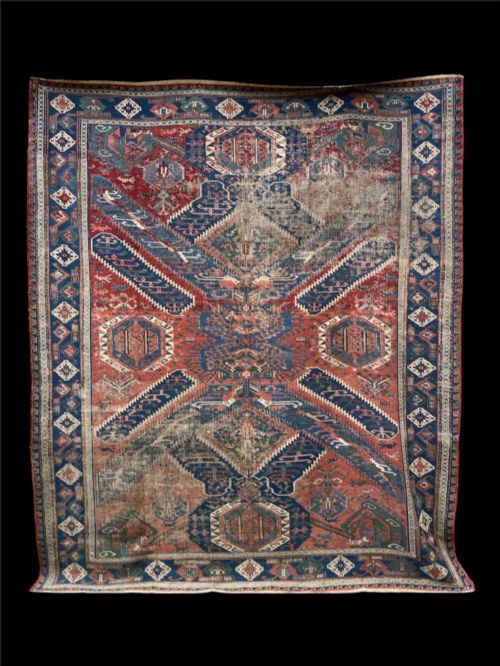
A 19th century flatweave comprises non-pile textiles such as kilims, soumaks, and tapestry rugs produced across the Caucasus, Persia, Turkey, Central Asia, and Europe. These pieces served functional roles as floor coverings, wall hangings, dining cloths, and transport bags before entering collections.
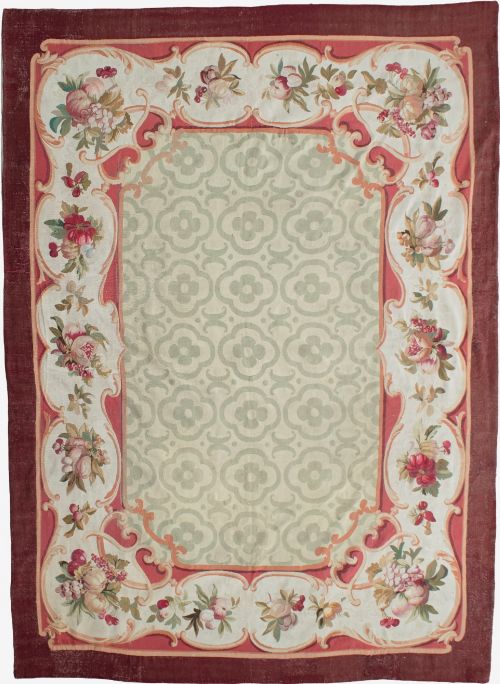
The most frequent examples encountered on this page stem from tribal traditions in the Caucasus and Anatolia, alongside Bessarabian and French Aubusson weaves. These items reflect the specific regional designs, structural formats, and utility of the period spanning from the mid-nineteenth century to the early twentieth century.
Makers utilised various formats, ranging from large room-sized carpets and room dividers to small storage bags, saddle bags, and mounted fragments. Each structural type displays the weaving conventions and material availability of its specific geographic origin.
Materials and construction methods
Makers constructed these textiles primarily using wool and cotton foundations, occasionally incorporating silk, camel hair, wood, leather, and metal elements for specific structural or decorative effects. The yarns were commonly dyed using natural dyes that yielded characteristic tonal depths across Caucasian, Persian, and Turkish workshops.
Construction techniques varied by region, encompassing slit-tapet weaving in standard kilims, supplementary weft wrapping in soumaks and verneh pieces, and needlepoint or tapestry methods in European Aubusson examples. Storage containers such as mafrash panels and khorjin saddle bags were frequently woven in sections and assembled with leather or wool bindings.
Object forms range from large room carpets and kilims to storage bags, sofa panels, and mounted silk fragments.
Quality variations in flatweave textiles
Quality in these textiles depends heavily upon the precision of the weave and the complexity of the structural technique employed. Finer weaves demand greater technical skill from the weaver, resulting in tighter structures and crisper rendition of geometric or floral motifs.
The vibrancy, integrity, and source of the colour palette dictate much of the visual success of a piece. Natural dyes that age with harmonious patination elevate an example above those with harsher or less stable colouring.
The 19th Century Flatweave Glossary
- Kilim
- A flatwoven textile produced without a pile by tightly interweaving warp and weft strands. This technique creates a smooth surface with identical patterns visible on both sides.
- Soumak
- A brocaded flatweave technique where supplementary weft threads are wrapped around the warp yarns in rows. This method adds structural thickness and durability, often creating raised surface textures.
- Mafrash
- A rectangular storage chest or bedding bag produced by nomadic tribes in the Caucasus and Persia. These pieces were constructed from four woven panels and a base, often utilising soumak or kilim techniques.
- Sofreh
- A flatwoven spread or cloth utilised during meals or dough preparation in Persian and tribal households. These utilitarian textiles frequently feature minimalist central fields surrounded by geometric borders.
- Verneh
- A type of Caucasian brocaded flatweave characterised by distinctive animal or dragon motifs arranged across the field. They demonstrate advanced supplementary weft work akin to soumak construction.
19th Century Flatweave: Frequently Asked Questions
What is a flatweave rug?
A flatweave rug is a textile constructed without knotted pile, created by interlacing warp and weft threads on a vertical or horizontal loom. This group includes kilims, soumaks, and tapestry weaves.
Because they lack pile, these textiles lie flat on the floor or function as wall hangings and covers. Their structure makes them lighter and easier to fold than traditional knotted carpets.
How were tribal bags used?
Nomadic and village groups utilised woven bags such as mafrash panels and khorjin saddle bags for transporting household goods, bedding, and provisions during seasonal migrations. They formed an essential part of daily domestic equipment.
Once pitched in camp, these containers served as stationary storage for possessions inside the tent. Their durable flatweave construction protected contents from dust and moisture.
How do I distinguish regional styles?
Regional styles are identified by specific colour palettes, structural techniques, and motif repertoires associated with particular tribes or weaving centres. Caucasian pieces often favour sharp geometric medallions, while Anatolian kilims display bold tribal symbols.
European examples like Aubusson or Bessarabian rugs introduce naturalistic floral sprays and French Rococo influences. Examining the specific weave structure, such as slit-tapestry versus soumak wrapping, confirms the geographic origin.
Where should I place an antique flatweave?
Antique flatweaves suit low-traffic areas of a home where their delicate structures and natural dyes can be appreciated without excessive abrasion. Many collectors display smaller fragments and bag faces as textile art on walls.
When placed on the floor, adding a suitable underlay prevents slipping and cushions the thin fabric against hard surfaces. Their low profile also allows doors to pass smoothly over them.