





Brown Striped Tribal Rug
These brown striped tribal rug pieces are hand-woven tribal textiles from Central Asia and Persia, offering authentic nomadic character for your floors.
Brown Striped Tribal Rug
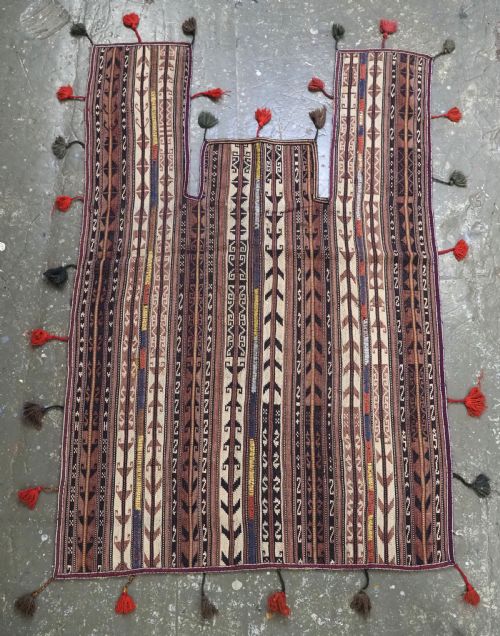
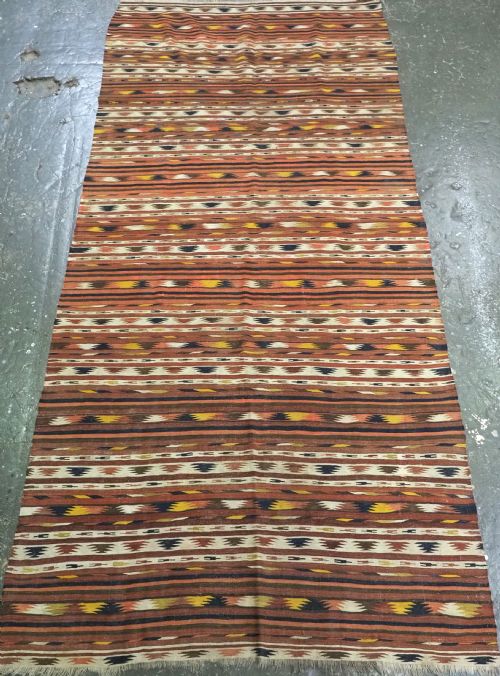
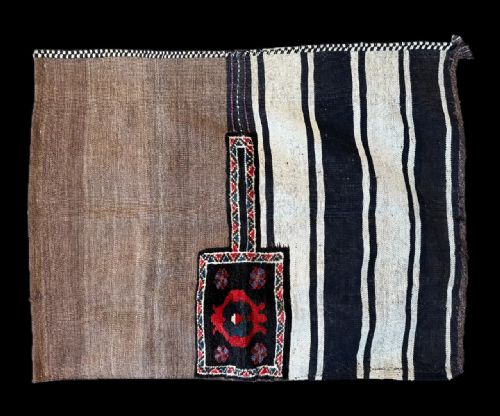
When you search for a brown striped tribal rug, you encounter traditional flatweaves and piled textiles originating from nomadic and village workshops in Persia, Central Asia, and the Caucasus. These utilitarian objects include kilims, wheat-sacks, horse blankets, and storage bags produced during the nineteenth and early twentieth centuries.
The items listed on this page span the 1870s to the 1920s, showing the banded and striped designs characteristic of tribal weaving traditions. Turkmen, Luri-Bakhtiari, Shahsavan, and Uzbek makers produced these textiles using geometric patterns and stripe formations for daily nomadic life.
You are most likely to meet banded flatweaves, mafrash panels, and tribal kilims that employ linear motifs and stripes in natural colour palettes. Each textile represents a functional object adapted from nomadic culture into a decorative floor covering or hanging.
What varies in quality
The standard of a tribal textile depends upon the tightness of the weave and the precision of the banded or striped layout. Finer knotting and density in structures like Turkmen kilims indicate greater labour and higher skill from the maker.
Quality also rests in the purity and depth of the natural dyes, which determine how the brown and secondary tones hold their brilliance. Intact original structures, such as complete saddle bags or unaltered flatweaves, command greater interest than assembled panel fragments.
Nomadic weavers occasionally hid small deliberate irregularities in their stripes, believing flawless work challenged divine perfection.
The Brown Striped Tribal Rug Glossary
- Kilim
- A flatwoven carpet or textile produced without a pile by tightly interlacing warp and weft strands. This technique creates a lightweight, durable fabric with identical patterns visible on both sides.
- Mafrash
- A large rectangular storage bag or chest panel used by nomadic tribes for bedding and household goods. These items frequently feature horizontal bands and striking geometric stripes.
- Sofreh
- A tribal dining kilim or spread used during meals and food preparation in Persian nomadic tents. They often display striped or banded fields designed to catch crumbs.
- Tacheh
- A traditional wheat-sack or grain container woven by Luri-Bakhtiari tribes in Western Persia. These functional textiles employ robust wool and practical banded designs.
- Warp
- The vertical foundation threads stretched lengthwise on a loom before weaving begins. Wefts are passed horizontally through these stationary strands to form the fabric.
Brown Striped Tribal Rug: Frequently Asked Questions
How are tribal rugs cleaned?
Maintenance requires gentle vacuuming without a rotating brush bar to protect the wool and hand-spun fibres. Professional textile cleaning is necessary for deeper care.
Water should be used sparingly on natural dye surfaces to prevent bleeding. Regular shaking outdoors removes dust trapped within the tight flatweave structure.
What is a mafrash panel?
A mafrash panel is a section of a nomadic storage container used for transporting household belongings on pack animals. These pieces display horizontal bands and stripes.
Many surviving panels are later repurposed into small kilims or wall hangings. They preserve the dense weaving and tribal iconography of nineteenth-century nomadic life.
Where did these tribal textiles originate?
The pieces originate from nomadic and semi-nomadic groups across Persia, Central Asia, and the Caucasus. Tribes such as the Turkmen, Uzbek, and Luri-Bakhtiari created them for domestic use.
Each region developed distinct colour palettes and stripe arrangements. These designs reflected the specific cultural heritage and environment of the maker.
Are these textiles durable for floor use?
Many flatweaves and kilims withstand foot traffic in low-to-medium-use areas when supported by an appropriate underlay. The tightly packed wool construction provides natural resilience.
Delicate ceremonial pieces or antique horse blankets function better as wall hangings or display items. Assessing the wool condition helps determine suitable placement in the home.