


19th Century Epergne
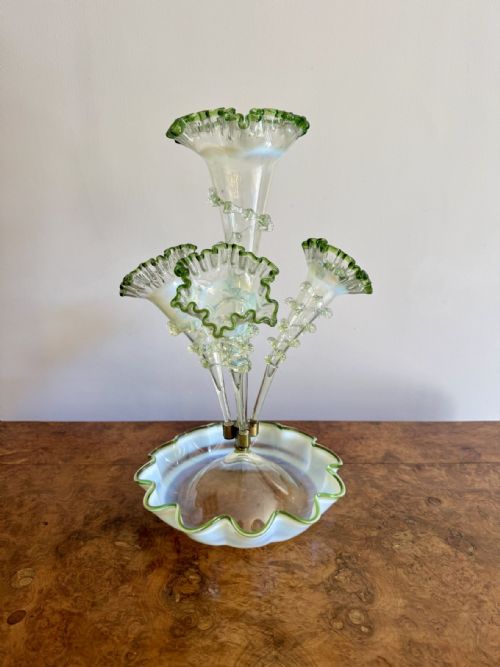
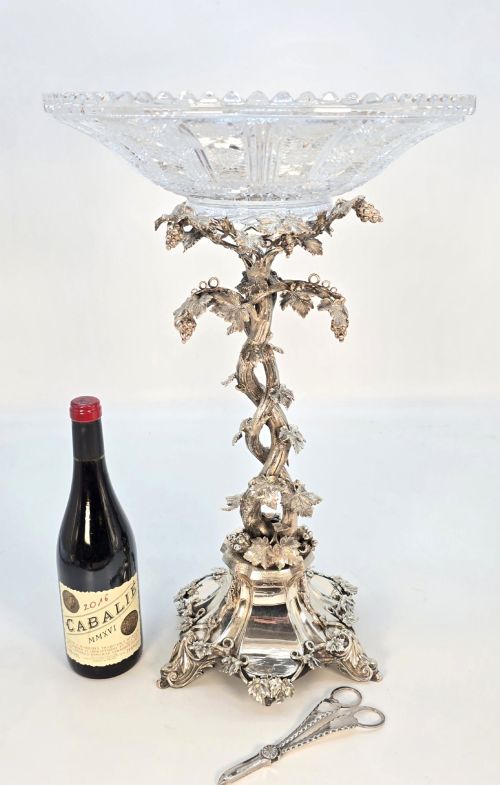
These 19th century epergne pieces are extravagant table centrepieces that bring a towering, glass-laden sculptural focal point to a dining room.
19th Century Epergne
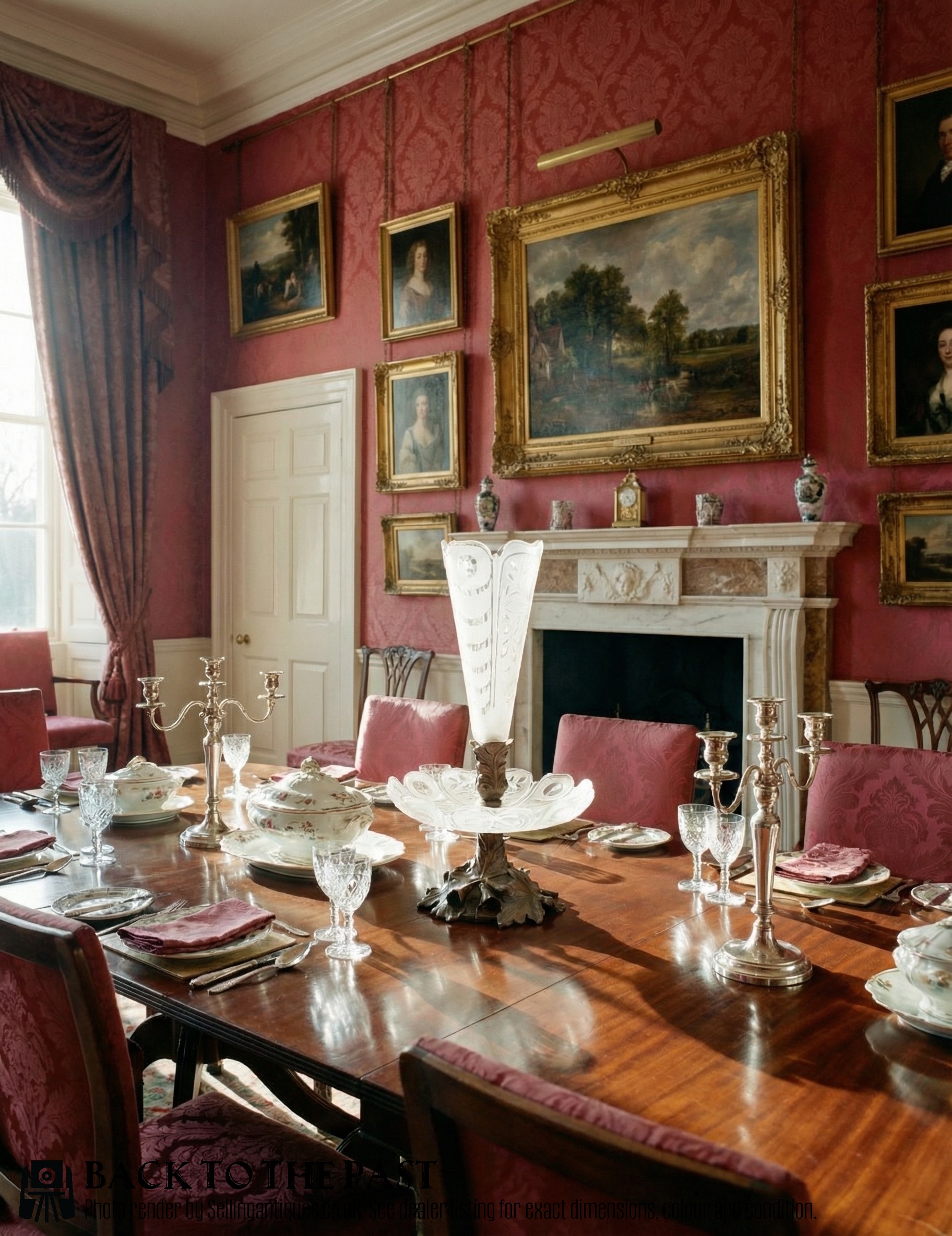
A 19th century epergne serves as an elaborate table centrepiece designed to hold fruit, sweetmeats, or floral displays during formal dining. When you search for a 19th century epergne, you will encounter grand multi-tiered arrangements featuring central bowls with radiating trumpet vases and hanging baskets. These objects dominate the middle of a dining table with towering vertical presence.
The versions most commonly met on this page span the Victorian era, often combining heavy metal frames with brilliant glass inserts. English and French workshops produced these striking forms in varied scales, from single trumpet vases to expansive multi-arm table centrepieces. Each piece displays the Victorian appetite for ornate dining display.
The form evolved across the period from earlier Neoclassical and Regency designs into heavily embellished Victorian creations. Alongside standard silver-plated metalwork, the material palette includes carved wood supports from the Black Forest and gilt bronze. Collectors find these pieces functioning as both decorative ornaments and historically rich serving vessels.
How they were made
Makers constructed these centrepieces by combining heavy cast or plated metal frameworks with blown and cut crystal vessels. Silver plate, Old Sheffield plate, and gilt bronze provide the structural base, supporting delicate glass trumpets and bowls through fitted collars and scrolling arms. The integration of carved wood elements also appears in specific regional pieces.
Glass production relied on skilled blowing, cutting, and moulding techniques to achieve deep facets and vibrant colours such as cranberry and opaline. Crystal components from French and English houses demonstrate precise wheel-cutting and polishing. Metal mounts utilised casting, chasing, and electroplating methods to secure the glass securely in place.
19th Century Epergne Retail Price Guide 2026
Typical asking prices for 19th century epergne among the pieces listed under this phrase on Sellingantiques today, from the lower quarter to the upper quarter. They describe what is for sale here now, not the wider market.
Listings feature periods from the early nineteenth century through the Victorian era, predominantly utilising cut glass, silver plate, and cranberry glass.
What varies in quality
Quality in a 19th century epergne rests upon the harmony between the metal mount and its glass components, where heavier gauge silver plate and deeper crystal cutting elevate the piece. Superior examples feature crisply chased metalwork and flawless glass free from cloudiness or replacement parts. The integration of named maker components or heavy Baccarat crystal shifts a piece to the upper tier of the range.
The complexity of the structural framework dictates the sculptural success of the centrepiece, distinguishing simple trumpet vases from multi-tiered masterworks. Finely detailed casting on bronze or plated mounts creates a more substantial presence on the dining table. Material selection, such as rich cranberry or opaline glass paired with substantial metalwork, defines the finer examples.
James Deakin·James Dixon·Baccarat
The 19th Century Epergne Glossary
- Epergne
- A large ornamental table centrepiece designed for holding fruit, flowers, or sweetmeats, featuring a main bowl and multiple detachable arms or trumpets. These multi-tiered vessels dominated formal Victorian dining tables.
- Cranberry glass
- A rich red-pink glass coloured with gold chloride, highly popular during the Victorian era for decorative vases and epergne inserts. This vibrant material catches dining room candlelight brilliantly.
- Old Sheffield plate
- An early form of plated metal produced by fusing a thin sheet of silver to a thicker copper base before rolling and shaping. This technique predates modern electroplating.
- Baccarat crystal
- High-grade lead crystal produced by the renowned French glassworks, known for its exceptional clarity and heavy, precise cutting. Pieces incorporating this crystal represent the finest manufacturing standards.
- Opaline glass
- An opaque or semi-translucent glass, often pale in tone, used for decorative vases and tableware during the nineteenth century. Its milky appearance provides a soft contrast to polished metal mounts.
19th Century Epergne: Frequently Asked Questions
What is a 19th century epergne used for?
These grand vessels served as the primary decorative focal point on formal dining tables, holding fruit, sweetmeats, or elaborate floral displays during dinner parties.
They allowed hosts to display wealth and taste through towering arrangements of glass and silver.
How do I clean a glass and silver epergne?
Careful hand washing with warm soapy water and a soft cloth preserves both the delicate glass inserts and the underlying silver plate or bronze.
Harsh metal polishes should be kept away from plated surfaces to prevent wearing down the historical finish over time.
Can I use an epergne for fresh flowers?
The detachable trumpet vases and central bowls were originally designed to hold water and fresh floral arrangements for dining room decoration.
Care must be taken when filling older glass vessels to avoid thermal shock from water temperature changes.
How do I identify a Victorian epergne?
Victorian examples typically feature combination materials like cranberry glass paired with heavy silver plate, or carved wood supports from the Black Forest.
Stylistic markers include ornate Neoclassical scrolling, heavy floral chasing, and multi-tiered arrangements characteristic of the mid to late nineteenth century.