



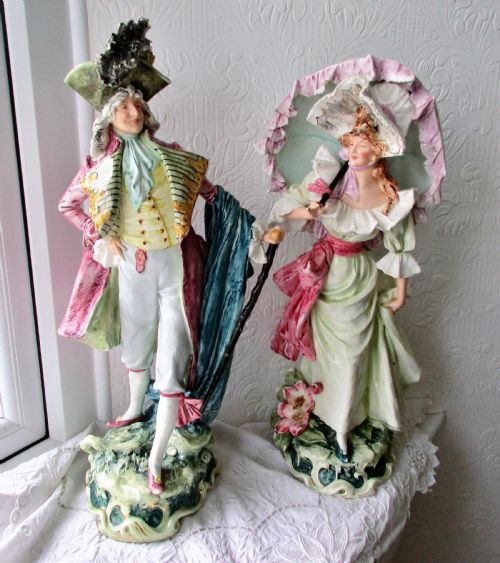
19th Century Earthenware Figurine
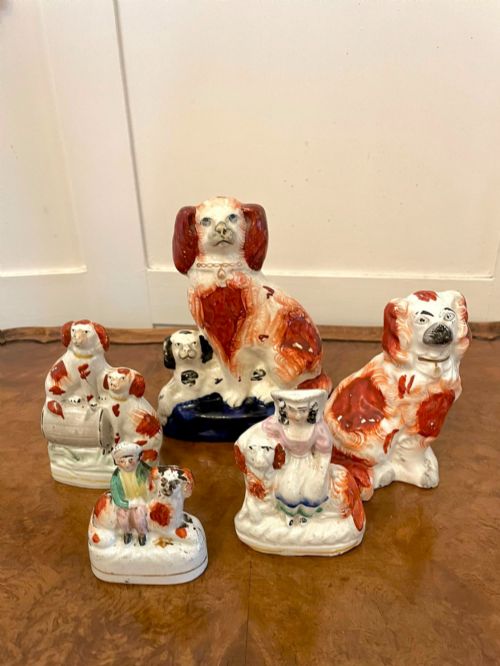
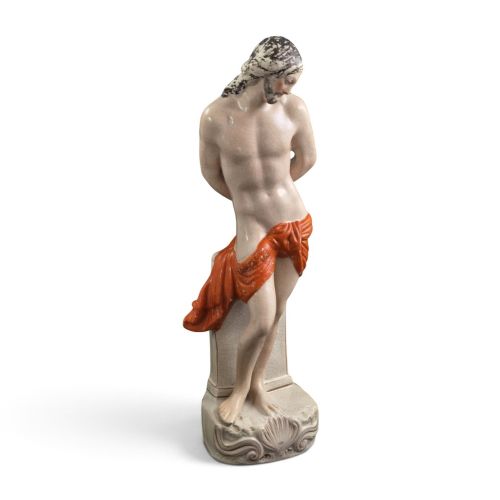
These 19th century earthenware figurine examples bring vernacular Victorian character to a mantelpiece, depicting animals, royalty and literary subjects.
19th Century Earthenware Figurine
Makers produced these decorative objects across various styles including Victorian Staffordshire, Dutch Delftware and majolica. Pieces frequently depict domestic animals, military heroes, or theatrical characters designed for display on cottage and parlour chimney pieces.
How they were made
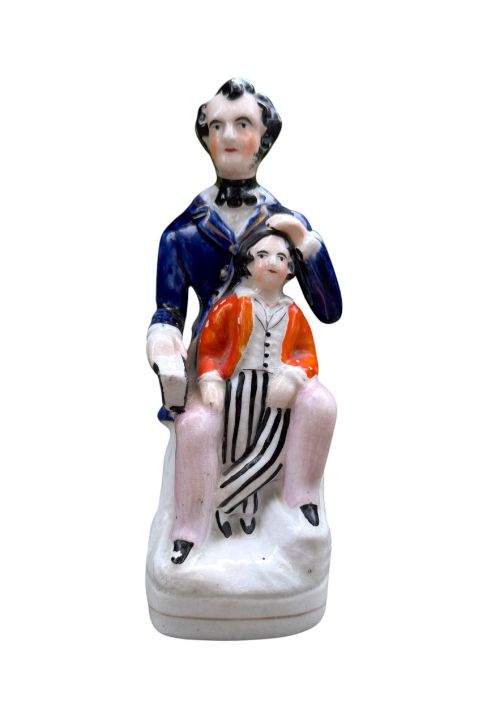
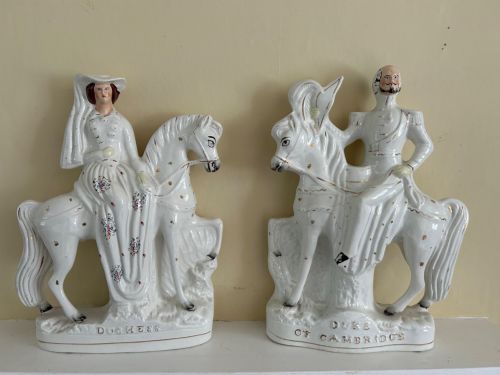
Potters shaped these earthenware bodies using press moulds, joining front and back sections together for flatback figures or forming hollow animal pairs. Artisans then applied lead glazes, enamel paint, and occasional gilt highlights to decorate the ceramic surface before firing.
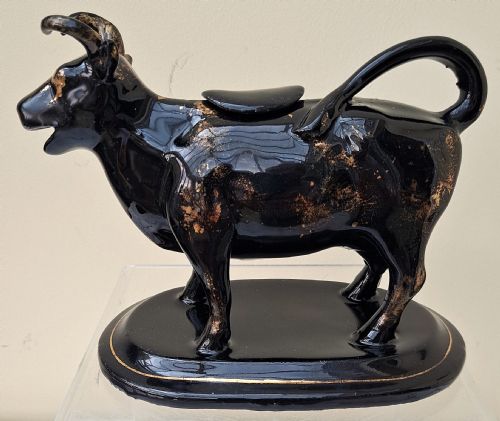
The use of cobalt blue, enamel colours and treacle glaze defined the surface treatment across Staffordshire, Dutch, and French workshops. Surface decoration relied on hand-painting over glazed earthenware, ensuring each piece retained individual brushwork.
What varies in quality
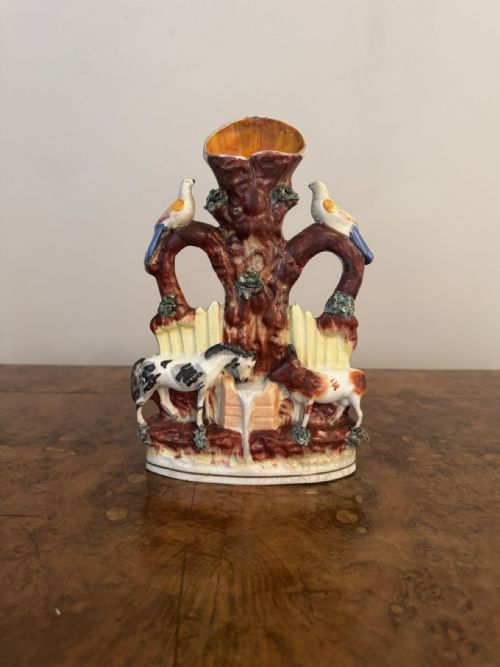
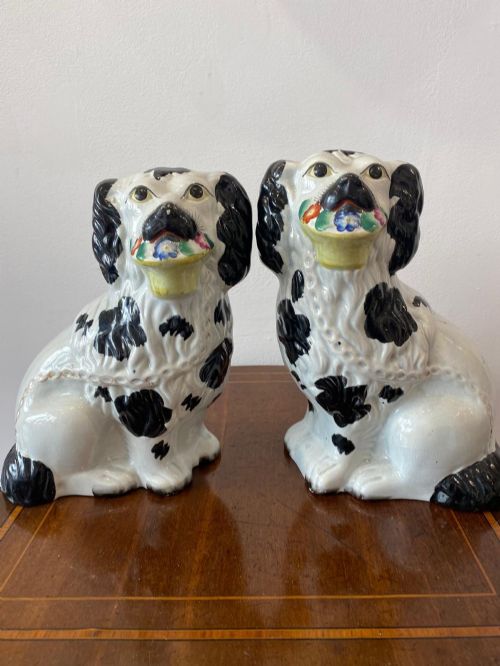
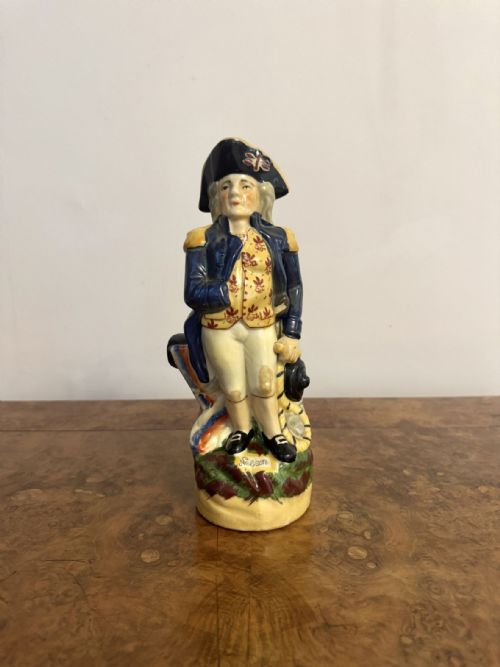
Matched pairs and uncommon subjects like specific portrait figures or detailed spill vases demonstrate greater sculptural ambition. The depth of the moulding and the vibrancy of the cobalt blue or enamel pigments distinguish standard production wares from finer pieces.
Thomas Parr
The 19th Century Earthenware Figurine Glossary
- Flatback
- A figure modelled with a finished front and a plain, unadorned or semi-flattened back designed to sit flush against a wall.
- Spill vase
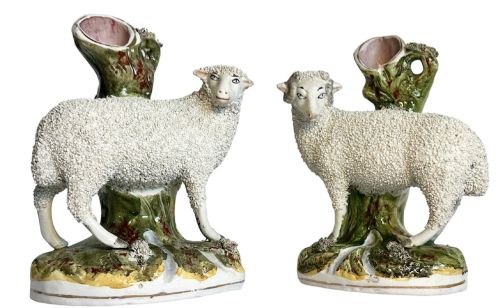
- A hollow cylindrical vase incorporated into a figure group, intended to hold wooden spills for lighting fires.
- Lead glaze
- A shiny glass-like coating applied to earthenware pottery before firing to waterproof the porous clay body.
- Treacle glaze
- A rich, dark brown translucent glaze that produced a glossy, treacle-like appearance on ceramic surfaces.
- Majolica
- A type of earthenware decorated with colourful lead glazes applied directly onto an opaque tin-glaze.
19th Century Earthenware Figurine: Frequently Asked Questions
What is a flatback figure?
Flatback figures are ceramic ornaments designed specifically to sit against a wall on a mantelpiece or shelf. The potters left the back unmodelled or flat because nobody would see it.
This construction method saved clay and production time while creating a stable base for tall figural groups and spill vases.
How were spill vases used?
Spill vases combined a decorative ceramic animal or figure with a functional tall cylinder. Households used them to hold thin wooden spills for transferring flames from the hearth to candles and lamps.
They sat prominently in the parlour, serving both a daily domestic purpose and an ornamental role.
What distinguishes Staffordshire dogs?
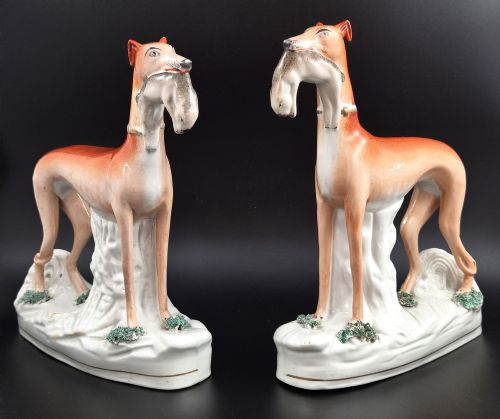
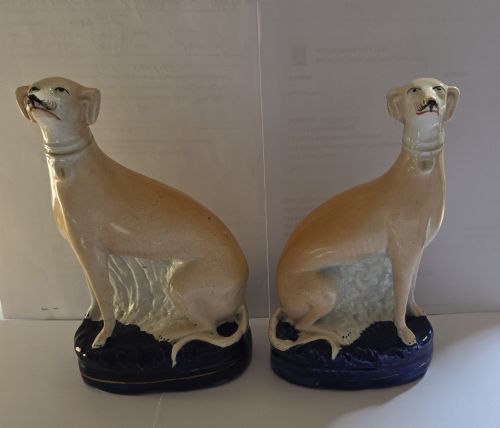
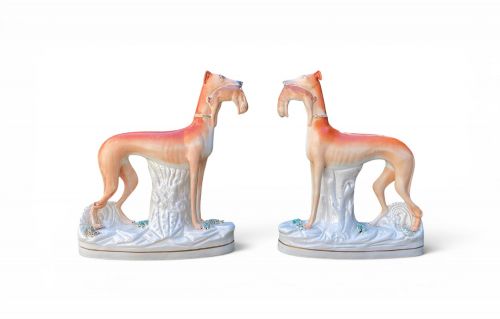
Staffordshire dogs typically depict seated spaniels, greyhounds, or poodles, often made in symmetrical pairs to flank a clock or ornament on the mantel. They feature hand-painted markings, gilded chains, and distinct facial expressions.
Potters produced these popular figures in vast quantities throughout the Victorian era to satisfy middle-class interior decoration tastes.
How do I date these figures?
Dating relies on stylistic clues, costume details, historical subjects, and manufacturing techniques like glaze types and moulding quality. Figures depicting specific Victorian events or personages provide a reliable after which date.
Comparing the vibrancy of the enamel paints and the weight of the earthenware body helps narrow down the period of manufacture within the nineteenth century.