




19th Century Dressing Chest
When you search for a 19th century dressing chest, you are looking at timber furniture designed for personal grooming, combining storage with mirrors or compartments.
19th Century Dressing Chest
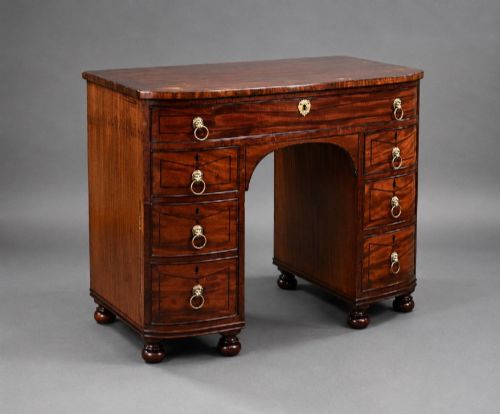
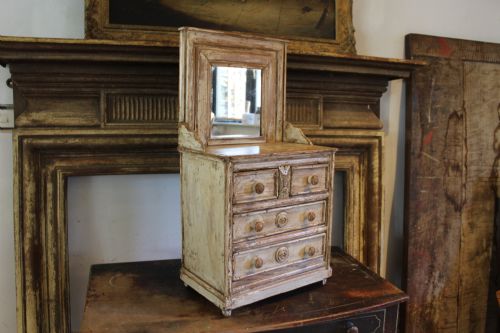
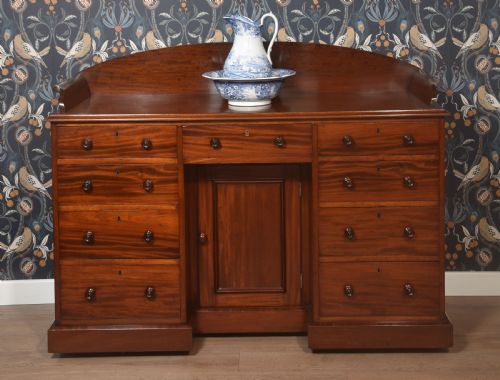
A 19th century dressing chest serves as a dedicated piece for grooming and storage, appearing frequently in mahogany, walnut, and pine across Victorian and Regency periods. The forms range from substantial gentleman's pieces with integrated mirrors to smaller chests equipped with drawers and fitted compartments.
Buyers often encounter variations that include marble-topped washstands, satinbirch models with candle sconces, and painted French or faux bamboo styles. These items reflect the domestic routines of the nineteenth century, combining functional drawer space with surfaces for mirrors and personal items.
How they were made
Cabinet makers utilised dense hardwoods such as mahogany, rosewood, and walnut, frequently selecting figured veneers to create patterned drawer fronts and cabinet surfaces. Secondary timbers like pine appear on internal drawer linings and carcass backs.
Construction techniques involve traditional joinery, complemented by brass handles, glass mirrors, and occasional marble tops on washstand variants. Surface treatments range from polished French polish to original painted finishes and detailed mother of pearl inlay.
19th Century Dressing Chest Retail Price Guide 2026
Typical asking prices for 19th century dressing chest among the pieces listed under this phrase on Sellingantiques today, from the lower quarter to the upper quarter. They describe what is for sale here now, not the wider market.
Listings feature 19th century dressing chests constructed from mahogany, walnut, rosewood, and pine across Victorian and Regency styles.
What varies in quality
The choice of primary timber and the selection of figured veneer dictate much of the visual distinction between examples. Pieces utilising dense mahogany or burr walnut with clean grain alignment sit above simpler pine or painted softwood variants.
Execution of secondary details, such as inlaid brass work, fitted interior compartments, and original hardware, separates standard utility furniture from finer, decorative items produced during the period.
Jennens and Bettridge
The 19th Century Dressing Chest Glossary
- Dressing chest
- A chest of drawers specifically adapted for grooming, typically incorporating a swing mirror or compartments for personal items. These pieces date predominantly from the Victorian and Regency periods.
- Lowboy
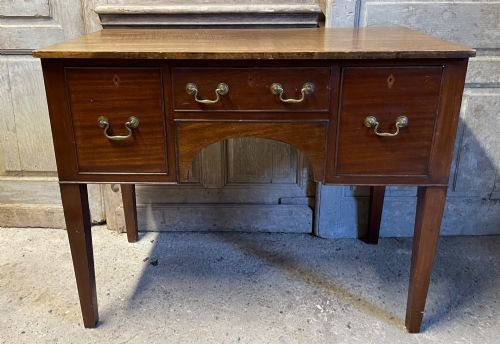
- A small table with drawers, often used as a dressing or side table during the nineteenth century. They provide surface space on slender legs.
- Washstand
- A piece of furniture designed for washing, frequently featuring a marble top to protect against water. Many examples integrate storage similar to a dressing chest.
- Commode
- A low cabinet or chest of drawers of French origin, often topped with marble. They appear in nineteenth-century interiors alongside standard dressing chests.
- Veneer
- A thin layer of finely figured wood applied to a secondary timber base. This technique allowed cabinet makers to display rich grains on drawer fronts.
19th Century Dressing Chest: Frequently Asked Questions
What is a 19th century dressing chest?
A 19th century dressing chest is a piece of bedroom furniture that combines drawer storage with facilities for grooming, such as an attached swing mirror or a fitted top.
These pieces were produced in various woods including mahogany, walnut, and pine, reflecting the changing domestic styles of the Victorian and Regency eras.
How do I identify a Victorian dressing chest?
Victorian dressing chests typically exhibit the characteristic dark hardwoods, heavy proportions, and decorative veneers popular during the nineteenth century.
Look for specific regional details such as swing mirrors mounted on scrolled supports, candle sconces, and fitted jewellery compartments within the top drawers.
Were these chests used by men or women?
Nineteenth-century dressing chests served both men and women, with specific variants tailored to different grooming needs. Gentleman's dressing chests often emphasised compartments for razors and linen, while lady's versions featured delicate mirrors and velvet-lined jewellery trays.
Many standard chests of drawers also functioned interchangeably for personal storage and daily toilette.
What materials were used for these chests?
Cabinet makers relied primarily on solid hardwoods and veneers such as mahogany, rosewood, walnut, and satinbirch. Secondary woods like pine appear on internal drawer structures.
Finer examples incorporate brass handles, glass mirror plates, marble tops, and mother of pearl inlay for decorative effect.