
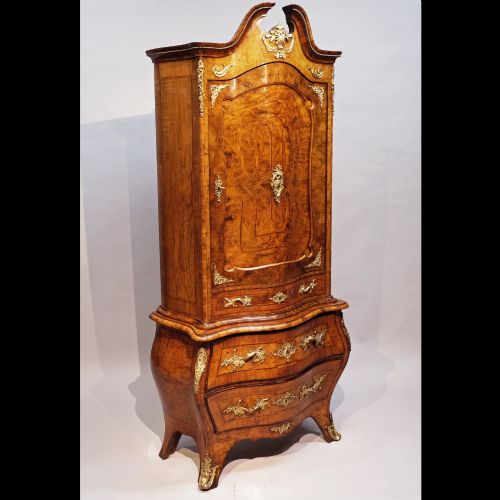

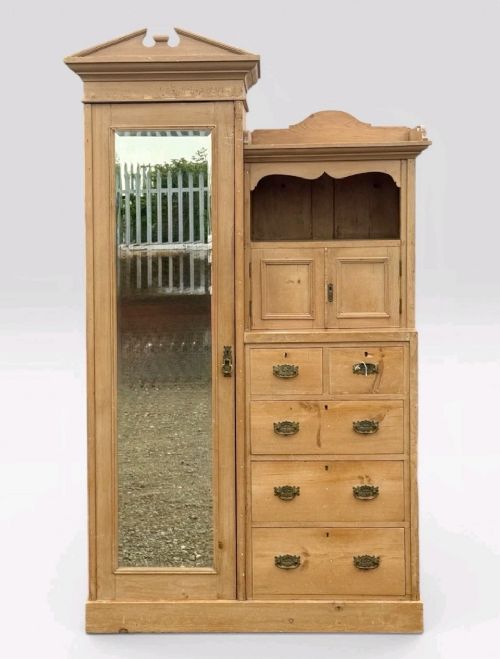


Victorian Linen Press Chest
A victorian linen press chest combines upper cupboard storage with lower drawers for heavy linens and garments, offering substantial traditional proportions.
Victorian Linen Press Chest
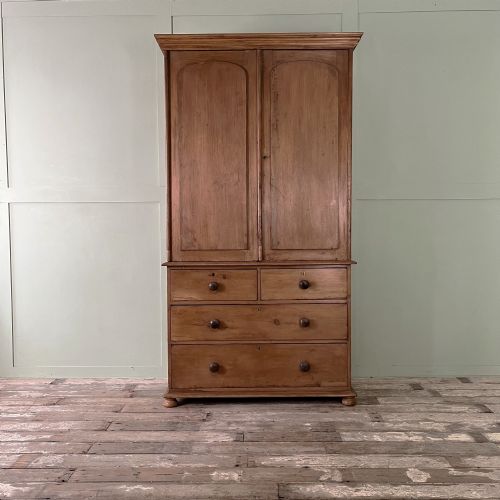
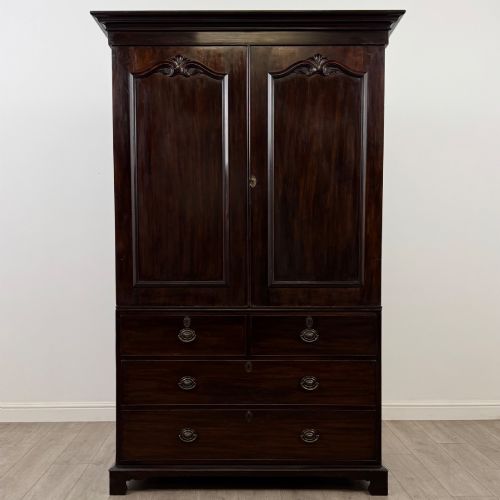
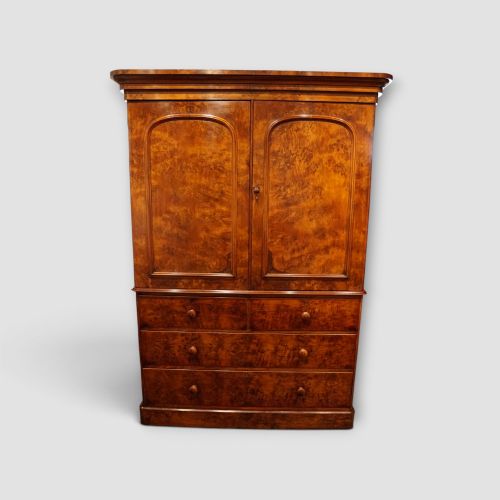
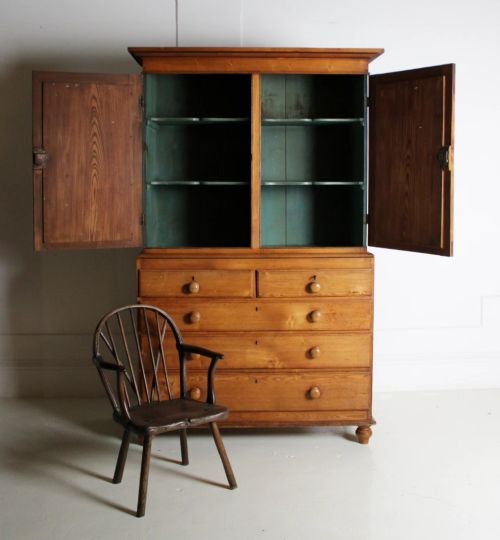
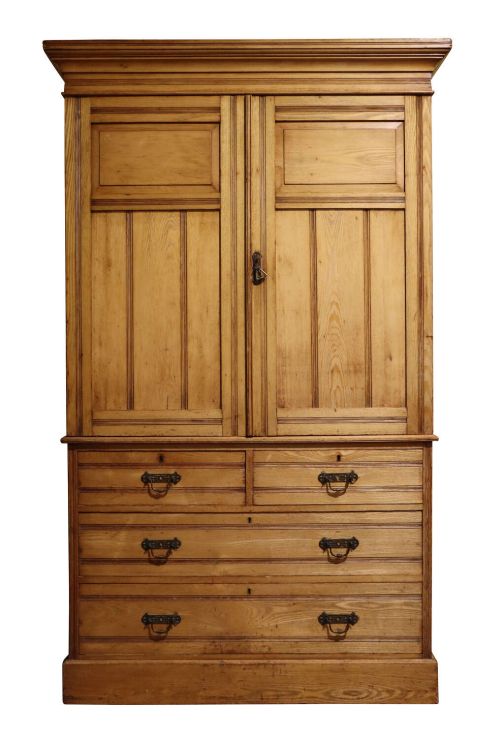
A victorian linen press chest is a substantial dual-purpose furniture form comprising an upper section with panelled doors enclosing trays or hanging space, mounted over a base fitted with a chest of drawers.
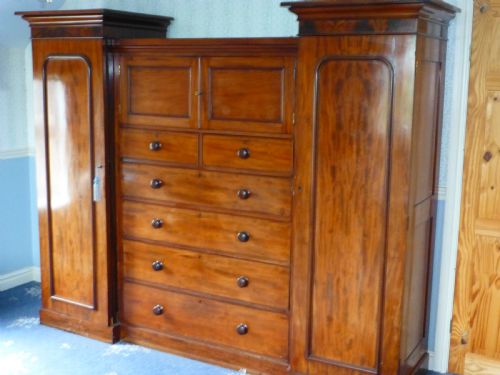
The pieces on this page span the nineteenth century and incorporate regional variations including Welsh vernacular oak cupboards, Scottish mahogany presses, and stripped or painted pine country pieces.
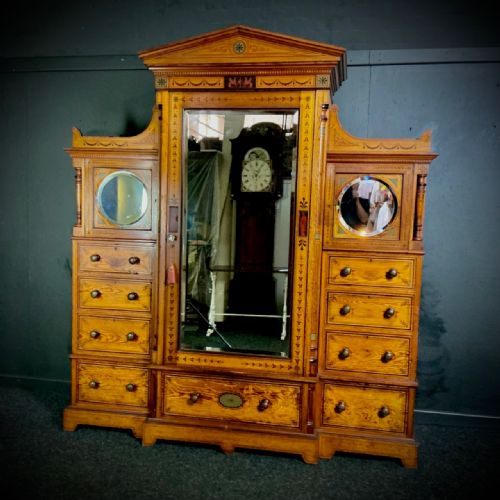
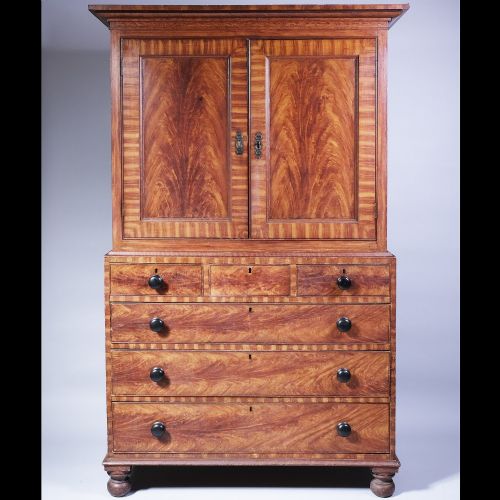
Makers and workshops of the period utilised timber combinations such as flame mahogany, burr walnut, satinbirch, and ash, sometimes creating modular or two-piece constructions that dismantle for transport.
How They Were Made
Cabinetmakers constructed these presses using solid and veneered hardwoods like mahogany, walnut, and oak, often incorporating secondary softwoods like pine for internal partitions and drawer linings.
Surface finishes range from French polished mahogany and waxed pine to scumble paint and decorative graining, supported by brass handles, locks, and hinges.
Listings feature woods including pine, mahogany, oak, walnut, ash, satinbirch, and metal fittings across the nineteenth century.
What Varies in Quality
Quality rests on timber selection, such as figured flame mahogany or matched burr walnut veneers, alongside the crispness of applied mouldings and panel construction.
Internal execution distinguishes standard utility cupboards from finer workshop productions, visible in the precision of dovetailed drawer boxes and the retention of original sliding trays.
Maple and Co·Gillows·Holland and Sons·Shapland and Petter
The Victorian Linen Press Chest Glossary
- Linen press
- A tall storage cabinet traditionally designed for storing folded linen in sliding internal trays above a chest of drawers. Later examples often convert this upper section for garment hanging.
- Compactum
- A multi-functional wardrobe combination uniting drawers, cupboards, and hanging space within a single unified architectural case.
- Scumble paint
- A decorative surface technique where a translucent glaze is manipulated over a lighter base coat to imitate the grain of more expensive timber.
- Satinbirch
- A lustrous timber derived from birch, highly prized during the nineteenth century for its pale golden colour and shimmering chatoyant grain figure.
Victorian Linen Press Chest: Frequently Asked Questions
What is a linen press used for?
These pieces were originally designed to store household linens, sheets, and folded garments on internal sliding trays above a chest of drawers.
Today they function equally well as general bedroom wardrobes, hallway storage units, or living room cabinets.
How do I dismantle a press chest?
Most nineteenth-century presses are built in two main sections, separating the heavy upper cupboard from the lower drawer base for easier transport.
Cornices, internal trays, and doors can often be removed independently to reduce weight during relocation.
Where were these cupboards made?
Production occurred across both urban cabinet-making workshops in London and regional centres like Wales, Scotland, and provincial English towns.
Local timber availability heavily influenced whether a piece was built from native oak and ash or imported colonial mahogany.