



Gentlemans Wardrobe Chest
A gentlemans wardrobe chest is a hybrid storage piece built for hanging and folding clothes, offering deep drawers and linen space in one substantial cabinet.
Gentlemans Wardrobe Chest
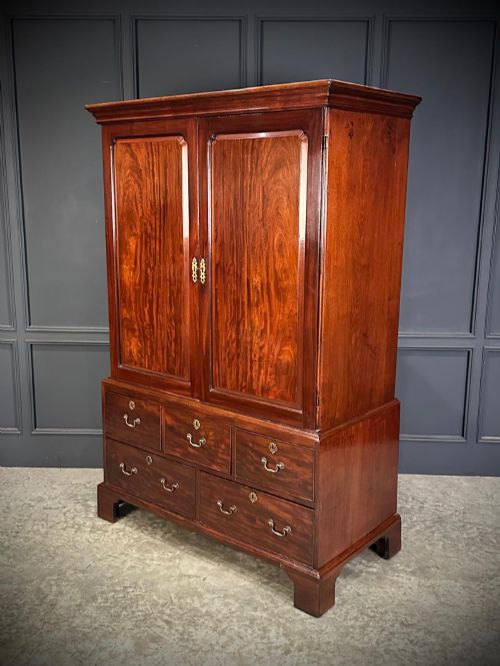
A gentlemans wardrobe chest combines the functions of a tall chest of drawers and a compact cupboard or hanging space into a single integrated carcass. These combination pieces appear in Georgian, Victorian, and Edwardian iterations alongside later Art Deco examples.
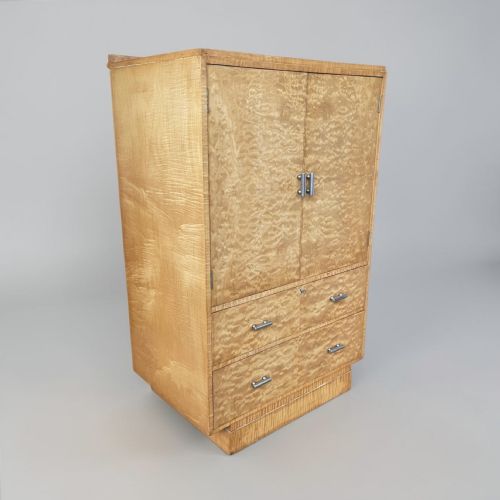
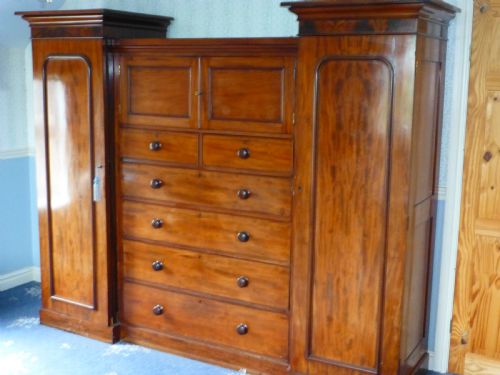
The most common form met here is the mahogany compactum or gentleman's cabinet, often featuring central linen slides enclosed by panelled doors above a graduated bank of lower drawers. Oak, burr walnut, and birds eye maple veneer also surface frequently across various styles from George III to the twentieth century.
How they were made
Cabinetmakers built these large carcasses using solid timbers like mahogany and oak for structural stability, applying flame mahogany or burr walnut veneers to the primary display surfaces. Secondary woods line the internal drawers and slides while brass handles and escutcheons secure the doors and drawer fronts.
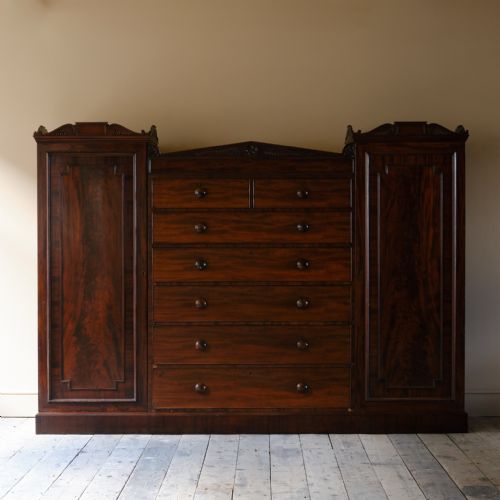
Joinery techniques ranged from traditional dovetailing on drawer construction to veneering methods that highlighted the natural grain patterns of satinwood, ash, and birds eye maple. Heavy architectural mouldings and breakfront configurations required precise carpentry to align hanging compartments with internal shelving and sliding trays.
Listings feature pieces spanning the Georgian and Victorian eras alongside Edwardian, William IV, and 1930s Art Deco examples.
What varies in quality
The standard of timber selection largely defines the upper tiers of these cabinets, where matched flame mahogany or carefully figured burr walnut veneers dictate the visual impact. Lesser examples rely on plainer secondary woods with simpler surface treatments and standard brass hardware.
Structural complexity also separates standard pieces from exceptional ones, particularly in inverted breakfront designs or fitted interiors by recognised workshops. The integration of sliding linen trays, internal drawers, and well-fitted hanging space demands superior architectural joinery compared to basic shelved cupboards.
Gillows·Maple and Co·Heal's·Whytock and Reid
The Gentlemans Wardrobe Chest Glossary
- Compactum
- A multi-functional wardrobe and chest combination designed to maximise storage efficiency within a single footprint. These units typically incorporate hanging space, shelves, and internal drawers.
- Linen press
- A tall cabinet featuring upper doors enclosing sliding trays for folded textiles, mounted over a base section of graduated drawers. They frequently share form with gentleman's chests.
- Breakfront
- A cabinet front where the central section projects forward from the flanking outer wings. This architectural arrangement adds considerable visual depth and complexity to larger wardrobes.
- Flame mahogany
- A veneer cut from the fork of the mahogany tree where the branches join the trunk, producing a distinctive flickering flame pattern. Cabinetmakers reserved this timber for principal display surfaces.
- Gentlemans chest
- A hybrid storage item combining a chest of drawers base with an upper cupboard section tailored for a gentleman's attire. They bridge the gap between tallboys and full wardrobes.
Gentlemans Wardrobe Chest: Frequently Asked Questions
What is a gentlemans wardrobe chest?
A gentlemans wardrobe chest is a large piece of antique furniture designed to store a complete wardrobe of men's clothing. It combines vertical hanging or shelving space with horizontal drawer storage.
These pieces evolved to keep coats, waistcoats, linen, and small accessories together in one designated cabinet within a dressing room or bedroom.
How were these pieces used?
Owners used the upper cupboards or sliding trays for folded shirts, cravats, and linens, while hanging compartments accommodated heavier coats and suits. The lower drawers held smaller garments and personal items.
They served as the primary storage hub for a gentleman's daily attire before fitted built-in closets became standard in modern domestic architecture.
How do I date a compactum wardrobe?
Dating relies on identifying the prevailing style, such as Georgian proportions, Victorian mouldings, or 1930s Art Deco geometric lines. Timber choice and construction methods also provide clear chronological markers.
Earlier George III pieces display hand-cut dovetails and solid mahogany timbers, whereas Edwardian and later examples incorporate varied veneers and alternative internal configurations.
Where should I place one?
These cabinets require substantial wall space and adequate clearance for opening large doors and pulling out deep drawers. Bedrooms and dressing rooms remain the traditional locations for their daily utility.
Because of their height and heavy timber construction, positioning them away from direct heat sources helps preserve the stability of the veneers and solid wood panels.