
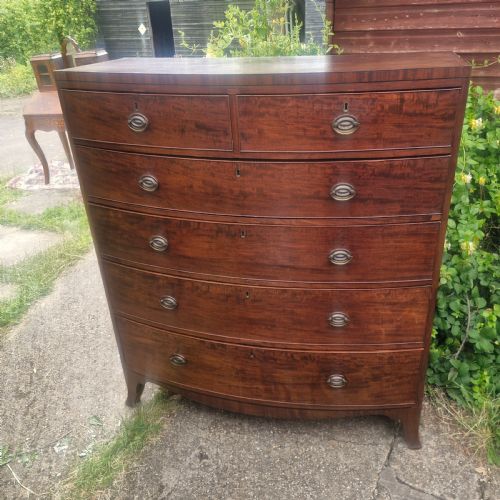
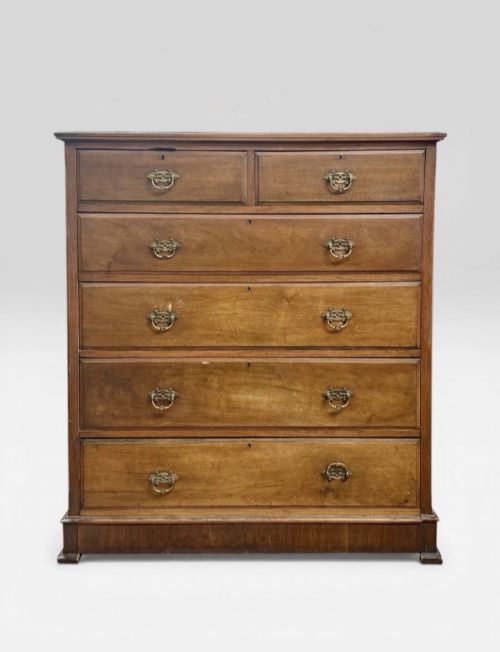


Large Wooden Chest Drawers
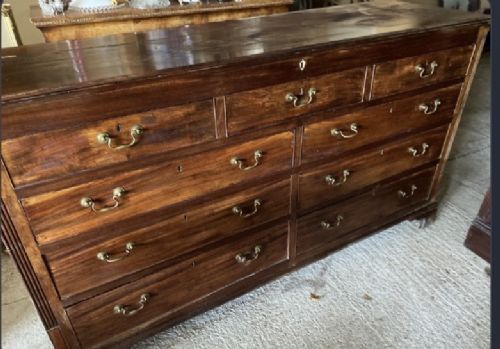
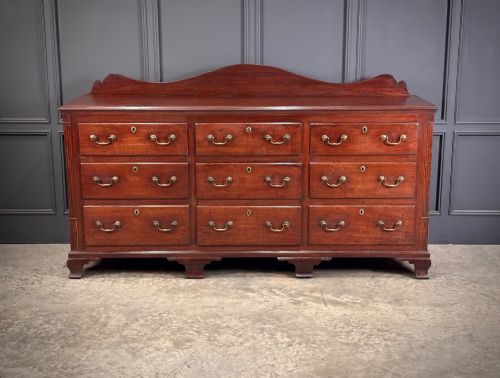
Large wooden chest drawers pieces provide substantial storage while anchoring a room with period timber and traditional proportions.
Large Wooden Chest Drawers
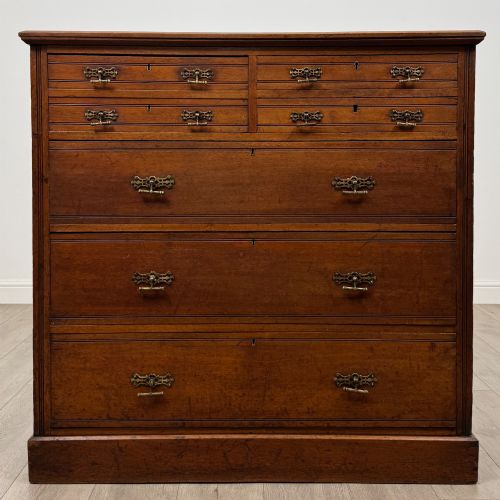
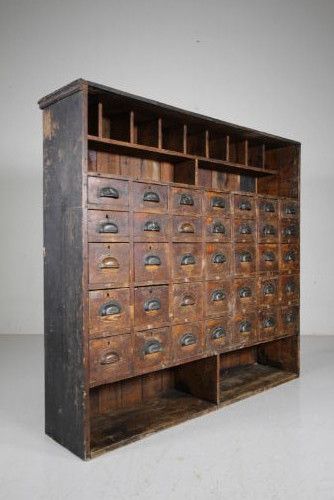
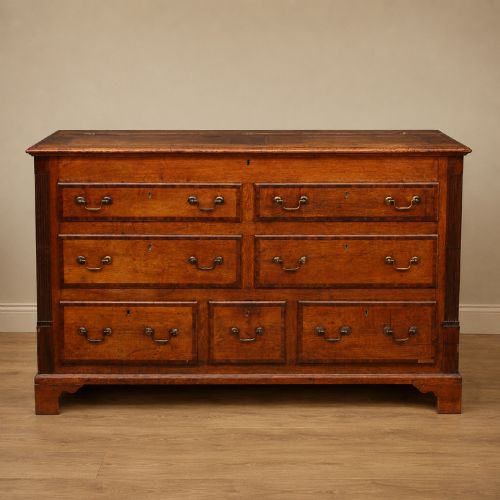
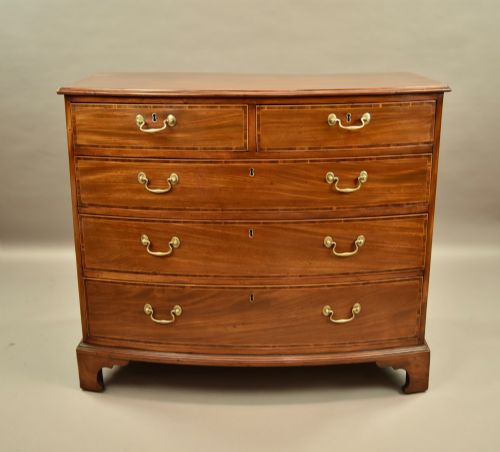
Large wooden chest drawers items span functional storage forms including standard chests, banks of drawers, mule chests, linen presses, and plan chests. These pieces originate across the Georgian, Victorian, Regency, Edwardian, and later twentieth-century periods.
Mahogany and pine dominate the selection, accompanied by walnut, oak, and flame mahogany variants. Buyers frequently encounter standard mahogany bedroom chests alongside utilitarian pine carpenter or shop pieces and multi-drawer banks.
How they were made
Cabinet makers utilised dense hardwoods like mahogany, walnut, and oak for formal pieces, employing crossbanding, burr veneers, and brass hardware to finish surfaces. Joinery relied on traditional dovetailed drawer construction and solid timber framing.
Pine and pitch pine served utility and regional workshops, often finished with paint, wax, or left in original timber surfaces. Internal elements like secret drawers and compartmentalised interiors required precise secondary softwood framing.
Secret drawers tucked within nineteenth-century carcases offer hidden compartments for private documents.
What varies in quality
Timber selection dictates the distinction between standard utility items and high-end cabinet work, visible in figured mahogany, burr walnut veneers, and crossbanded borders. Superior examples maintain crisp serpentine fronts, intact original brasses, and clean internal drawer linings.
Structural integrity depends on the original construction of the carcase and drawer runners rather than later surface treatments. Pieces retaining original paint finishes or untouched cabinetmaker patination command distinct interest compared to heavily restored surfaces.
Whytock & Reid·Jas Shoolbred
The Large Wooden Chest Drawers Glossary
- Serpentine front
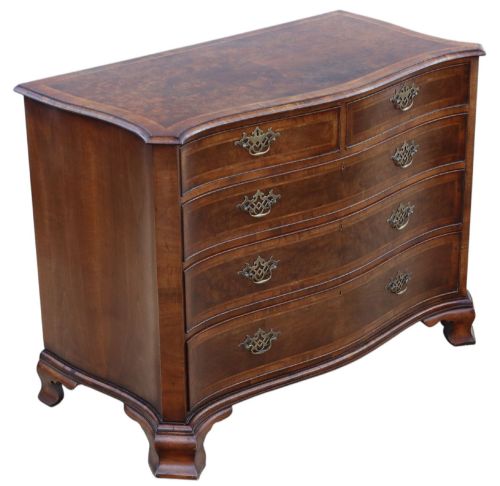
- A convex central section flanked by two concave curves, creating an undulating facade that demands skilled woodworking.
- Bowfront
- A convex curved cabinet front popular during the Georgian and Regency periods, softening the rectangular lines of the room.
- Bank of drawers
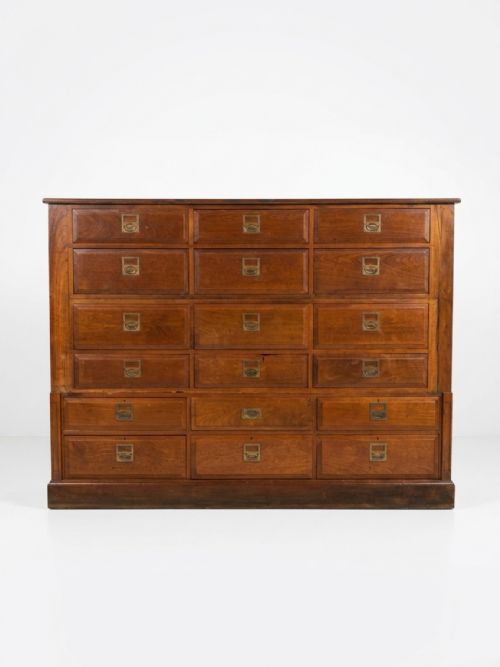
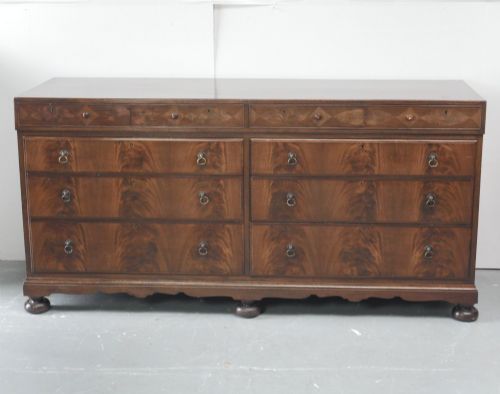
- A multi-drawer storage unit historically utilised in shops, offices, or workshops rather than domestic bedrooms.
- Crossbanding
- A border of veneer laid with the grain running perpendicular to the surrounding wood to frame drawer fronts or tabletops.
- Linen press
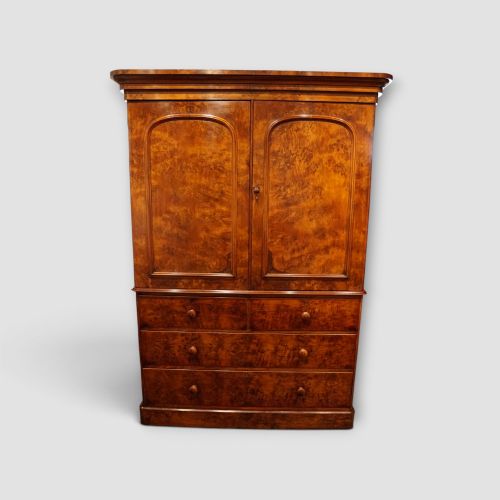
- A tall storage cabinet featuring upper doors enclosing sliding trays above a base configuration of lower storage drawers.
Large Wooden Chest Drawers: Frequently Asked Questions
What periods do these chests cover?
The pieces span from the eighteenth century through the Georgian and Victorian eras into early twentieth-century examples.
Craftsmanship shifts from formal hardwood cabinet work to utilitarian pine workshop and shop fittings across these periods.
How were these large chests used historically?
Domestic bedrooms utilised tallboys and drawer units for clothing storage, while specialist pieces served offices and merchant shops.
Deep drawers and internal compartments accommodated linens, documents, trade goods, and personal garments.
How do I identify a Georgian chest?
Georgian pieces display formal proportions in mahogany or oak, often incorporating bracket feet, cockbeaded drawers, and brass swing handles.
Cabinet work from this era focuses on architectural symmetry and restrained decorative veneers rather than heavy mouldings.
What is a Scotch chest?
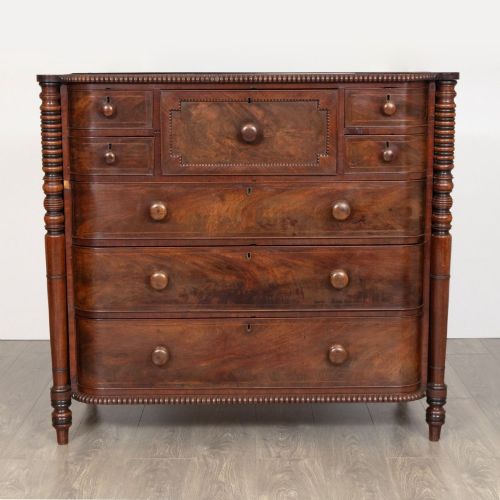
A Scotch chest is a nineteenth-century regional form characterised by a deep cushion drawer positioned above the main bank.
These pieces typically present substantial proportions in flame mahogany or walnut veneers with bold architectural presence.